Preparing for the AP Physics 1 Exam (Coursera)

Preparing for the AP Physics 1 Exam (Coursera)

This course is designed for high school students preparing to take the AP Physics 1 Exam. AP Physics 1 is a registered trademark of the College Board, which was not involved in the production of, and does not endorse, this product.

Class Deals by MOOC List - Click here and see Coursera's Active Discounts, Deals, and Promo Codes.

Syllabus

WEEK 1
Kinematics
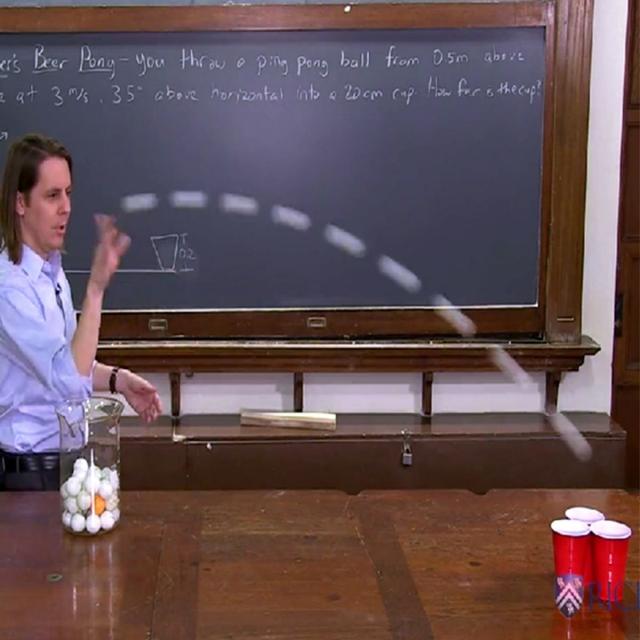
Topics include velocity, acceleration, free fall, projectile problems and graphical analysis. You will watch 3 videos, complete 3 sets of practice problems and take 2 quizzes. Please click on the resources tab for each video to view the corresponding student handout.

WEEK 2
Forces
Topics include forces, Newton’s Laws of Motion, and applications of each. You will watch 3 videos, complete 3 sets of practice problems and take 2 quizzes. Please click on the resources tab for each video to view the corresponding student handout.
WEEK 3
Circular Motion and Gravitation
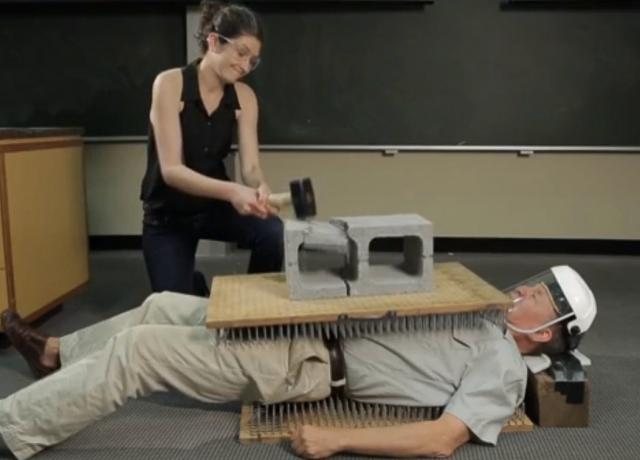
Topics include kinematics and dynamics of circular motion, Newton’s law of universal law of gravitation, and applications of topics. You will watch 2 videos, complete 2 sets of practice problems and take 2 quizzes. Please click on the resources tab for each video to view the corresponding student handout.
WEEK 4
Energy and Momentum
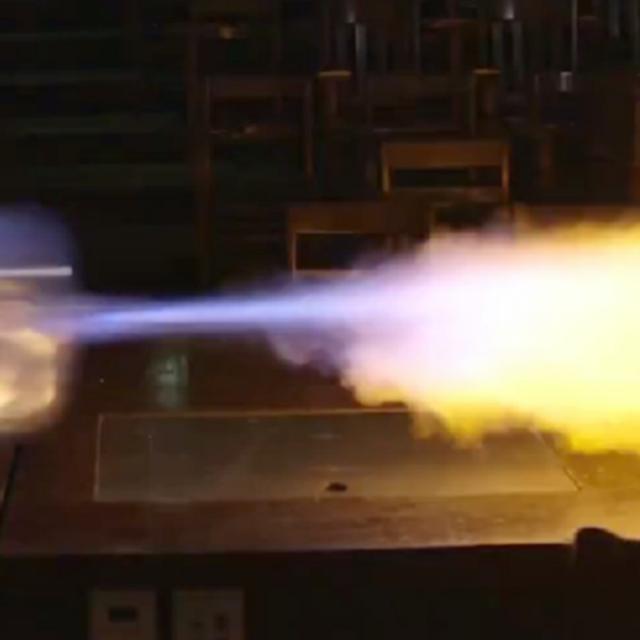
Topics include work, energy, conservation of energy, impulse, linear momentum, and conservation of linear momentum. You will watch 3 videos, complete 3 sets of practice problems and take 2 quizzes.Please click on the resources tab for each video to view the corresponding student handout.

WEEK 5
Rotational Mechanics
Topics include torque, rotational kinematics and energy, rotational dynamics, and conservation of angular momentum. You will watch 3 videos, complete 3 sets of practice problems and take 2 quizzes. Please click on the resources tab for each video to view the corresponding student handout.

WEEK 6
Waves and Sound
Topics include mechanical waves, sound, simple harmonic motion and applications of topics. You will watch 3 videos, complete 3 sets of practice problems and take 2 quizzes. Please click on the resources tab for each video to view the corresponding student handout.
WEEK 7
Introduction to Circuits
Topics include elective charge, electric force, and DC Circuits. You will watch 3 videos, complete 3 sets of practice problems and take 2 quizzes. Please click on the resources tab for each video to view the corresponding student handout.
Go to Class
MOOC List is learner-supported. When you buy through links on our site, we may earn an affiliate commission.

Related Courses

Modern Robotics, Course 2: Robot Kinematics (Coursera) Coursera
Northwestern University

Modern Robotics, Course 2: Robot Kinematics (Coursera)

Do you want to know how robots work? Are you interested in robotics as a career? Are you willing to invest the effort to learn fundamental mathematical modeling techniques that are used in all subfields of robotics? If so, then the "Modern Robotics: Mechanics, Planning, and Control" specialization may be for you. This specialization, consisting of six short courses, is serious preparation for serious students who hope to work in the field of robotics or to undertake advanced study. It is not a sampler.

Jun 29th 2026
4 Weeks
Density Functional Theory (Coursera) Coursera
École Polytechnique

Density Functional Theory (Coursera)

The aim of this course is to give a thorough introduction to Density Functional Theory (DFT). DFT is today the most widely used method to study interacting electrons, and its applicability ranges from atoms to solid systems, from nuclei to quantum fluids. In this course, we introduce the most important concepts underlying DFT, its foundation, and basic ideas. We will in particular stress the features and reasons that lead DFT to become the dominant method for simulating quantum mechanical systems.

Jun 29th 2026
3 Weeks
Geometrical and Physical Optics (Coursera) Coursera
Rice University

Geometrical and Physical Optics (Coursera)

This third course serves as an introduction to the physics of waves and light. Upon completion, learners will understand how mathematical laws and conservation principles describe wave propagation and light in the context of both geometrical and physical optics. Learners will gain experience in solving physics problems with tools such as graphical analysis, algebra, vector analysis, and calculus.

Jul 6th 2026
4 Weeks
Understanding Modern Physics I: Relativity and Cosmology (Coursera) Coursera
The Hong Kong University of Science and Technology - HKUST

Understanding Modern Physics I: Relativity and Cosmology (Coursera)

The 20th century was known as the century of physics. In the past 120 years, concepts such as space, time, energy, entropy and particles were understood to much deeper levels. New paradigms of thinking such as relativity and quantum mechanics emerged. This course is the first course in the Understanding Modern Physics series, which covers an introduction to special relativity, general relativity and cosmology.

Jul 6th 2026
5-12 Weeks
Global Warming I: The Science and Modeling of Climate Change (Coursera) Coursera
University of Chicago

Global Warming I: The Science and Modeling of Climate Change (Coursera)

This class describes the science of global warming and the forecast for humans’ impact on Earth’s climate. Intended for an audience without much scientific background but a healthy sense of curiosity, the class brings together insights and perspectives from physics, chemistry, biology, earth and atmospheric sciences, and even some economics—all based on a foundation of simple mathematics (algebra).

Jun 29th 2026
5-12 Weeks
Understanding Modern Physics II: Quantum Mechanics and Atoms (Coursera) Coursera
The Hong Kong University of Science and Technology - HKUST

Understanding Modern Physics II: Quantum Mechanics and Atoms (Coursera)

The 20th century was known as the century of physics. In the past 120 years, concepts such as space, time, energy, entropy and particles were understood to much deeper levels. New paradigms of thinking such as relativity and quantum mechanics emerged. This course is the second course in the Understanding Modern Physics series, which covers an introduction to quantum mechanics, atomic physics and quantum information.

Jul 6th 2026
4 Weeks
The Discovery of the Higgs Boson (Coursera) Coursera
University of Edinburgh

The Discovery of the Higgs Boson (Coursera)

The discovery of a new fundamental particle at the Large Hadron Collider (LHC), CERN is the latest step in a long quest seeking to answer one of physics’ most enduring questions: why do particles have mass? The experiments’ much anticipated success confirms predictions made decades earlier by Peter Higgs and others, and offers a glimpse into a universe of physics beyond the Standard Model.

Jul 6th 2026
5-12 Weeks
Electrodynamics: An Introduction (Coursera) Coursera
Korea Advanced Institute of Science and Technology - KAIST

Electrodynamics: An Introduction (Coursera)

The depth and breadth of electromagnetism, the foundation for many fields including materials science, electrical engineering, and physical chemistry, requires a long, steep, and steady learning curve. This course aims to bridge the gap between the fundamental principles taught in electromagnetism and its practical application to specific fields such as materials, physics, and chemistry related to energy storage and harvesting.

Jul 6th 2026
5-12 Weeks
AstroTech: The Science and Technology behind Astronomical Discovery (Coursera) Coursera
University of Edinburgh

AstroTech: The Science and Technology behind Astronomical Discovery (Coursera)

Modern astronomy has made some astonishing discoveries - how stars burn and how black holes form; galaxies from the edge of the universe and killer rocks right next door; where the elements come from and how the expanding universe is accelerating. But how do we know all that? The truth is that astronomy would be impossible without technology, and every advance in astronomy is really an advance in technology. But the technology by itself is not enough. We have to apply it critically with a knowledge of physics to unlock the secrets of the Universe.

Jun 29th 2026
5-12 Weeks
Physics 101 - Energy and Momentum (Coursera) Coursera
Rice University

Physics 101 - Energy and Momentum (Coursera)

This course serves as an introduction to the physics of energy and momentum. Upon completion, learners will have an understanding of how mathematical laws and conservation principles describe the motions and interactions of objects all around us. They will gain experience in solving physics problems with tools such as graphical analysis, algebra, vector analysis, and calculus.

Jun 29th 2026
4 Weeks