Peterloo to the Pankhursts: Radicalism and Reform in the 19th Century (FutureLearn)

Peterloo to the Pankhursts: Radicalism and Reform in the 19th Century (FutureLearn)

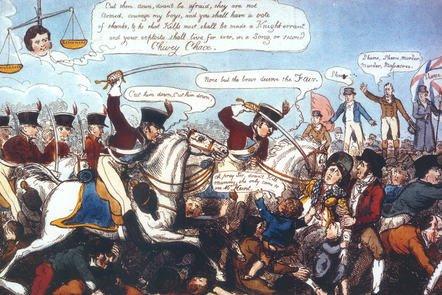
Discover the history of protest, parliament and citizens’ rights. Improve your understanding of important milestones in political history. 16th August 2019 marks the bicentenary of the Peterloo Massacre, a key milestone in the campaign to reform Parliament in the 19th century, and an important part of Britain’s democratic heritage and history. On this course, you will understand this event within a wider context of radicalism and reform over the 19th century.

Class Deals by MOOC List - Click here and see FutureLearn's Active Discounts, Deals, and Promo Codes.

You will first explore the birth of modern democratic ideas and responses to the American and French revolutions in the 18th century. You will end the course by examining the campaign for universal men’s and women’s suffrage in the early years of the 20th century.

What topics will you cover?
Each week will have a thematic focus:

  1. Revolutions. Week one explores how revolutions in political thought; in agriculture and industry; and America and France led to increasing calls for the reform of Parliament, culminating in the Peterloo Massacre of 1819.
  2. Reform. Week two examines key moments, movements and figures associated with reform in the first half of the nineteenth century, including Catholic Emancipation; the Great Reform Act and Chartism; the abolition of slavery; the Poor Law Amendment Act and the Repeal of the Corn Laws.
  3. Workers: Week three charts the emergence of trade unionism, British responses to and variations of socialism and the establishment and early electoral fortunes of the Labour Party.
  4. Voters: The course concludes with an exploration of when, how and why the vote was extended by Reform Acts in the second half of the nineteenth century, examining the role of both popular campaigns and political calculation. This week culminates with the emergence of mass politics and calls for universal male and (limited) women’s suffrage at the turn of the century.

What will you achieve?
By the end of the course, you'll be able to...

  • Improve your understanding of key milestones in the extension of citizens rights and representation in the nineteenth century.
  • Explore the origins and path of the course of Parliamentary reform from the impact of the American and French Revolutions to the First World War.
  • Reflect upon and debate the role of popular protest in effecting political change.
  • Improve your understanding of the development of workers' rights and the emergence of modern trade unionism and the Labour Party.
  • Compare the responses of the Liberal and Conservative parties to calls for universal suffrage and the emergence of mass politics.
Go to Class
MOOC List is learner-supported. When you buy through links on our site, we may earn an affiliate commission.

Related Courses

Casing the Joint: Introducing Histories of Crime (FutureLearn) FutureLearn
The University of Newcastle, Australia

Casing the Joint: Introducing Histories of Crime (FutureLearn)

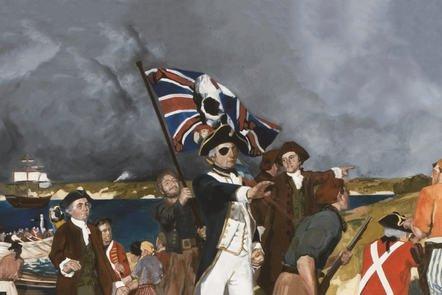
Learn about historical approaches to the study of crime and punishment, particularly in Australia. Delve beyond true crime podcasts, books and television series Crime holds a special place in Australian history, having facilitated colonisation, provided its most celebrated anti-hero in Ned Kelly and been used to sell millions of newspapers, books and movie tickets.

No sessions available
3 Weeks
Zoroastrianism: History, Religion, and Belief (FutureLearn) FutureLearn
SOAS University of London

Zoroastrianism: History, Religion, and Belief (FutureLearn)

Explore the ancient religion of Zoroastrianism, its languages, and the challenges faced by Zoroastrian communities today. Delve into the rich visual history of the Zoroastrian religion Zoroastrianism has had a profound influence on major world religions. Its history tells the story of imperial culture, persecution, migration and the establishment of diasporic communities.

Jul 26th 2021
4 Weeks
Magic in the Middle Ages (Coursera) Coursera
University of Barcelona

Magic in the Middle Ages (Coursera)

Magical thought has always attracted human imagination. In this course we will introduce you to the Middle Ages through a wide conception of magic. Students will have an approach to medieval culture, beliefs and practices from the perspective of History and History of Science. Popular magic, as well as learned magic (alchemy, geomancy and necromancy) will be addressed. Moreover, we will also deal with how eastern practices and texts influenced western culture. In July 2016, the course will contain a brand-new module devoted to astrology. Magic in the Middle Ages offers a captivating overview of medieval society and promotes reflection about certain stereotypes associated with this period.

Aug 17th 2026
5-12 Weeks
Journey of the Universe: The Unfolding of Life (Coursera) Coursera
Yale University

Journey of the Universe: The Unfolding of Life (Coursera)

Journey of the Universe weaves together the discoveries of the evolutionary sciences together with humanities such as history, philosophy, art, and religion. The course draws on the Emmy-award winning film, Journey of the Universe, and the book from Yale University Press. Journey explores cosmic evolution as a creative process based on connection, interdependence, and emergence. It examines a range of dynamic interactions in the unfolding of galaxies, Earth, life, and human communities. It investigates ways in which we understand evolutionary processes and the implications for humans and our ecological future.

Aug 17th 2026
5-12 Weeks
Hadrian's Wall: Life on the Roman Frontier (FutureLearn) FutureLearn
Newcastle University

Hadrian's Wall: Life on the Roman Frontier (FutureLearn)

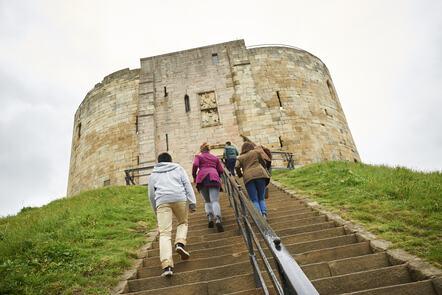
Explore the archaeology of the most heavily fortified frontier in the Roman Empire, its people and their lives. Hadrian’s Wall stretches over 73 miles (117 km), from coast to coast in what is now Northern England. The Wall, complemented by a sophisticated system of outposts and coastal watch stations, offers a remarkable glimpse of ancient society. In addition to housing one of the largest concentrations of Roman soldiers anywhere in the Empire’s provinces, Hadrian’s frontier system was home to an incredibly cosmopolitan array of civilians. This six week course offers a comprehensive introduction to Hadrian’s Wall and its people and raises fascinating issues concerning colonisation, cultural transformation, immigration, integration and imperialism.

Self Paced
5-12 Weeks
Dead Interesting: Uncovering Roman Britain in Old Museum Collections (FutureLearn) FutureLearn
University of Reading,Colchester Musuems

Dead Interesting: Uncovering Roman Britain in Old Museum Collections (FutureLearn)

Explore the archaeology of early Roman Britain an d learn techniques to build a profile of an individual from the first century AD. Uncover the history of early Roman Britain. What did a Roman funeral look, sound, and smell like? And how can you tell just from a person’s remains? Join a research team uncovering exciting new information about cremation burials excavated over 100 years ago in Colchester, the site of Camulodunum, one of Britain’s oldest towns and its first Roman capital city.

Self Paced
2 Weeks
Terrorism and Counterterrorism: Comparing Theory and Practice (FutureLearn) FutureLearn
Leiden University

Terrorism and Counterterrorism: Comparing Theory and Practice (FutureLearn)

Delve into the research behind terrorism as you unpack the assumptions and impacts of both terrorism and counterterrorism. Explore terrorism and counterterrorism studies. Terrorism has arguably been one of the defining factors of our age. It frequently makes headlines, threatening or attacking governments, private businesses, and ordinary citizens. In many parts of the world, it has been one of the most important threats to peace, security, and stability – but what does this mean exactly? On this six-week course from Leiden University, you’ll explore the essence of terrorism and discover why it is so difficult to define.

Apr 25th 2022
5-12 Weeks
The Life and Afterlife of Mary Queen of Scots (FutureLearn) FutureLearn
University of Glasgow

The Life and Afterlife of Mary Queen of Scots (FutureLearn)

Explore the 16th century life of Mary Queen of Scots, and her place in cultural history in the centuries that followed. Discover the life and lasting legacy of Mary Queen of Scots. Mary Queen of Scots was born and ascended to the throne of Scotland in 1542, before being forced to abdicate in 1567. She was married three times, first to the king of France, and then to two noblemen from the British Isles, one of whom was spectacularly murdered.

Self Paced
3 Weeks
World War 1: Paris 1919 - A New World Order? (FutureLearn) FutureLearn
University of Glasgow

World War 1: Paris 1919 - A New World Order? (FutureLearn)

This course reassesses the legacy of the Paris Peace Conference (1919) and how it sought to create a new world order. The Paris Peace Conference of 1919 ended a Great War, but it also designed the post-war future. In 1919, world leaders assembled in Paris redrew the map of the world, partitioned and created countries, and ushered in a new era of international relations. The naivety of the peace-makers of 1919 has been justly criticised. However, in setting up a permanent ‘world organisation’, the League of Nations, they changed the management of world affairs forever…

No sessions available
3 Weeks
A Question of Time: How We Date Human Evolution (FutureLearn) FutureLearn
Griffith University

A Question of Time: How We Date Human Evolution (FutureLearn)

Discover the role that dating human fossils plays in the reconstruction of human evolution: explore examples from around the world. Uncover the history of our ancestors by dating human fossils. Trace your origins and develop your understanding of human evolution, with this course from the world-leading experts at Griffith University.

No sessions available
2 Weeks
World War 1: Trauma, Memory, Controversy (FutureLearn) FutureLearn
The Open University

World War 1: Trauma, Memory, Controversy (FutureLearn)

Explore the traumatic effects of WW1 on soldiers and civilians. Discover how we remember and debate the history of this war. In this free online course, you will study the social, cultural, medical and diplomatic history of the First World War. Topics range from physical and mental trauma suffered by combatants to the traumatic experiences of civilians in wartime.

Self Paced
4 Weeks
Teaching the Holocaust: Innovative Approaches to the Challenges We Face (FutureLearn) FutureLearn
University College London,Yad Vashem

Teaching the Holocaust: Innovative Approaches to the Challenges We Face (FutureLearn)

Explore history, delve into pedagogical challenges revealed by research, and find practical solutions for teaching the Holocaust. The Holocaust was the murder of approximately 6 million Jews perpetrated by Nazi Germany and its collaborators. That this atrocity proved possible raises many complex questions which remain relevant for young people today.

Self Paced
3 Weeks