Pagamenti digitali e frodi (POK)

Offered by Politecnico di Milano,
Pagamenti digitali e frodi (POK)

Benefici, costi e rischi degli strumenti di pagamento. L’obiettivo del corso è quello di presentare le caratteristiche tecnologiche, i benefici, i costi e i rischi degli strumenti di pagamento (moneta e elettronici), con particolare attenzione alle frodi.

Il corso è pensato per un pubblico generalista e per un utilizzo didattico nella scuola secondaria (di I e II grado). Il corso si compone di video, materiale di approfondimento e quiz/esercizi che metteranno alla prova il partecipante al corso.

Informazioni sul corso
Il corso ha come obiettivo quello di presentare i principali strumenti di pagamento (moneta e elettronici), i loro costi e i rischi di frode.
Nella prima settimana ci occuperemo della moneta, con particolare attenzione all’euro. Mostreremo come la moneta si è evoluta nel tempo con lo sviluppo dei commerci e della tecnologia. Ci soffermeremo sulla moneta che ha corso legale e sul ruolo della moneta che deteniamo presso un intermediario.
Nella seconda settimana ci occuperemo delle diverse forme di strumenti di pagamento elettronici: bonifici, addebiti diretti, pagamenti con carta (carta di debito, carta di credito, carta prepagata), pagamenti con applicazioni per smartphone.
Nella terza settimana illustreremo i costi sia sociali che privati dei pagamenti, costi fissi e variabili, tariffe per servizio e tariffazione a pacchetto.
Nella quarta settimana affronteremo il tema delle frodi, rischio di falso delle banconote, rischi e sistemi di autenticazione nei pagamenti elettronici, possibili rimedi.
Il percorso si compone di video, quiz e esercizi.
Go to Class
MOOC List is learner-supported. When you buy through links on our site, we may earn an affiliate commission.

Related Courses

Matemáticas financieras (Coursera) Coursera
Universidad Nacional Autónoma de México

Matemáticas financieras (Coursera)

En el curso matemáticas financieras se explica la relación que tiene el dinero y su valor a través del tiempo. Se abordan los temas de interés simple, interés compuesto, anualidades, perpetuidades, amortizaciones, valor presente y valor futuro, todos ellos elementos básicos que el administrador financiero deberá aplicar en los análisis de opciones de inversión o financiamiento.

Oct 19th 2026
5-12 Weeks
Finanza per tutti (POK) Polimi OPEN KNOWLEDGE
Politecnico di Milano

Finanza per tutti (POK)

Trovi difficile decidere come investire i tuoi risparmi? Le differenze fra azioni e obbligazioni non ti sono per nulla chiare? Quando vai in banca ti sembra che il tuo consulente finanziario parli un’altra lingua? Con questo corso ti aiuteremo a districarti nella giungla della finanza.

Available
3 Weeks
Fundamentals of financial and management accounting (POK) Polimi OPEN KNOWLEDGE
Politecnico di Milano

Fundamentals of financial and management accounting (POK)

Learn how to read and analyze financial statements and understand basic techniques to manage costs and capital investment decisions. This is an introductory course on financial and management accounting. How many times have you heard of net profit, operating profit, operating margin, cash, earning and so on? But are they referring to the same concepts or are they different things?

Available
5-12 Weeks
Finance for Non-Finance Professionals (Coursera) Coursera
Rice University

Finance for Non-Finance Professionals (Coursera)

This short course surveys all the major topics covered in a full semester MBA level finance course, but with a more intuitive approach on a very high conceptual level. The goal here is give you a roadmap and framework for how financial professional make decisions. We will cover the basics of financial valuation, the time value of money, compounding returns, and discounting the future. You will understand discounted cash flow (DCF) valuation and how it compares to other methods. We also step inside the mind of a corporate financial manager and develop the basic tools of capital budgeting. We will survey the how, when, and where to spend money, make tradeoffs about investment, growth, dividends, and how to ensure sound fiscal discipline.

Oct 26th 2026
5-12 Weeks
Banking and Financial Institutions (Coursera) Coursera
University of Illinois at Urbana-Champaign

Banking and Financial Institutions (Coursera)

The purpose of this course is to provide you with a basic understanding of the connections between money, the financial system, and the broader macroeconomy. We will examine the economics of modern financial institutions (e.g. banks), including how they are organized, the products and financial services they offer, the risks they take, why and how they are regulated, and how this has changed over time.

Oct 26th 2026
4 Weeks
Economics of Money and Banking (Coursera) Coursera
Columbia University

Economics of Money and Banking (Coursera)

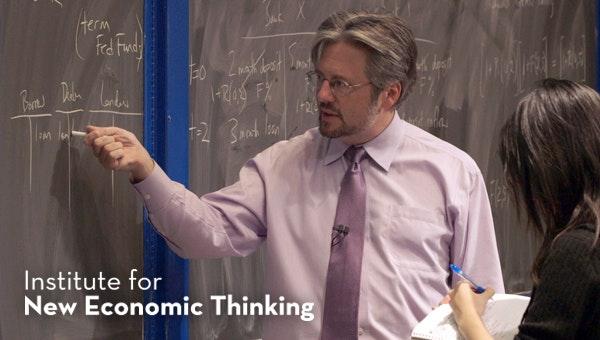
The last three or four decades have seen a remarkable evolution in the institutions that comprise the modern monetary system. The financial crisis of 2007-2009 is a wakeup call that we need a similar evolution in the analytical apparatus and theories that we use to understand that system. Produced and sponsored by the Institute for New Economic Thinking, this course is an attempt to begin the process of new economic thinking by reviving and updating some forgotten traditions in monetary thought that have become newly relevant.

Oct 26th 2026
13-24 Weeks
Private Equity and Venture Capital (Coursera) Coursera
Università Bocconi

Private Equity and Venture Capital (Coursera)

The course deals with the analysis of the private equity and venture capital business. Over the course, students will be provided with a deep understanding of the mechanism underpinning the creation and/or development of a firm and the financial support it can get from the financial system through venture capital investment. The course tries to discover how special financial intermediaries (called private equity investors) finance through equity companies belonging to different stages of their life-cycle, starting from the very beginning (startup and early stage) to a more mature phase (i.e. expansion, mature age, etc.) or also staying into crises and decline.

Nov 2nd 2026
5-12 Weeks
Alternative Approaches to Valuation and Investment (Coursera) Coursera
University of Melbourne

Alternative Approaches to Valuation and Investment (Coursera)

In this course, participants will develop an understanding of the intuitive foundations of asset and investment valuation, and how alternative valuation techniques may be used in practice. This is part of a Specialization in corporate finance created in partnership between the University of Melbourne and Bank of New York Mellon (BNY Mellon).

Oct 19th 2026
4 Weeks
Finance for Everyone: Markets (Coursera) Coursera
McMaster University

Finance for Everyone: Markets (Coursera)

Markets begins with one of the most common and important elements of the financial system – interest rates. You will learn why interest rates have always been a key barometer in determining the value of everything. You will explore the changing influence of interest rates; the impact of interest rates on consumption, investment and economic growth; and the bizarre realities of negative interest rates. Markets explains how interest rates change the value of all financial instruments, highlighting the role of the bond and stock markets that have toppled empires

Oct 19th 2026
4 Weeks
La Disrupción del Blockchain (Coursera) Coursera
Universidad Austral

La Disrupción del Blockchain (Coursera)

Muchas personas ya conocen al bitcoin, la moneda digital que en pocos años pasó de valer unos pocos centavos a miles de dólares. Pero esto es sólo la punta del iceberg de un fenómeno mucho más grande. El blockchain, la tecnología en la que se basa el bitcoin, tiene el potencial de disrumpir los negocios, las finanzas, las leyes y hasta los gobiernos.

Oct 26th 2026
5-12 Weeks