EdX

Mathematics 1 Part 2: Integral calculus, algebra, and applications (edX)

Mathematics 1 Part 2: Integral calculus, algebra, and applications (edX)

The second in a series of two courses which help you to master mathematics fundamentals and build your quantitative skillset for progression in high-growth careers, or to use as step towards further study at undergraduate level.

Class Deals by MOOC List - Click here and see EdX's Active Discounts, Deals, and Promo Codes.

Mathematics 1 Part 2 is the second of two self-paced courses from LSE which aim to introduce and develop and understanding of essential mathematical concepts, methods and techniques. This course can be taken alone or as part of the LSE MicroBachelors program in Mathematics and Statistics Fundamentals.
Part 2 covers the following topics:

  • Integration
  • Profit maximisation
  • Constrained optimisation
  • Matrices, vectors, and linear equations
  • Sequences, series, and financial modelling
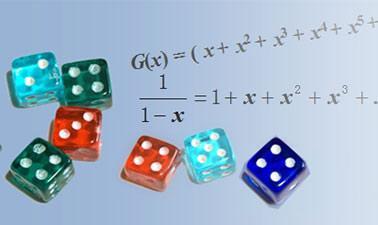
This course will equip you with the skills to solve unseen mathematical problems in these areas and will emphasise their applications to problems in economics, management, and related areas.
This course is part of the Mathematics and Statistics Fundamentals MicroBachelors® Program.

What you'll learn
By the end of this course you will have:

  • used the concepts, terminology, methods and conventions covered in the course to solve mathematical problems
  • the ability to solve unseen mathematical problems involving understanding of these concepts and application of these methods
  • seen how mathematical techniques can be used to solve problems in economics and related subjects
  • acquired skills in the methods of calculus (including multivariate calculus) and linear algebra, as required for their use in economics-based subjects

Syllabus

  • Integration
  • Profit maximisation
  • Constrained optimisation
  • Matrices, vectors, and linear equations
  • Sequences, series, and financial modelling
Go to Class
MOOC List is learner-supported. When you buy through links on our site, we may earn an affiliate commission.

Related Courses

Probability and Statistics in Data Science using Python (edX) EdX
University of California, San Diego,UC San DiegoX

Probability and Statistics in Data Science using Python (edX)

Using Python, learn statistical and probabilistic approaches to understand and gain insights from data. The job of a data scientist is to glean knowledge from complex and noisy datasets. Reasoning about uncertainty is inherent in the analysis of noisy data. Probability and Statistics provide the mathematical foundation for such reasoning.

Self Paced
Self-Paced
MathTrackX: Statistics (edX) EdX
University of Adelaide,AdelaideX

MathTrackX: Statistics (edX)

Understand fundamental concepts relating to statistical inference and how they can be applied to solve real world problems. This course will build on probability and random variable knowledge gained from previous courses in the MathTrackX XSeries with the study of statistical inference, one of the most important parts of statistics.

Self Paced
Self-Paced
A-Level Further Mathematics for Year 12 - Course 2: 3 x 3 Matrices, Mathematical Induction, Calculus Methods and Applications, Maclaurin Series, Complex Numbers and Polar Coordinates (edX) EdX
Imperial College London,ImperialX

A-Level Further Mathematics for Year 12 - Course 2: 3 x 3 Matrices, Mathematical Induction, Calculus Methods and Applications, Maclaurin Series, Complex Numbers and Polar Coordinates (edX)

Develop your thinking skills, fluency and confidence in A-level further maths and prepare for undergraduate STEM degrees. This course by Imperial College London is designed to help you develop the skills you need to succeed in your A-level further maths exams. You will investigate key topic areas to gain a deeper understanding of the skills and techniques that you can apply throughout your A-level study.

Self Paced
Self-Paced
On-Ramp to AP* Physics C: Mechanics (edX) EdX
Weston High School

On-Ramp to AP* Physics C: Mechanics (edX)

This course will help the students who have taken intro-level high-school physics to get ready for more advanced courses including AP Physics C: Mechanics. This short course is intended for the high-school students who have taken an introductory-level physics course, acquired some background in Mechanics and intend to take a more advanced course – for instance, AP Physics C.

Self Paced
Self-Paced
MathTrackX: Integral Calculus (edX) EdX
University of Adelaide,AdelaideX

MathTrackX: Integral Calculus (edX)

Discover concepts and techniques relating to integration and how they can be applied to solve real world problems. This course is part four of the MathTrackX XSeries Program which has been designed to provide you with a solid foundation in mathematical fundamentals and how they can be applied in the real world.

Self Paced
Self-Paced
Introduction to Linear Models and Matrix Algebra (edX) EdX
HarvardX,Harvard University

Introduction to Linear Models and Matrix Algebra (edX)

Learn to use R programming to apply linear models to analyze data in life sciences. Matrix Algebra underlies many of the current tools for experimental design and the analysis of high-dimensional data. In this introductory data analysis course, we will use matrix algebra to represent the linear models that commonly used to model differences between experimental units. We perform statistical inference on these differences. Throughout the course we will use the R programming language.

Self Paced
Self-Paced
Probability and Statistics I: A Gentle Introduction to Probability (edX) EdX
Georgia Institute of Technology,GTx

Probability and Statistics I: A Gentle Introduction to Probability (edX)

This course provides an introduction to basic probability concepts. Our emphasis is on applications in science and engineering, with the goal of enhancing modeling and analysis skills for a variety of real-world problems. In order to make the course completely self-contained (and to bring back long-lost memories), we’ll start off with Bootcamp lessons to review concepts from set theory and calculus.

Self Paced
Self-Paced
Public Sector Debt Statistics (edX) EdX
International Monetary Fund - IMF,IMFx

Public Sector Debt Statistics (edX)

The course examines coverage and accounting rules for public sector debt, valuation, classification, important methodological issues, and the sources and methods used for compiling the statistics. This course, presented by IMF Statistics Department, covers the fundamentals needed to compile and disseminate comprehensive public sector debt statistics (PSDS) that are useful for policy- and decision-makers, as well as other users.

Self Paced
Self-Paced
Calculus Applied! (edX) EdX
HarvardX,Harvard University

Calculus Applied! (edX)

Apply tools of single-variable calculus to create and analyze mathematical models used by real practitioners in social, life, and physical sciences. In this course, we go beyond the calculus textbook, working with practitioners in social, life and physical sciences to understand how calculus and mathematical models play a role in their work.

Self Paced
Self-Paced
MathTrackX: Differential Calculus (edX) EdX
University of Adelaide,AdelaideX

MathTrackX: Differential Calculus (edX)

Discover concepts and techniques relating to differentiation and how they can be applied to solve real world problems. This course will cover basic concepts and techniques relating to differentiation; a fundamental tool of calculus. Derivatives are key to the understanding of rates of change, that is the extent to which a function responds to changes in a dependent variable.

Self Paced
Self-Paced
BioStatistics (edX) EdX
DoaneX,Doane University

BioStatistics (edX)

This college-level, credit-eligible Biostatistics course will teach you the skills required for success in future analytical studies in biology. In this undergraduate-level biostatistics course, the learners will be introduced to the use of statistics and study designs in biology. Upon successful completion of this course, learners will be able to design experimental, quasi-experimental and observational studies that will meet regulatory guidelines; collect, analyze, and interpret data using appropriate statistical tools.

Self Paced
Self-Paced