EdX

Calculus Applied! (edX)

Calculus Applied! (edX)

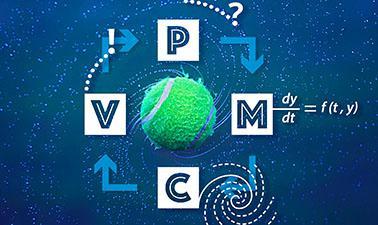
Apply tools of single-variable calculus to create and analyze mathematical models used by real practitioners in social, life, and physical sciences. In this course, we go beyond the calculus textbook, working with practitioners in social, life and physical sciences to understand how calculus and mathematical models play a role in their work.

Class Deals by MOOC List - Click here and see EdX's Active Discounts, Deals, and Promo Codes.

Through a series of case studies, you’ll learn:

  • How standardized test makers use functions to analyze the difficulty of test questions;
  • How economists model interaction of price and demand using rates of change, in a historical case of subway ridership;
  • How an x-ray is different from a CT-scan, and what this has to do with integrals;
  • How biologists use differential equation models to predict when populations will experience dramatic changes, such as extinction or outbreaks;
  • How the Lotka-Volterra predator-prey model was created to answer a biological puzzle;
  • How statisticians use functions to model data, like income distributions, and how integrals measure chance;
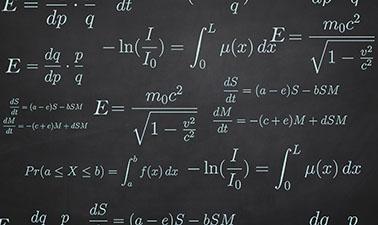
  • How Einstein’s Energy Equation, E=mc2 is an approximation to a more complicated equation.

With real practitioners as your guide, you’ll explore these situations in a hands-on way: looking at data and graphs, writing equations, doing calculus computations, and making educated guesses and predictions.
This course provides a unique supplement to a course in single-variable calculus. Key topics include application of derivatives, integrals and differential equations, mathematical models and parameters.
This course is for anyone who has completed or is currently taking a single-variable calculus course (differential and integral), at the high school (AP or IB) or college/university level. You will need to be familiar with the basics of derivatives, integrals, and differential equations, as well as functions involving polynomials, exponentials, and logarithms.
This is a course to learn applications of calculus to other fields, and NOT a course to learn the basics of calculus. Whether you’re a student who has just finished an introductory Calculus course or a teacher looking for more authentic examples for your classroom, there is something for you to learn here, and we hope you’ll join us!

What you'll learn

  • Authentic examples and case studies of how calculus is applied to problems in other fields
  • How to analyze mathematical models, including variables, constants, and parameters
  • Appreciation for the assumptions and complications that go into modeling real world situations with mathematics

Go to Class
MOOC List is learner-supported. When you buy through links on our site, we may earn an affiliate commission.

Related Courses

Cours préparatoire: Fonctions trigonométriques, logarithmiques et exponentielles (edX) EdX
École Polytechnique Fédérale de Lausanne,EPFLx

Cours préparatoire: Fonctions trigonométriques, logarithmiques et exponentielles (edX)

Ce cours donne les connaissances fondamentales liées aux fonctions trigonométriques, logarithmiques et exponentielles. Le cours propose une approche très détaillée et précise des notions fondamentales liées aux fonctions trigonométriques, logarithmiques et exponentielles.

Self Paced
Self-Paced
Further Mathematics Year 13 course 2: Applications of Differential Equations, Momentum, Work, Energy & Power, The Poisson Distribution, The Central Limit Theorem, Chi Squared Tests, Type I and II Errors (edX) EdX
Imperial College London,ImperialX

Further Mathematics Year 13 course 2: Applications of Differential Equations, Momentum, Work, Energy & Power, The Poisson Distribution, The Central Limit Theorem, Chi Squared Tests, Type I and II Errors (edX)

Develop your thinking skills, fluency and confidence in the applied mathematics content of A-level further maths and prepare for undergraduate STEM degrees. This course by Imperial College London is designed to help you develop the skills you need to succeed in your A-level further maths exams. You will investigate key topic areas to gain a deeper understanding of the skills and techniques that you can apply throughout your A-level study.

Self Paced
5-12 Weeks
Algèbre Linéaire (Partie 2) (edX) EdX
École Polytechnique Fédérale de Lausanne,EPFLx

Algèbre Linéaire (Partie 2) (edX)

Un MOOC francophone d'algèbre linéaire accessible à tous, enseigné de manière rigoureuse et ne nécessitant aucun prérequis. Vous voulez apprendre l'algèbre linéaire, un précieux outil complémentaire à vos connaissances acquises durant vos études en économie, ingénierie, physique, ou statistique? Ou simplement pour la beauté de la matière? Alors ce cours est fait pour vous!

Self Paced
Self-Paced
Effective Thinking Through Mathematics (edX) EdX
University of Texas at Austin,UTAustinX

Effective Thinking Through Mathematics (edX)

Learn tools of effective thinking through puzzles and mathematics in this fun and fascinating course. A wondrously romantic belief is that brilliant thinkers magically produce brilliant ideas: Einstein jostles his hair and relativity falls out. We can enjoy these fanciful visions of leaps of genius, but we should not be fooled into believing that they’re reality.

Self Paced
Self-Paced
A-Level Further Mathematics for Year 12 - Course 2: 3 x 3 Matrices, Mathematical Induction, Calculus Methods and Applications, Maclaurin Series, Complex Numbers and Polar Coordinates (edX) EdX
Imperial College London,ImperialX

A-Level Further Mathematics for Year 12 - Course 2: 3 x 3 Matrices, Mathematical Induction, Calculus Methods and Applications, Maclaurin Series, Complex Numbers and Polar Coordinates (edX)

Develop your thinking skills, fluency and confidence in A-level further maths and prepare for undergraduate STEM degrees. This course by Imperial College London is designed to help you develop the skills you need to succeed in your A-level further maths exams. You will investigate key topic areas to gain a deeper understanding of the skills and techniques that you can apply throughout your A-level study.

Self Paced
Self-Paced
Introducción a las ecuaciones diferenciales (edX) EdX
Galileo University,GalileoX

Introducción a las ecuaciones diferenciales (edX)

Aprende el lenguaje de las ecuaciones diferenciales ordinarias y su aplicación en la modelación de muchos de los fenómenos que nos rodean. Este curso en línea se centra en el estudio de las ecuaciones diferenciales ordinarias (EDOs) de primer orden y consta de una introducción a la terminología y teoría, haciendo especial énfasis en la solución analítica de las mismas, sus propiedades y su aplicación en el modelado y resolución de problemas en física e ingeniería, entre otros.

Self Paced
Self-Paced
Introducción a Matemáticas para Finanzas y Negocios (edX) EdX
Tecnológico de Monterrey,TecdeMonterreyX

Introducción a Matemáticas para Finanzas y Negocios (edX)

El objetivo del curso es entender como ciertos conceptos matemáticos se utilizan de forma recurrente para analizar problemas financieros y de negocios. En la primera parte del curso se analiza el caso de las funciones lineales donde se introduce el concepto de pendiente para cuantificar la dependencia entre las variables.

Self Paced
Self-Paced
Observation Theory: Estimating the Unknown (edX) EdX
Delft University of Technology,DelftX

Observation Theory: Estimating the Unknown (edX)

Learn how to estimate parameters from observational data for real-world engineering applications and assess the quality of the results. Are you an engineer, scientist or technician? Are you dealing with measurements or big data, but are you unsure about how to proceed? This is the course that teaches you how to find the best estimates of the unknown parameters from noisy observations. You will also learn how to assess the quality of your results.

Self Paced
Self-Paced