EdX

How to Survive Your PhD (edX)

How to Survive Your PhD (edX)

Learn evidence-based strategies for emotional resilience and supervision that will help you finish your PhD or research degree. You need to be smart to begin a PhD - but you need to be resilient to finish one. Between one-quarter and one-third of all research students never finish their degree. The PhD is an emotional journey as much as it is an intellectual one.

Class Deals by MOOC List - Click here and see EdX's Active Discounts, Deals, and Promo Codes.

What kinds of emotions does the research degree process provoke? What strategies can help students deal with the emotional highs and lows? How can academic advisors, family and friends help research students cope with these stresses - and celebrate the successes?

This course is primarily designed for masters, PhD, and research students and the academics who are tasked with helping them, but you may also be a family member or friend of a PhD student who is seeking to better understand what your loved one is going through.
By directly addressing the emotional issues, and by helping us see the connections between emotional resilience and success, this course aims to help us all create a more supportive academic environment, where students can do their best research work.
What you'll learn:

  • Understand the common emotional experiences of research students and why they tend to have emotional issues in common.
  • Discuss and create strategies and approaches to help research students cope with the emotional challenges of research study.
  • Help academics and prospective academics become more effective research supervisors.

Go to Class
MOOC List is learner-supported. When you buy through links on our site, we may earn an affiliate commission.

Related Courses

That's So Meta(cognitive)! (edX) EdX
Smithsonian,SmithsonianX

That's So Meta(cognitive)! (edX)

That’s so Meta(cognitive)! — investigates how explicitly teaching students metacognitive strategies helps them become more effective learners, able to integrate knowledge rather than just memorize isolated science facts and definitions.

Self Paced
Self-Paced
Reconciliation Through Indigenous Education (edX) EdX
The University of British Columbia,UBCx

Reconciliation Through Indigenous Education (edX)

Advancing reconciliation in classrooms, organizations, and communities through the teaching and learning of Indigenous ways of knowing. This course will help you envision how Indigenous histories, perspectives, worldviews, and approaches to learning can be made part of the work we do in classrooms, organizations, communities, and our everyday experiences in ways that are thoughtful and respectful.

Sep 22nd 2026
5-12 Weeks
Teaching & Learning in the Diverse Classroom (edX) EdX
CornellX,Cornell University

Teaching & Learning in the Diverse Classroom (edX)

Through real stories, reflection, and key research, learn how to create and sustain inclusive, student-centered learning environments. U.S.-based and higher education-centered, this is a five-week, instructor-paced course that offers an inclusive teaching framework with multiple entry points for reflection and exploration of the research on learning and diversity.

Self Paced
Self-Paced
Sign Language Science: Factors Contributing to Natural Learning (edX) EdX
Georgetown University,GeorgetownX

Sign Language Science: Factors Contributing to Natural Learning (edX)

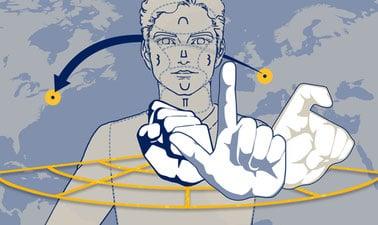
This course promotes a better understanding of the factors that may affect how people learn signed language. In this course, we will look at how multiple, varying factors can account for language-learning patterns. Age, for example, is a key factor that predicts fluency. Another topic of particular importance to signed languages is the mind.

Self Paced
Self-Paced
The Postdoc Academy: Succeeding as a Postdoc (edX) EdX
Boston University,BUx

The Postdoc Academy: Succeeding as a Postdoc (edX)

Create a rewarding postdoc experience that will launch you into your chosen career path by developing strategies and skills to successfully navigate your time as a postdoc. Are you a postdoc looking for flexible professional development? Are you looking for a place to connect with and regularly interact with other postdocs? This course is built for you!

Mar 18th 2024
5-12 Weeks
Teaching with Physical Computing: Introduction to Project-Based Learning (edX) EdX
Arm Education,ArmEducationX

Teaching with Physical Computing: Introduction to Project-Based Learning (edX)

This course introduces the fundamental concepts underpinning Project-Based Learning, and how you can apply it with programmable devices to bring STEM & Computing to life in the classroom. Arm’s first professional development course introduces you to the core elements of physical computing. This includes common Arm-based hardware platforms such as Arduino, Raspberry Pi and micro:bit, as well as the learning theories and concepts that underpin a Project-Based Learning pedagogy. The course helps you transform your approach to teaching Computer Science in the classroom, sharing best practice and practical guides to give all learners the opportunity to develop and practice a broad range of STEM skills.

Self Paced
Self-Paced
Teaching Critical Thinking through Art with the National Gallery of Art (edX) EdX
Smithsonian,SmithsonianX

Teaching Critical Thinking through Art with the National Gallery of Art (edX)

Learn how to integrate works of art using Artful Thinking routines, effective strategies from Project Zero at Harvard University, in this online course for teachers of all levels and subjects. Based on the National Gallery of Art’s popular Art Around the Corner professional development program for teachers in Washington, D.C., this five-part online course provides everything you need to begin creating a culture of critical thinking and collaboration for any classroom, subject, or level.

Self Paced
Self-Paced
Equity and Inclusion in Education (edX) EdX
SDGAcademyX,SDG Academy

Equity and Inclusion in Education (edX)

The equitable education online course aims to educate, raise awareness and build capacity on ten core aspects of equitable education, why they are important, and what can be done in order to implement them in practice. It is directed at a broad audience of education experts and practitioners, namely policy-makers, government officials, NGOs/CBOs in the education sector, educators and university students.

Self Paced
Self-Paced