Getting to Know Catalonia: An Introduction to the Catalan Language, Culture and Society (FutureLearn)

Getting to Know Catalonia: An Introduction to the Catalan Language, Culture and Society (FutureLearn)

Get an introduction to Catalan society, by learning about its history, language and culture. Understand all things Catalan. You might have heard about Catalonia on the news, or visited Barcelona sometime. But how much do you really know about Catalan society? This course will introduce you to the history, language and culture of Catalonia, from its origins to the present day.

Class Deals by MOOC List - Click here and see FutureLearn's Active Discounts, Deals, and Promo Codes.

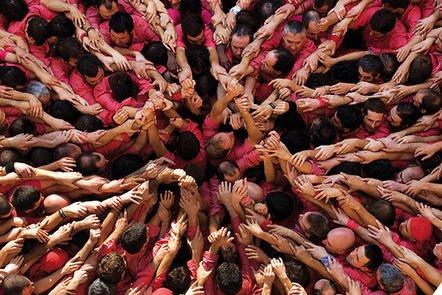
You’ll become familiar with the social customs of Catalan society, including local folklore and other cultural traditions.
You’ll understand the main features of the Catalan language, as well as its evolution throughout time.
You’ll learn about the characteristics of Catalan art, and its influence across the world.

What topics will you cover?

  • Economy, society and the welfare state in Catalonia
  • Catalonia as a millennial nation
  • Catalan media
  • The Catalan language
  • Catalonia’s main artistic and cultural expressions

What will you achieve?
By the end of the course, you'll be able to...

  • Identify the main economic sectors and knowledge points of Catalonia
  • Describe the main historical events in Catalonia, from the origins to the current political situation
  • Analyze the impact of the Catalan language within the communicative space of Catalonia, and abroad
  • Distinguish the characteristic features of the Catalan language, as well as its history and evolution
  • Explore the main artistic and cultural expressions of Catalonia
Go to Class
MOOC List is learner-supported. When you buy through links on our site, we may earn an affiliate commission.

Related Courses

Irish 103: An Introduction to Irish Language and Culture (FutureLearn) FutureLearn
Dublin City University

Irish 103: An Introduction to Irish Language and Culture (FutureLearn)

Learn to talk about occupations, daily life and personal skills in this third introductory course on the Irish language. Develop your understanding of Irish language and culture. On this course, you will develop your written and spoken understanding of basic words and phrases about yourself, occupations, daily routines, shopping, and skills and abilities.

Self Paced
4 Weeks
Multilingual Practices: Tackling Challenges and Creating Opportunities (FutureLearn) FutureLearn
University of Groningen

Multilingual Practices: Tackling Challenges and Creating Opportunities (FutureLearn)

Learn about central aspects of multilingualism in today's globalised societies, such as cognition, policies and education. In a world of globalisation, people who do not share the same language meet more often every day. Being able to deal with these multilingual practices in an effective way can give you an advantage in your daily life and work.

Self Paced
4 Weeks
Irish 102: An Introduction to Irish Language and Culture (FutureLearn) FutureLearn
Dublin City University

Irish 102: An Introduction to Irish Language and Culture (FutureLearn)

Find out how to speak, write and understand basic words, phrases and dialogues in Irish. Develop your knowledge of the basics of the Irish language. Ireland is home to one of the oldest living languages in Europe. On this course, you’ll improve your understanding of basic spoken words, phrases and dialogues in Irish.

Self Paced
4 Weeks
World War 1: Trauma, Memory, Controversy (FutureLearn) FutureLearn
The Open University

World War 1: Trauma, Memory, Controversy (FutureLearn)

Explore the traumatic effects of WW1 on soldiers and civilians. Discover how we remember and debate the history of this war. In this free online course, you will study the social, cultural, medical and diplomatic history of the First World War. Topics range from physical and mental trauma suffered by combatants to the traumatic experiences of civilians in wartime.

Self Paced
4 Weeks
Accounting for Death in War: Separating Fact from Fiction (FutureLearn) FutureLearn
Royal Holloway, University of London,Every Casualty Counts

Accounting for Death in War: Separating Fact from Fiction (FutureLearn)

Discover the main methods used to account for war deaths, how they've been used and practice using them yourself. Calculating the number of deaths during a war is a difficult, but necessary, task - having accurate information is crucial for political and societal debates and decisions. On this course you will explore the methods currently used to account for war deaths and then apply these methods to particular wars.

Self Paced
3 Weeks
Archaeology: from Dig to Lab and Beyond (FutureLearn) FutureLearn
University of Reading

Archaeology: from Dig to Lab and Beyond (FutureLearn)

Get an introduction to studying archaeology, exploring exciting discoveries in the Vale of Pewsey, near to Stonehenge and Avebury. Chart the progress of an archaeological excavation from dig to lab and beyond. We’ll show you around our field school at the Vale of Pewsey, a relatively untouched site compared to its famous neighbour, Stonehenge.

Self Paced
2 Weeks
Introduction to Norwegian (FutureLearn) FutureLearn
University of Oslo

Introduction to Norwegian (FutureLearn)

Start learning Norwegian today. Learn to speak, write and understand basic Norwegian with this four-week course. Explore Norwegian culture and start to learn Norwegian. Are you planning a visit to Norway for study, travel or work? Are you interested in Norwegian culture? This Norwegian language course will give you the basic language skills to make new friends and cope with everyday situations. It will also help you discover more about Norwegian society and culture.

Self Paced
4 Weeks
The Scientific Revolution: Understanding the Roots of Modern Science (FutureLearn) FutureLearn
University of Groningen

The Scientific Revolution: Understanding the Roots of Modern Science (FutureLearn)

Learn about the seventeenth-century Scientific Revolution and its role in shaping the modern Western world. How did the science of today come about? What constitutes ‘modern’ science? How does science relate to religion? Answer these questions and more with this course that travels back in time to the seventeenth-century Scientific Revolution to explore the roots of modern science.

Self Paced
3 Weeks
Sino-Japanese Interactions Through Rare Books (FutureLearn) FutureLearn
Keio University

Sino-Japanese Interactions Through Rare Books (FutureLearn)

Learn about the role of books in the relationship between the cultures of Japan and China, with this free online course. Books have played a major role in the formation of Japan’s culture, particularly those brought from China. On this course we’ll examine how big an impact these books have had, as well as looking at how books and religion are connected in Japan and East Asia, and the history of publishing in Japan.

Self Paced
3 Weeks
A History of Royal Fashion (FutureLearn) FutureLearn
University of Glasgow,Historic Royal Palaces

A History of Royal Fashion (FutureLearn)

From Henry VIII to Queen Elizabeth II, explore how British kings and queens have influenced fashion over 500 years. Learn how royalty used fashion to entertain, control and impress. A History of Royal Fashion takes you into the wardrobes of British kings and queens across five royal dynasties from the Tudors, Stuarts and Georgians to the Victorians and Windsors.

Self Paced
5-12 Weeks
Working with Translation: Theory and Practice (FutureLearn) FutureLearn
Cardiff University

Working with Translation: Theory and Practice (FutureLearn)

Explore what it means to communicate in multiple languages in a variety of contexts, and discover your inner translator. Translation is one of the most fundamental of human activities, allowing us to interact with one another within and across cultures. Drawing on the research and expertise of specialists at Cardiff University and the University of Namibia, on this course, you will discover a wealth of practical tips and knowledge about the nature of translation in an increasingly multilingual world.

Self Paced
4 Weeks