Exploring the World of Electric Buses: Advancing Zero-Emission Public Transport (FutureLearn)

Exploring the World of Electric Buses: Advancing Zero-Emission Public Transport (FutureLearn)

Understand the planning, operation, and maintenance of electric buses to advance a cleaner and greener public transport system. On this six-week course from the Transformative Urban Mobility initiative (TUMI), you’ll learn how e-buses are implemented, operated, financed, and maintained. As you explore the technology, business models, and urban issues of electric mobility, you’ll be preparing for the future of public transport.

Class Deals by MOOC List - Click here and see FutureLearn's Active Discounts, Deals, and Promo Codes.

Discover e-buses with TUMI
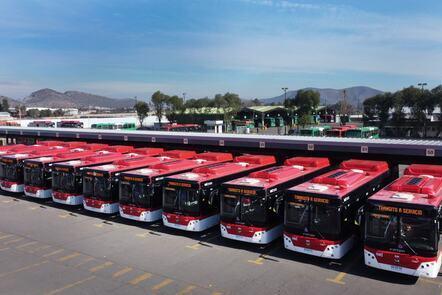
With a history dating back over 140 years, electric buses have only recently begun to multiply in cities all around the world. They now play a vital role in reducing pollution, cutting costs, and diversifying public transport.

Gain an overview of electric buses and their benefits
Like all electric vehicles, e-buses emit no pollution and are considerably more energy efficient. Research has also shown that they help boost diversity among drivers and passengers.
The course will start with a general introduction to electric buses and their benefits for society, the environment, and individuals.

Understand e-bus planning, financing, and maintenance
Once you’ve understood the motivations for implementing electric buses, you’ll take a closer look at what that implementation might involve.
Weeks 2, 3, and 4 of the course will delve into the planning, financing, and maintenance of e-bus projects.

Prepare for a greener future in global public transport
The overarching aim of this course is on sharing ideas and best practices for zero-emission public transport.
You’ll join an vibrant online community of transport professionals and enthusiasts, who are all committed to working towards a greener future in mobility.
Note: this is the second course in a series on electric mobility, along with ‘Exploring the World of Electric Mobility: Key Concepts and Strategies’.

Syllabus

Week 1: Introduction to Electric Buses and their Benefits
Week 2: E-Bus Project Planning & Stakeholders Involvement
Week 3: Technology Selection & Financing Models
Week 4: Operations Planning & Monitoring
Week 5: Staff Training & Employment Opportunities
Week 6: End-of-Life Battery - Scrapping and Recycling Practices of Batteries

What will you achieve?
By the end of the course, you‘ll be able to...

  • Demonstrate an extensive understanding of zero-emission electric buses, their significance, and their role in addressing environmental concerns and sustainable transportation.
  • Explore various aspects of electric buses: technology, policy, environmental impacts, business models, and integration into urban transport systems.
  • Evaluate diverse resources and real-world examples for informed decision-making while developing a broader perspective and contributing effectively to the development of zero-emission solutions in their specific contexts.
  • Identify the latest advancements and innovations in zero-emission electric buses, keeping up-to-date with the dynamic landscape of this field.
  • Compare different types of electric buses and their applications, while understanding their specific features and capabilities in various transportation scenarios.
  • Assess the potential benefits and challenges of implementing zero-emission buses in various settings, considering infrastructure requirements, operational considerations, and regulatory aspects.
  • Develop personal and professional growth by cultivating critical thinking and problem-solving skills in sustainable transportation. Gain valuable expertise in electric buses, unlocking numerous opportunities for professional advancement.
  • Demonstrate the readiness to actively contribute and drive positive change during the shift towards sustainable, inclusive, accessible, and eco-friendly transportation systems by comprehensively grasping the concept of zero-emission electric buses.

Who is the course for?
This course is designed for anyone interested in learning more about electric buses, their benefits, and their implementation within transport systems around the world.
It is particularly suited to learners working or planning to work in the transport sector, e.g. policy-makers, urban planners, architects, transport professionals, students, and researchers.
Go to Class
MOOC List is learner-supported. When you buy through links on our site, we may earn an affiliate commission.

Related Courses

Electric Cars: Business (edX) EdX
Delft University of Technology,DelftX

Electric Cars: Business (edX)

Get an in-depth understanding of varied profitable business models for electric cars. Electric cars are more than a novel means of mobility. They have been recognized as an essential building block of the energy transition. Fulfilling their promise will imply a significant change in the technical, digital and social dimensions of transport and energy infrastructure. If you want to explore the business opportunities this new market offers, then this is the course for you!

Self Paced
Self-Paced
Mastering EV Cooling: Advanced Thermal Management (Coursera) Coursera
Coursera Instructor Network

Mastering EV Cooling: Advanced Thermal Management (Coursera)

Electric Vehicle Thermal Management is a foundational course designed to provide learners with a comprehensive overview of the crucial aspects of managing thermal conditions in electric vehicles (EVs). As the EV industry continues to grow, optimizing thermal performance becomes paramount for safety, efficiency, and overall vehicle performance.

May 11th 2026
1 Week
Sustainable Transport and Shared Mobility (FutureLearn) FutureLearn
Cenex

Sustainable Transport and Shared Mobility (FutureLearn)

Delve into the concepts of shared mobility and how it can provide a sustainable solution to help reduce road transport emissions. Understand the environmental impact of road transport. The transition to low emission road transport is gathering pace as the world battles to control emissions-induced climate change and urban air quality issues.

Jan 10th 2022
3 Weeks
Electric and Conventional Vehicles (edX) EdX
Chalmers University of Technology,ChalmersX

Electric and Conventional Vehicles (edX)

Learn how electric and conventional powertrains work and methods to analyse their performance and energy consumption. Electric powertrains are estimated to propel a large part of road vehicles in the future, due to their high efficiency and zero tailpipe emissions. But, the cost and weight of batteries and the time to charge them are arguments for the conventional powertrain in many vehicles.

Self Paced
Self-Paced
Electric Two-and-Three-Wheelers: Steering the Mobility Revolution (FutureLearn) FutureLearn
RWTH Aachen,Transforming Urban Mobility Initiative - TUMI,GIZ,PEM Motion

Electric Two-and-Three-Wheelers: Steering the Mobility Revolution (FutureLearn)

Join this six-week course to explore the surging popularity of electric two-and-three-wheelers across the globe. The electric transportation sector is a rapidly changing industry that relies on innovative leaders to help shape policy and strive to create empowering solutions for the future. This six-week course offers an in-depth look into the surging popularity of electric two-and-three-wheelers across the globe, particularly in the Global South.

Mar 23rd 2026
5-12 Weeks
Electric Vehicle Operation and Diagnosis (Coursera) Coursera
Starweaver

Electric Vehicle Operation and Diagnosis (Coursera)

"Electric Vehicle Operation and Diagnosis" is a course tailored to meet the increasing demand for professionals skilled in troubleshooting electric vehicles (EVs). Participants will gain a solid understanding of EV fundamentals, system operations, and diagnostic techniques. The course emphasizes environmental benefits and sustainable practices in transportation.

May 25th 2026
4 Weeks
Renewable Energy Futures (Coursera) Coursera
University of Colorado Boulder

Renewable Energy Futures (Coursera)

Renewable energy's future is bright, yet uncertain. Will it continue to grow rapidly? Is current growth sufficient to achieve climate stabilization? How do related technologies, like electric vehicles and heat pumps, fit in? This course will shed light on the many confusing and at-times inconsistent claims and predictions for renewable energy.

May 25th 2026
5-12 Weeks
EV Evolution: Comprehensive Introduction to EVs (Coursera) Coursera
Coursera Instructor Network

EV Evolution: Comprehensive Introduction to EVs (Coursera)

As countries around the world work together to tackle global warming, electric mobility is considered to be one of the major initiatives to reduce the carbon footprint across the transportation sector from cycles to aircraft. This course provides you with the fundamentals of Electric Vehicle (EV) technology, laying a strong foundation to learn further specific topics in electric mobility.

May 11th 2026
1 Week
Electric Vehicles and Mobility (Coursera) Coursera
École des Ponts ParisTech

Electric Vehicles and Mobility (Coursera)

The purpose of Electric Vehicles and Mobility is to help you, whatever your profile, your training or your country, find your own answers to questions such as: - Will electric vehicles be the last to be allowed in megalopolises in the 21st century? - Does the environmental gain from vehicle electrification justify heavy investment in charging infrastructure? - Are electric vehicles only for wealthy people in developed countries?

Jun 1st 2026
5-12 Weeks
Sustainable Transportation Networks and Streetscapes (Coursera) Coursera
Johns Hopkins University

Sustainable Transportation Networks and Streetscapes (Coursera)

This course will evaluate best practices in transportation networks, thoroughfares, and streetscape designs for the effective movement of people, goods, and services in a region. Sustainable public and private streetscape design and application will be reviewed and evaluated for applications for sustainable cities. Considerations are assessed for smart urban planning, growth, and lifestyle. Strategies for creating equitable, healthy, and sustainable communities are also evaluated.

Jun 1st 2026
3 Weeks