Electrodynamics: Analysis of Electric Fields (Coursera)

Electrodynamics: Analysis of Electric Fields (Coursera)

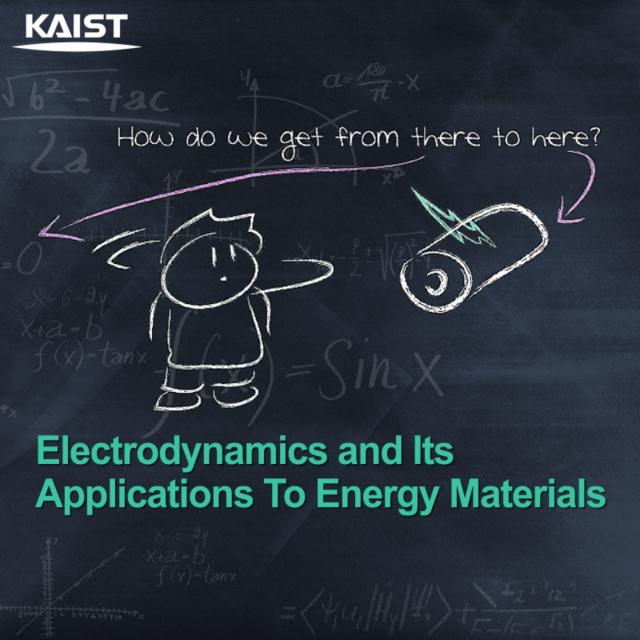
This course is a continuation of Electrodynamics: An Introduction. Here, we will cover different methods of calculating an electric field. In addition, we will introduce polarization, dielectrics, and how electric fields create dipoles.

Class Deals by MOOC List - Click here and see Coursera's Active Discounts, Deals, and Promo Codes.

Learners will
• Be able to apply symmetry and other tools to calculate the electric field.
• Understand what susceptibility, polarization, and dipoles are.
Additionally, students will learn to visualize Maxwell equations in order to apply the derived mathematics to other fields, such as heat/mass diffusion and meso-scale electromechanical properties, and to create patents that could lead to potential innovations in energy storage and harvesting. The approach taken in this course complements traditional approaches, covering a fairly complete treatment of the physics of electricity and magnetism, and adds Feynman’s unique and vital approach to grasping a picture of the physical universe. Furthermore, this course uniquely provides the link between the knowledge of electrodynamics and its practical applications to research in materials science, information technology, electrical engineering, chemistry, chemical engineering, energy storage, energy harvesting, and other materials related fields.

Course 2 of 4 in the Electrodynamics Specialization

Syllabus

WEEK 1
The Electric Field in Various Circumstances
The primary focus of the first portion of this module is the concept of dipole moments, both for a single molecule and an arbitrary distribution. The equations for both the potential and the electric field of a dipole are derived within the first part of the lecture. This lecture also describes the method of images and how it can be applied to solving the electric field from different geometries.

WEEK 2
The Electric Field in Various Circumstances (cont'd)
In this module, we cover how to solve for 2D electric fields, and also introduce some basic applications for electrostatics. We describe how imaginary numbers can be used to plot the electric field and equipotential surfaces. Then, we discuss how concepts such as natural resonance, potential distribution, and grid spacing can help design modern devices and experiments.

WEEK 3
Electrostatic Energy
This module introduces the importance of electrostatic energy and describes how to evaluate it. It also covers how to use the concept of virtual work and how that can be used to find force; specifically we examine this in respect to capacitors. Finally, we discuss where the electrostatic energy can be located.

WEEK 4
Introduction to Dielectrics
In the first module concerning dielectrics, we discuss what constitutes a dielectric material and how their presence effects the operation of a capacitor. Then, we cover many ways to characterize a dielectric such as susceptibility and displacement. Finally, we investigate the forces on a dielectric with respect to the capacitor.

WEEK 5
Dielectrics (cont'd)
This module starts by describing how to obtain polarization for molecules under an electric field. Then, we cover methods to solve for the dielectric constant, such as Clausius-Mossotti Equation and Onsager Equation. Our last topic covered is the concept of ferroelectricity and how ferroelectric materials can be modeled by the Curie-Weiss law and other methods.

Go to Class
MOOC List is learner-supported. When you buy through links on our site, we may earn an affiliate commission.

Related Courses

Introducción a los modelos de demanda de transporte (Coursera) Coursera
Pontificia Universidad Católica de Chile

Introducción a los modelos de demanda de transporte (Coursera)

¿Cuántos viajan? ¿Por dónde? ¿En qué modo? En general, los proyectos de transporte (tanto de infraestructura como gestión) poseen plazos y costos de realización sumamente elevados. Por estos motivos, la evaluación de este tipo de proyectos requiere de una adecuada estimación de la demanda para su correcto dimensionamiento.

Aug 17th 2026
5-12 Weeks
Digital Signal Processing 4: Applications (Coursera) Coursera
École Polytechnique Fédérale de Lausanne

Digital Signal Processing 4: Applications (Coursera)

Digital Signal Processing is the branch of engineering that, in the space of just a few decades, has enabled unprecedented levels of interpersonal communication and of on-demand entertainment. By reworking the principles of electronics, telecommunication and computer science into a unifying paradigm, DSP is a the heart of the digital revolution that brought us CDs, DVDs, MP3 players, mobile phones and countless other devices.

Aug 17th 2026
3 Weeks
Fisica II (Federica Web Learning) Federica Web Learning
University of Naples Federico II

Fisica II (Federica Web Learning)

Il corso esplora gli argomenti di elettromagnetismo classico e di ottica. La successione degli argomenti è quella tradizionale dell’impostazione didattica italiana e prevede: l’elettrostatica, le correnti elettriche, la magnetostatica, l’elettrodinamica, i fenomeni elettromagnetici nella materia e infine l’ottica.

No sessions available
5-12 Weeks
Is this Physics or Magic? Learning Physics through Minds-on Science Demonstration (edX) EdX
National University of Singapore,NUS

Is this Physics or Magic? Learning Physics through Minds-on Science Demonstration (edX)

Is this MOOC an introduction to Physics or Magic? Here's calling all curious minds from every corner of the globe to join us to learn physics via science demonstrations which are exciting, visually appealing and thought provoking. In this MOOC, you'll get to witness how demonstrations can add reality and vividness to the process of concept formation, and pick up one or two scientific nuggets along the way.

Sep 5th 2023
5-12 Weeks
Advanced Functional Ceramics (Coursera) Coursera
Yonsei University

Advanced Functional Ceramics (Coursera)

To realize next-generation devices, novel ceramic materials with ultimate physical and chemical properties are required. For this purpose, a few intrinsic and extrinsic approaches for the development of new functional ceramics are proceeding. This course provides the fundamentals of functional ceramics and the materials design rules for developing advanced ceramics with ultimate physical and chemical properties.

Aug 17th 2026
5-12 Weeks
Electrodynamics: Electric and Magnetic Fields (Coursera) Coursera
Korea Advanced Institute of Science and Technology - KAIST

Electrodynamics: Electric and Magnetic Fields (Coursera)

This course is a continuation of Electrodynamics: An Introduction and Electrodynamics: Analysis of Electric Fields. Here, we will introduce magnetostatics and relate it to the material we learned previously. In addition, we will cover the basics of the electromotive force and how it can be used to build different devices.

Aug 10th 2026
5-12 Weeks
Digital Signal Processing 1: Basic Concepts and Algorithms (Coursera) Coursera
École Polytechnique Fédérale de Lausanne

Digital Signal Processing 1: Basic Concepts and Algorithms (Coursera)

Digital Signal Processing is the branch of engineering that, in the space of just a few decades, has enabled unprecedented levels of interpersonal communication and of on-demand entertainment. By reworking the principles of electronics, telecommunication and computer science into a unifying paradigm, DSP is a the heart of the digital revolution that brought us CDs, DVDs, MP3 players, mobile phones and countless other devices.

Aug 17th 2026
4 Weeks
Remote Sensing Image Acquisition, Analysis and Applications (Coursera) Coursera
UNSW Sydney - University of New South Wales

Remote Sensing Image Acquisition, Analysis and Applications (Coursera)

Welcome to Remote Sensing Image Acquisition, Analysis and Applications, in which we explore the nature of imaging the earth's surface from space or from airborne vehicles. This course covers the fundamental nature of remote sensing and the platforms and sensor types used. It also provides an in-depth treatment of the computational algorithms employed in image understanding, ranging from the earliest historically important techniques to more recent approaches based on deep learning.

Aug 17th 2026
13-24 Weeks
Quantitative Methods (Coursera) Coursera
University of Amsterdam

Quantitative Methods (Coursera)

Discover the principles of solid scientific methods in the behavioral and social sciences. Join us and learn to separate sloppy science from solid research! This course will cover the fundamental principles of science, some history and philosophy of science, research designs, measurement, sampling and ethics. The course is comparable to a university level introductory course on quantitative research methods in the social sciences, but has a strong focus on research integrity. We will use examples from sociology, political sciences, educational sciences, communication sciences and psychology.

Aug 17th 2026
5-12 Weeks
Digital Signal Processing 2: Filtering (Coursera) Coursera
École Polytechnique Fédérale de Lausanne

Digital Signal Processing 2: Filtering (Coursera)

Digital Signal Processing is the branch of engineering that, in the space of just a few decades, has enabled unprecedented levels of interpersonal communication and of on-demand entertainment. By reworking the principles of electronics, telecommunication and computer science into a unifying paradigm, DSP is a the heart of the digital revolution that brought us CDs, DVDs, MP3 players, mobile phones and countless other devices.

Aug 17th 2026
3 Weeks
Introduction to Embedded Systems Software and Development Environments (Coursera) Coursera
University of Colorado Boulder

Introduction to Embedded Systems Software and Development Environments (Coursera)

Welcome to the Introduction to Embedded Systems Software and Development Environments. This course is focused on giving you real world coding experience and hands on project work with ARM based Microcontrollers. You will learn how to implement software configuration management and develop embedded software applications. Course assignments include creating a build system using the GNU Toolchain GCC, using Git version control, and developing software in Linux on a Virtual Machine.

Aug 17th 2026
4 Weeks