Earth Observation from Space: the Optical View (FutureLearn)

Offered by European Space Agency,
Earth Observation from Space: the Optical View (FutureLearn)

Discover how optical Earth observation data is gathered and used in this free online course from the European Space Agency (ESA). Earth observation (EO) encompasses a series of techniques that use remote sensing to monitor changes to our climate, and natural and built environment.

Class Deals by MOOC List - Click here and see FutureLearn's Active Discounts, Deals, and Promo Codes.

Get an introduction to optical Earth observation
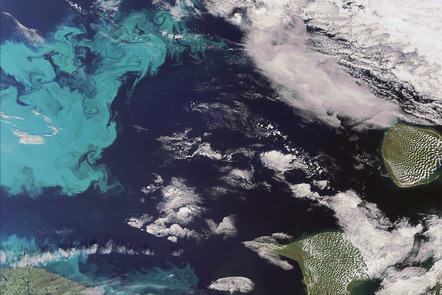
This free online course will provide an introduction to optical Earth observation - monitoring our planet from satellites, using photography, imaging in various wavelengths, lidar and other optical sensing technologies.
You’ll find out how satellite data is acquired and used, the range of data types available, and the terminology and techniques involved. The course will also provide detailed case studies of how this data is used in diverse fields, from climate science to humanitarian relief, monitoring of urban change to agriculture, and many other areas.

Learn with ESA - Europe’s Earth observation leader
The course has been developed by the European Space Agency (ESA) - the leading enabler of satellite Earth observation science and technology in Europe.
It will use case studies, real-world applications, and data from ESA and other Earth observation programmes, to help you discover:
how we observe and measure the Earth with optical sensors
how satellite data is used alongside other forms of measurement
the main types of data acquired through Copernicus and other satellites
how to conduct simple analysis using a range of different types of optical Earth observation data
how optical EO data is used in a range of scientific, policy and decision-making areas, in conjunction with models
Alongside articles and videos, interactive visualisation tools, additional resources and discussions with other learners will provide you with the opportunity to understand Earth observation in depth.
(Animations, data visualisations and imagery from ESA and NASA are provided courtesy of ESA and NASA. This course is produced for ESA by Imperative Space).

Go to Class
MOOC List is learner-supported. When you buy through links on our site, we may earn an affiliate commission.

Related Courses

Planet Earth ... and You! (Coursera) Coursera
University of Illinois at Urbana-Champaign

Planet Earth ... and You! (Coursera)

Earthquakes, volcanoes, mountain building, ice ages, landslides, floods, life evolution, plate motions—all of these phenomena have interacted over the vast expanses of deep time to sculpt the dynamic planet that we live on today. Planet Earth presents an overview of several aspects of our home, from a geological perspective. We begin with earthquakes—what they are, what causes them, what effects they have, and what we can do about them. We will emphasize that plate tectonics—the grand unifying theory of geology—explains how the map of our planet's surface has changed radically over geologic time, and why present-day geologic activity—including a variety of devastating natural disasters such as earthquakes—occur where they do. We consider volcanoes, types of eruptions, and typical rocks found there.

Jul 27th 2026
5-12 Weeks
Ocean Science in Action: Addressing Marine Ecosystems and Food Security in the Western Indian Ocean (FutureLearn) FutureLearn
National Oceanography Centre

Ocean Science in Action: Addressing Marine Ecosystems and Food Security in the Western Indian Ocean (FutureLearn)

Explore how innovative marine technologies can tackle the challenges of the sustainable management of marine ecosystems. Discover the new technologies that can aid marine resource management. Journey to the Western Indian Ocean alongside experts at the UK’s National Oceanography Centre to learn how we can measure and monitor the oceans in order to better protect them.

Nov 1st 2021
4 Weeks
Sensing Planet Earth - Water and Ice (edX) EdX
Chalmers University of Technology,ChalmersX

Sensing Planet Earth - Water and Ice (edX)

Learn how to measure and monitor the Earth’s water and ice masses to deepen your understanding of global change. Global warming. Rising sea levels. Droughts. Flooding. The melting of the polar ice caps. In this energy and earth science course, you will learn how continental water and ice masses are measured and monitored through remote sensing.

Self Paced
5-12 Weeks
The Earth in My Pocket: an Introduction to Geology (FutureLearn) FutureLearn
The Open University

The Earth in My Pocket: an Introduction to Geology (FutureLearn)

Get an introduction to geology. Discover where materials that make up everyday objects come from and how to use them sustainably. Everything we use that has not been grown either contains or relies on materials that have been sourced by a geoscientist. Whether we are standing out in the wilderness, in the middle of a city or in our home, geology and the Earth’s natural resources are all around us, forming an integral part of our everyday lives.

No sessions available
4 Weeks
Global Warming II: Create Your Own Models in Python (Coursera) Coursera
University of Chicago

Global Warming II: Create Your Own Models in Python (Coursera)

This class provides a series of Python programming exercises intended to explore the use of numerical modeling in the Earth system and climate sciences. The scientific background for these models is presented in a companion class, Global Warming I: The Science and Modeling of Climate Change. This class assumes that you are new to Python programming (and this is indeed a great way to learn Python!), but that you will be able to pick up an elementary knowledge of Python syntax from another class or from on-line tutorials.

Aug 10th 2026
5-12 Weeks
Geology and Engineering Geology | 工程地质学 (edX) EdX
Tsinghua University,TsinghuaX

Geology and Engineering Geology | 工程地质学 (edX)

Learn the basics of geology and geological engineering as we explore ways to both protect and properly utilize the earth’s resources today and in the future. The earth is our home. The development of human civilization as we know it goes hand in hand with how we have used and continue to reshape the planet. This course will introduce the basic knowledge of geology and methods of engineering geology to help people protect and utilize our earth more effectively.

Self Paced
Self-Paced
Emergence of Life (Coursera) Coursera
University of Illinois at Urbana-Champaign

Emergence of Life (Coursera)

How did life emerge on Earth? How have life and Earth co-evolved through geological time? Is life elsewhere in the universe? Take a look through the 4-billion-year history of life on Earth through the lens of the modern Tree of Life. This course will evaluate the entire history of life on Earth within the context of our cutting-edge understanding of the Tree of Life. This includes the pioneering work of Professor Carl Woese on the University of Illinois Urbana-Champaign campus which revolutionized our understanding with a new "Tree of Life."

Aug 10th 2026
5-12 Weeks
Monitoring Climate from Space (FutureLearn) FutureLearn
European Space Agency

Monitoring Climate from Space (FutureLearn)

Explore our planet from space and learn how Earth observation is used to monitor climate change, with this free online course. It is increasingly essential for us to study climate change across the planet at the highest level of detail possible. But how can we achieve such a comprehensive worldwide view?

No sessions available
5-12 Weeks
Elements of Renewable Energy (FutureLearn) FutureLearn
The Open University

Elements of Renewable Energy (FutureLearn)

Learn how sustainable energy from the Greek elements – Earth, Air, Fire and Water – can replace fossil fuels and nuclear power. In recent decades there’s been increasing global concern about the sustainability of our use of fossil fuels and nuclear power, which has led to increased interest in more sustainable renewable energy sources.

No sessions available
4 Weeks
Origens da Vida no Contexto Cósmico (Coursera) Coursera
Universidade de São Paulo, Brasil

Origens da Vida no Contexto Cósmico (Coursera)

Origens da vida no contexto cósmico é um curso desenvolvido no Instituto de Astronomia, Geofísica e Ciências Atmosféricas da Universidade de São Paulo, com o objetivo de apresentar os mais recentes avanços científicos na compreensão deste intrigante assunto. É um curso com formato multidisciplinar que o levará a compreender melhor os aspectos envolvidos no surgimento de vida na Terra e no possível surgimento de vida em outros planetas.

Aug 3rd 2026
4 Weeks
Extreme Geological Events (FutureLearn) FutureLearn
Cardiff University

Extreme Geological Events (FutureLearn)

Explore how extreme geological events have shaped Earth and what challenges future events might pose to our planet. Discover how extreme geological events have transformed our planet. Retrace how Earth formed 4.5 billion years ago and has evolved to become the planet we know today. On this course, you’ll get an introduction to the geological history of planet Earth, and explore the extreme events that shaped it and created conditions for life.

Self Paced
3 Weeks