Discrete Optimization (Coursera)

Discrete Optimization (Coursera)

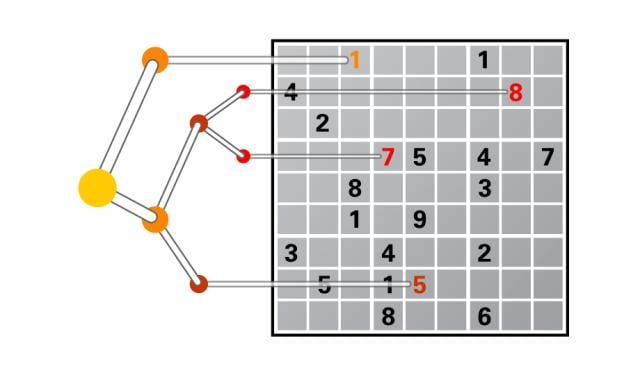
Tired of solving Sudokus by hand? This class teaches you how to solve complex search problems with discrete optimization, including constraint programming, local search, and mixed-integer programming. Optimization technology is ubiquitous in our society. It schedules planes and their crews, coordinates the production of steel, and organizes the transportation of iron ore from the mines to the ports.

Class Deals by MOOC List - Click here and see Coursera's Active Discounts, Deals, and Promo Codes.

Optimization clears the day-ahead and real-time markets to deliver electricity to millions of people. It organizes kidney exchanges and cancer treatments and helps scientists understand the fundamental fabric of life, control complex chemical reactions, and design drugs that may benefit billions of individuals. This class is an introduction to discrete optimization and exposes students to some of the most fundamental concepts and algorithms in the field. It covers constraint programming, local search, and mixed-integer programming from their foundations to their applications for complex practical problems in areas such as scheduling, vehicle routing, supply-chain optimization, and resource allocation.

Syllabus

WEEK 1
Welcome
These lectures and readings give you an introduction to this course: its philosophy, organization, and load. They also tell you how the assignments are a significant part of the class. This week covers the common input/output organization of the assignments, how they are graded, and how to succeed in this class.

WEEK 2
Knapsack
These lectures introduce optimization problems and some optimization techniques through the knapsack problem, one of the most well-known problem in the field. It discusses how to formalize and model optimization problems using knapsack as an example. It then reviews how to apply dynamic programming and branch and bound to the knapsack problem, providing intuition behind these two fundamental optimization techniques. The concept of relaxation and search are also discussed.

WEEK 3
Constraint Programming
Constraint programming is an optimization technique that emerged from the field of artificial intelligence. It is characterized by two key ideas: To express the optimization problem at a high level to reveal its structure and to use constraints to reduce the search space by removing, from the variable domains, values that cannot appear in solutions. These lectures cover constraint programming in detail, describing the language of constraint programming, its underlying computational paradigm and how it can be applied in practice.

WEEK 4
Local Search
Local search is probably the oldest and most intuitive optimization technique. It consists in starting from a solution and improving it by performing (typically) local perturbations (often called moves). Local search has evolved substantially in the last decades with a lot of attention being devoted on which moves to explore. These lectures explore the theory and practice of local search, from the concept of neighborhood and connectivity to meta-heuristics such as tabu search and simulated annealing.

WEEK 5
Linear Programming
Linear programming has been, and remains, a workhorse of optimization. It consists in optimizing a linear objective subject to linear constraints, admits efficient algorithmic solutions, and is often an important building block for other optimization techniques. These lectures review fundamental concepts in linear programming, including the infamous simplex algorithm, simplex tableau, and duality. .

WEEK 6
Mixed Integer Programming
Mixed Integer Programming generalizes linear programming by allowing integer variables, which dramatically changes the complexity of the problems but also broadens the potential applications significantly. These lectures review how to model problems in mixed-integer programming and how to solve mixed-integer programs using branch and bound. Advanced techniques such as cutting planes and polyhedral cuts are also covered.

WEEK 7
Advanced Topics: Part I
These lectures cover some more advanced concepts in optimization. They introduce constraint-programming techniques for scheduling and routing.

WEEK 8
Advanced Topics: Part II
These lectures continues to cover some more advanced concepts in optimization. They introduce large neighborhood search, which often combines constraint programming and local search, and column generation which decomposes an optimization model into a master and pricing problem, using more complex variables.


Go to Class
MOOC List is learner-supported. When you buy through links on our site, we may earn an affiliate commission.

Related Courses

HTML, CSS, and Javascript for Web Developers (Coursera) Coursera
Johns Hopkins University

HTML, CSS, and Javascript for Web Developers (Coursera)

Do you realize that the only functionality of a web application that the user directly interacts with is through the web page? Implement it poorly and, to the user, the server-side becomes irrelevant! Today’s user expects a lot out of the web page: it has to load fast, expose the desired service, and be comfortable to view on all devices: from a desktop computers to tablets and mobile phones. In this course, we will learn the basic tools that every web page coder needs to know. We will start from the ground up by learning how to implement modern web pages with HTML and CSS.

Jun 16th 2026
5-12 Weeks
C++程序设计 (Coursera) Coursera
Peking University

C++程序设计 (Coursera)

讲授C++语言中和面向对象有关的概念和语法,如类和对象、运算符重载、继承和多态、类模板和算法模板、标准模板库等。目标是使得学生能够用C++语言,以面向对象的方法编写可维护性、可扩充性好的,较大规模的程序,初步领会面向对象程序设计方法的优势所在。

Jun 15th 2026
5-12 Weeks
Capstone Project: Teaching Impacts of Technology (Coursera) Coursera
University of California, San Diego

Capstone Project: Teaching Impacts of Technology (Coursera)

In this project-based course you’ll review the Advanced Placement Computer Science Principles course and exam description guide to prepare for the “Explore Task”, where students must research a recent computing innovation and and analyze its impacts on the world. You’ll also review the description of this task from the student perspective and complete the task yourself. Then you’ll assess sample secondary student work by following the APCSP scoring guidelines as well as provide feedback to a fellow learner on their submitted task and receive the same from fellow learners.

Jun 17th 2026
5-12 Weeks
Introduction to CSS3 (Coursera) Coursera
University of Michigan

Introduction to CSS3 (Coursera)

The web today is almost unrecognizable from the early days of white pages with lists of blue links. Now, sites are designed with complex layouts, unique fonts, and customized color schemes. This course will show you the basics of Cascading Style Sheets (CSS3). The emphasis will be on learning how to write CSS rules, how to test code, and how to establish good programming habits.

Jun 15th 2026
4 Weeks
Programming Languages, Part A (Coursera) Coursera
University of Washington

Programming Languages, Part A (Coursera)

This course is an introduction to the basic concepts of programming languages, with a strong emphasis on functional programming. The course uses the languages ML, Racket, and Ruby as vehicles for teaching the concepts, but the real intent is to teach enough about how any language “fits together” to make you more effective programming in any language -- and in learning new ones.

Jun 15th 2026
5-12 Weeks
Introduction à la programmation orientée objet (en Java) (Coursera) Coursera
École Polytechnique Fédérale de Lausanne

Introduction à la programmation orientée objet (en Java) (Coursera)

Ce cours introduit la programmation orientée objet (encapsulation, abstration, héritage, polymorphisme) en l'illustrant en langage Java. Il présuppose connues les bases de la programmation (variables, types, boucles, fonctions, ...). Il est conçu comme la suite du cours « Initiation à la programmation (en Java) ».

Jun 21st 2026
5-12 Weeks
Interactivity with JavaScript (Coursera) Coursera
University of Michigan

Interactivity with JavaScript (Coursera)

If you want to take your website to the next level, the ability to incorporate interactivity is a must. But adding some of these types of capabilities requires a stronger programming language than HTML5 or CSS3, and JavaScript can provide just what you need. With just a basic understanding of the language, you can create a page that will react to common events such as page loads, mouse clicks & movements, and even keyboard input.

Jun 15th 2026
4 Weeks
Algorithmic Thinking (Part 1) (Coursera) Coursera
Rice University

Algorithmic Thinking (Part 1) (Coursera)

Experienced Computer Scientists analyze and solve computational problems at a level of abstraction that is beyond that of any particular programming language. This two-part class is designed to train students in the mathematical concepts and process of "Algorithmic Thinking", allowing them to build simpler, more efficient solutions to computational problems.

Jun 15th 2026
4 Weeks
Cluster Analysis in Data Mining (Coursera) Coursera
University of Illinois at Urbana-Champaign

Cluster Analysis in Data Mining (Coursera)

Discover the basic concepts of cluster analysis, and then study a set of typical clustering methodologies, algorithms, and applications. This includes partitioning methods such as k-means, hierarchical methods such as BIRCH, and density-based methods such as DBSCAN/OPTICS. Moreover, learn methods for clustering validation and evaluation of clustering quality. Finally, see examples of cluster analysis in applications.

Jun 15th 2026
4 Weeks
Unordered Data Structures (Coursera) Coursera
University of Illinois at Urbana-Champaign

Unordered Data Structures (Coursera)

The Unordered Data Structures course covers the data structures and algorithms needed to implement hash tables, disjoint sets and graphs. These fundamental data structures are useful for unordered data. For example, a hash table provides immediate access to data indexed by an arbitrary key value, that could be a number (such as a memory address for cached memory), a URL (such as for a web cache) or a dictionary.

Jun 17th 2026
4 Weeks