FUN

Des neurones à la psyché, Introduction aux réseaux de neurones biologiques et artificiels (FUN)

Des neurones à la psyché, Introduction aux réseaux de neurones biologiques et artificiels (FUN)

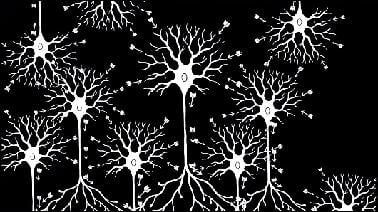
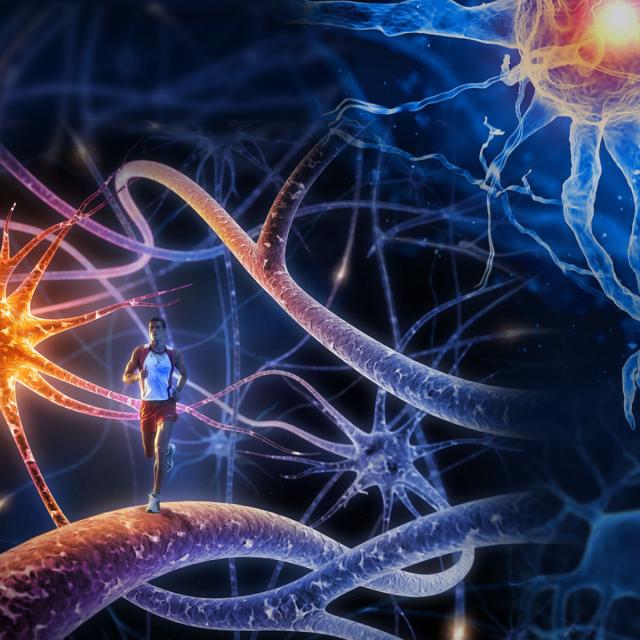
La thématique du cours porte sur la compréhension des réseaux de neurones biologiques et artificiels dans une perspective théorique (liens entre neurones et psyché, avantage d’un système parallèle distribué par rapport à une machine de Turing-Von Neumann) mais aussi méthodologique (implémentation concrète de réseaux de neurones artificiels).

Ce cours se déroulera sur quatre semaines. Chaque semaine sera composée de 2 à 4 vidéos (de 10 à 15 minutes). Des Quizz vous permettront de valider vos acquis.

Plan du cours

Semaine 1 : Les origines de la psychologie cognitive
Semaine 2 : Algorithmes d'apprentissage synaptique
Semaine 3 : Similitude entre les réseaux de neurones biologiques et artificiels : première partie
Semaine 4 : Similitude entre les réseaux de neurones biologiques et artificiels : seconde partie : Vers des réseaux artificiels conscients ?

Go to Class
MOOC List is learner-supported. When you buy through links on our site, we may earn an affiliate commission.

Related Courses

Advanced Neurobiology I (Coursera) Coursera
Peking University

Advanced Neurobiology I (Coursera)

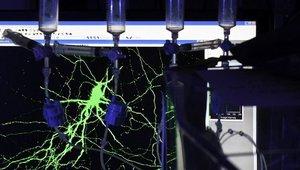
Hello everyone! Welcome to advanced neurobiology! Neuroscience is a wonderful branch of science on how our brain perceives the external world, how our brain thinks, how our brain responds to the outside of the world, and how during disease or aging the neuronal connections deteriorate. We’re trying to understand the molecular, cellular nature and the circuitry arrangement of how nervous system works.

Jun 1st 2026
5-12 Weeks
S'initier à la Data Science et à ses enjeux (FUN) FUN
CY Cergy Paris Université

S'initier à la Data Science et à ses enjeux (FUN)

La Data Science d’un monde qui change ! La Big data, et plus généralement l’analyse de données, occupent une place de plus en plus importante au sein des stratégies de nombreuses organisations. Suivi de performance, analyse des comportements, découvertes de nouvelles opportunités de marché : les applications sont multiples, et intéressent des secteurs variés. Du e-commerce à la finance, en passant par les transports et la santé, les entreprises ont besoin de talents formés à la collecte, au stockage, mais aussi au traitement et à la modélisation des données.

Self Paced
Self-Paced
Machine Learning Models in Science (Coursera) Coursera
LearnQuest

Machine Learning Models in Science (Coursera)

This course is aimed at anyone interested in applying machine learning techniques to scientific problems. In this course, we'll learn about the complete machine learning pipeline, from reading in, cleaning, and transforming data to running basic and advanced machine learning algorithms. We'll start with data preprocessing techniques, such as PCA and LDA. Then, we'll dive into the fundamental AI algorithms: SVMs and K-means clustering.

Jun 1st 2026
4 Weeks
Natural Language Processing with Sequence Models (Coursera) Coursera
DeepLearning.AI

Natural Language Processing with Sequence Models (Coursera)

In Course 3 of the Natural Language Processing Specialization, offered by deeplearning.ai, you will: a) Train a neural network with GLoVe word embeddings to perform sentiment analysis of tweets, b) Generate synthetic Shakespeare text using a Gated Recurrent Unit (GRU) language model, c) Train a recurrent neural network to perform named entity recognition (NER) using LSTMs with linear layers, and d) Use so-called ‘Siamese’ LSTM models to compare questions in a corpus and identify those that are worded differently but have the same meaning.

Jun 1st 2026
4 Weeks
Introduction to Deep Learning & Neural Networks with Keras (Coursera) Coursera
IBM

Introduction to Deep Learning & Neural Networks with Keras (Coursera)

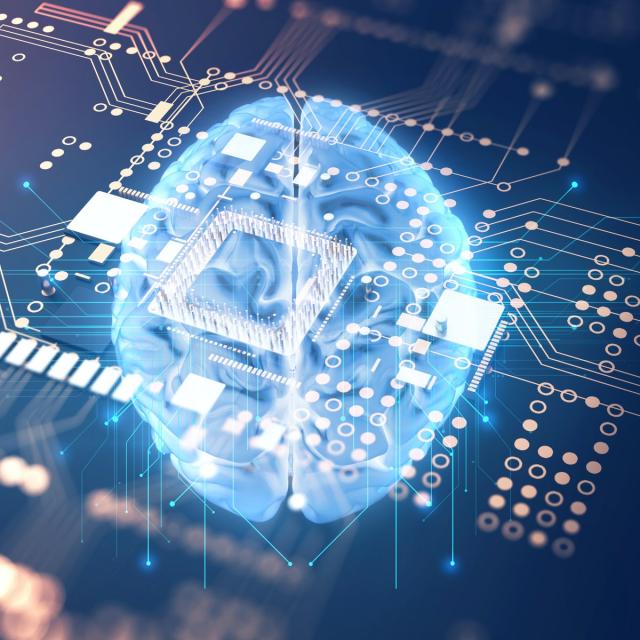
Looking to start a career in Deep Learning? Look no further. This course will introduce you to the field of deep learning and help you answer many questions that people are asking nowadays, like what is deep learning, and how do deep learning models compare to artificial neural networks? You will learn about the different deep learning models and build your first deep learning model using the Keras library.

Jun 8th 2026
5-12 Weeks
Optimización de Redes Neuronales Profundas (Coursera) Coursera
Universidad Austral

Optimización de Redes Neuronales Profundas (Coursera)

Este curso se centrará en la optimización de Redes Neuronales Profundas, cambiando la idea de que todo el proceso es una “caja negra”. Comprenderá qué impulsa el rendimiento y podrá obtener mejores resultados de manera más sistemática. Entenderá cómo optimizar los principales Hiperparámetros y su implementación. Además, aprenderá nuevos conceptos útiles para el entrenamiento de las redes como los mini-batch y las regularizaciones. También, aprenderá a implementar una red neuronal utilizando TensorFlow

Jun 8th 2026
3 Weeks
Introduction to Trading, Machine Learning & GCP (Coursera) Coursera
New York Institute of Finance,Google Cloud

Introduction to Trading, Machine Learning & GCP (Coursera)

In this course, you’ll learn about the fundamentals of trading, including the concept of trend, returns, stop-loss, and volatility. You will learn how to identify the profit source and structure of basic quantitative trading strategies. This course will help you gauge how well the model generalizes its learning, explain the differences between regression and forecasting, and identify the steps needed to create development and implementation backtesters. By the end of the course, you will be able to use Google Cloud Platform to build basic machine learning models in Jupyter Notebooks.

Jun 1st 2026
4 Weeks
Synapses, Neurons and Brains (Coursera) Coursera
Hebrew University of Jerusalem

Synapses, Neurons and Brains (Coursera)

These are very unique times for brain research. The aperitif for the course will thus highlight the present “brain-excitements” worldwide. You will then become intimately acquainted with the operational principles of neuronal “life-ware” (synapses, neurons and the networks that they form) and consequently, on how neurons behave as computational microchips and how they plastically and constantly change - a process that underlies learning and memory.

Jun 1st 2026
5-12 Weeks
Getting Started with Machine Learning at the Edge on Arm (Coursera) Coursera
Arm

Getting Started with Machine Learning at the Edge on Arm (Coursera)

The age of machine learning has arrived! Arm technology is powering a new generation of connected devices with sophisticated sensors that can collect a vast range of environmental, spatial and audio/visual data. Typically this data is processed in the cloud using advanced machine learning tools that are enabling new applications reshaping the way we work, travel, live and play.

Jun 8th 2026
5-12 Weeks