Deploy AI Apps with Cloudflare (Coursera)

Offered by Scrimba,
Deploy AI Apps with Cloudflare (Coursera)

Dive into deploying secure and robust applications with our Cloudflare course. Learn to manage API requests with Cloudflare workers, boost app strength with an AI Gateway, and launch websites using Cloudflare Pages. This hands-on course also teaches you to refine error handling for smoother user experiences.

Class Deals by MOOC List - Click here and see Coursera's Active Discounts, Deals, and Promo Codes.

Build practical skills in using Cloudflare’s features to secure APIs, enhance sites with AI, and ensure reliability. By the end of the course, you'll be skilled at using Cloudflare to boost your applications' security and performance, ready to solve real-world problems.
This course is part of the AI for Web Developers Specialization.

What you'll learn

  • Integrate OpenAI with Cloudflare Workers, manage APIs, and handle errors
  • Deploy apps on Cloudflare Pages, configure domains, and handle CORS

Syllabus

Deploy AI Apps with Cloudflare
Learn how to leverage Cloudflare's powerful edge computing and security features to deploy AI applications with high availability and low latency.


Go to Class
MOOC List is learner-supported. When you buy through links on our site, we may earn an affiliate commission.

Related Courses

SAP Cloud Platform API Management (openSAP) OpenSAP
SAP

SAP Cloud Platform API Management (openSAP)

Join this free online course to gain expertise in SAP Cloud Platform API Management, which is available as a service on SAP Cloud Platform. You’ll begin by learning API management basics, and gradually progress to master advanced SAP API Management topics. After completing this course, you’ll understand what the API management components are, how to manage the API lifecycle, ways to integrate API management with tools like SAP Web IDE, and how to build and manage APIs ground-up, treat them as products, and monetize them.

Self Paced
Self-Paced
M2M & IoT Interface Design & Protocols for Embedded Systems (Coursera) Coursera
University of Colorado Boulder

M2M & IoT Interface Design & Protocols for Embedded Systems (Coursera)

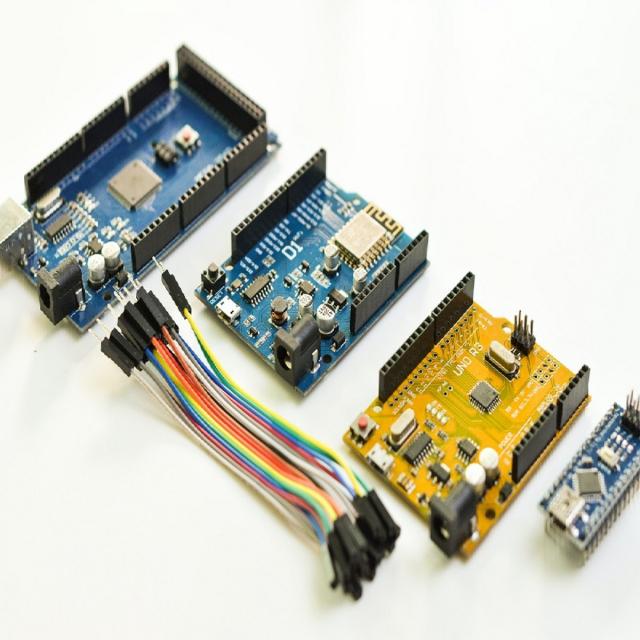
This course can also be taken for academic credit as ECEA 5348, part of CU Boulder’s Master of Science in Electrical Engineering degree. M2M and IoT Interface Design and Protocols is the third of three classes in the Embedded Interface Design (EID) specialization, an online version of the on-campus EID class taught in graduate embedded systems design. This course is focused on connecting devices to each other and to the cloud to create prototypes and actual systems that flow data from devices to consumers. The class includes an introduction to M2M (Machine-to-Machine) and IoT (Internet of Things) concepts, using the cloud to develop IoT systems (specifically AWS (Amazon Web Services) and its IoT framework), a review of common communications protocols at every level of connected devices, and other IoT design concerns such as security, message queuing approaches, and the use and design of APIs and microservices .

Sep 28th 2026
4 Weeks
Programming Applications with Python: Libraries and Web Scraping (FutureLearn) FutureLearn
FutureLearn

Programming Applications with Python: Libraries and Web Scraping (FutureLearn)

Consider applications for APIs and Python, and explore the purpose of web scraping. Examine Python libraries for web development. This course will introduce you to the popular Requests library in Python. You’ll study how to install the Requests library and get to know how it works. Learning via videos, interactive exercises, and quizzes, you’ll also explore what HTTP requests are and what each of the status codes in HTTP mean.

May 23rd 2022
4 Weeks
iOS Networking with Swift (Udacity) Udacity
Udacity

iOS Networking with Swift (Udacity)

Web Services, APIs, and JSON. In this course, you’ll learn how to incorporate networking into your apps, so they can access data from around the world. You’ll learn how to harness the power of APIs to display images and retrieve movie data. At the end of the course, you’ll build the "On the Map" app which allows you to share interesting links, projects, or other information with fellow Udacity students.

Self Paced
Self-Paced
Future Technologies Series: Artificial Intelligence & Machine Learning (CanopyLAB) CanopyLAB
CanopyLAB

Future Technologies Series: Artificial Intelligence & Machine Learning (CanopyLAB)

Possibly the most popular of all modern technologies, Artificial Intelligence (AI) and Machine Learning (ML) have been the source of great hopes and great fears in recent years. Starting with the concept of AI and ML, you will move on to examine how these technologies have been applied in various fields and the societal impact that they can have.

Self Paced
Self-Paced
Big Data Science with the BD2K-LINCS Data Coordination and Integration Center (Coursera) Coursera
Icahn School of Medicine at Mount Sinai

Big Data Science with the BD2K-LINCS Data Coordination and Integration Center (Coursera)

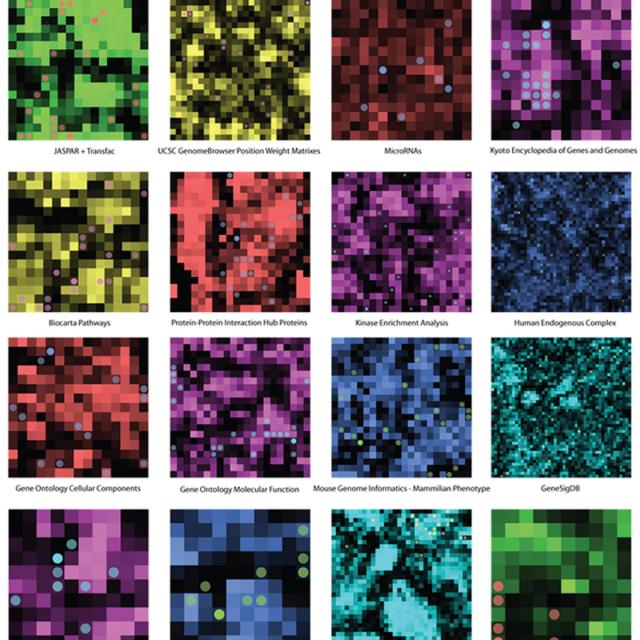
In this course we briefly introduce the DCIC and the various Centers that collect data for LINCS. We then cover metadata and how metadata is linked to ontologies. We then present data processing and normalization methods to clean and harmonize LINCS data. This follow discussions about how data is served as RESTful APIs. Most importantly, the course covers computational methods including: data clustering, gene-set enrichment analysis, interactive data visualization, and supervised learning. Finally, we introduce crowdsourcing/citizen-science projects where students can work together in teams to extract expression signatures from public databases and then query such collections of signatures against LINCS data for predicting small molecules as potential therapeutics.

Sep 21st 2026
5-12 Weeks
Customising your models with TensorFlow 2 (Coursera) Coursera
Imperial College London

Customising your models with TensorFlow 2 (Coursera)

Welcome to this course on Customising your models with TensorFlow 2! In this course you will deepen your knowledge and skills with TensorFlow, in order to develop fully customised deep learning models and workflows for any application. You will use lower level APIs in TensorFlow to develop complex model architectures, fully customised layers, and a flexible data workflow. You will also expand your knowledge of the TensorFlow APIs to include sequence models.

Sep 28th 2026
5-12 Weeks
Importing Data in the Tidyverse (Coursera) Coursera
Johns Hopkins University

Importing Data in the Tidyverse (Coursera)

Getting data into your statistical analysis system can be one of the most challenging parts of any data science project. Data must be imported and harmonized into a coherent format before any insights can be obtained. You will learn how to get data into R from commonly used formats and harmonizing different kinds of datasets from different sources. If you work in an organization where different departments collect data using different systems and different storage formats, then this course will provide essential tools for bringing those datasets together and making sense of the wealth of information in your organization.

Sep 21st 2026
4 Weeks