Defining, Describing, and Visualizing Data (Coursera)

Defining, Describing, and Visualizing Data (Coursera)

As leaders in your chosen field, you need to not only know how to ask the right questions but also answer them using data-based methods. Through this class, you will be able to get to the bottom of what you really want to know, describe the associated data related to that question, and visualize the information from that data to understand and explain the results.

Class Deals by MOOC List - Click here and see Coursera's Active Discounts, Deals, and Promo Codes.

This specialization can be taken for academic credit as part of CU Boulder’s Master of Engineering in Engineering Management (ME-EM) degree offered on the Coursera platform. The ME-EM is designed to help engineers, scientists, and technical professionals move into leadership and management roles in the engineering and technical sectors. With performance-based admissions and no application process, the ME-EM is ideal for individuals with a broad range of undergraduate education and/or professional experience.

What You Will Learn

  • Classify types of data with scales of measurement
  • Calculate descriptive statistics and create graphical representations using R software
  • Solve problems and make decisions using probability distributions

Syllabus

WEEK 1
Data and Measurement
Upon completion of this module, students will be able to classify types of data using measurement scales.

WEEK 2
Working with Data in RStudio and ROIStat
Upon completion of this module, students will be able to work with datasets in RStudio and ROIStat.

WEEK 3
Describing and Visualizing Data
Upon completion of this module, students will be able to use RStudio and ROIStat to calculate descriptive statistics to describe location, spread, and shape of data and create visual representations of data.

WEEK 4
Determining Probabilities
Upon completion of this module, students will be able to apply the rules and conditions of probability to make decisions and solve problems.

WEEK 5
Making Decisions with Discrete and Continuous Probability Distributions
Upon completion of this module, students will be able to apply both discrete and continuous probability distributions to make decisions and solve problems using RStudio and ROIStat.

Go to Class
MOOC List is learner-supported. When you buy through links on our site, we may earn an affiliate commission.

Related Courses

Accounting Data Analytics with Python (Coursera) Coursera
University of Illinois at Urbana-Champaign

Accounting Data Analytics with Python (Coursera)

This course focuses on developing Python skills for assembling business data. It will cover some of the same material from Introduction to Accounting Data Analytics and Visualization, but in a more general purpose programming environment (Jupyter Notebook for Python), rather than in Excel and the Visual Basic Editor. These concepts are taught within the context of one or more accounting data domains (e.g., financial statement data from EDGAR, stock data, loan data, point-of-sale data).

Oct 12th 2026
5-12 Weeks
Structural Equation Model and its Applications | 结构方程模型及其应用 (普通话) (Coursera) Coursera
The Chinese University of Hong Kong

Structural Equation Model and its Applications | 结构方程模型及其应用 (普通话) (Coursera)

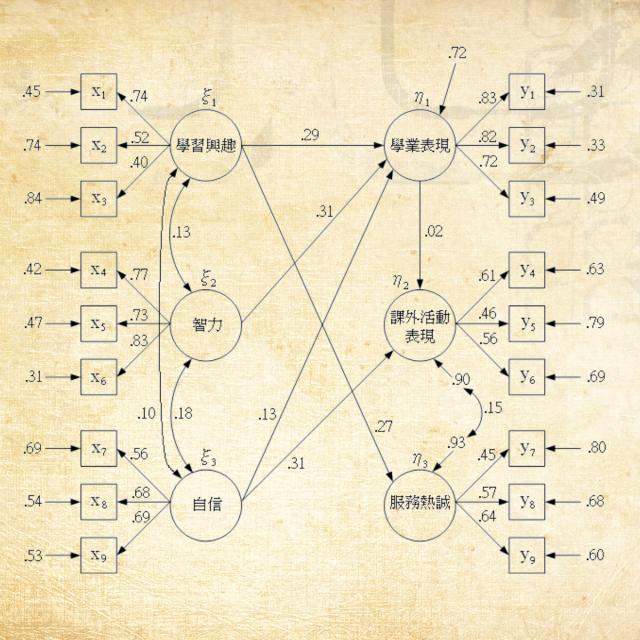
在社会学、心理学、教育学、经济学、管理学、市场学等研究领域的数据分析中,结构方程建模是当前最前沿的统计方法中应用最广、研究最多的一个。它包含了方差分析、回归分析、路径分析和因子分析,弥补了传统回归分析和因子分析的不足,可以分析多因多果的联系、潜变量的关系,

Oct 12th 2026
5-12 Weeks
Reproducible Templates for Analysis and Dissemination (Coursera) Coursera
Emory University

Reproducible Templates for Analysis and Dissemination (Coursera)

This course will assist you with recreating work that a previous coworker completed, revisiting a project you abandoned some time ago, or simply reproducing a document with a consistent format and workflow. Incomplete information about how the work was done, where the files are, and which is the most recent version can give rise to many complications.

Oct 12th 2026
5-12 Weeks
Fundamentals of Machine Learning in Finance (Coursera) Coursera
New York University Tandon School of Engineering

Fundamentals of Machine Learning in Finance (Coursera)

The course aims at helping students to be able to solve practical ML-amenable problems that they may encounter in real life that include: (1) understanding where the problem one faces lands on a general landscape of available ML methods, (2) understanding which particular ML approach(es) would be most appropriate for resolving the problem, and (3) ability to successfully implement a solution, and assess its performance.

Oct 12th 2026
4 Weeks
Earth Economics (Coursera) Coursera
Erasmus University Rotterdam

Earth Economics (Coursera)

After this course you will be an Earth Economist that can provide evidence-based advise on the best global policy. As an Earth Economist you will better understand the behavior and advice of economists, have become a better economist yourself and know where to find Earth's data and how to analyze these world observations. Our planet is too important: we need you to get engaged!

Oct 12th 2026
5-12 Weeks
Fundamentos de la visualización de datos con Tableau (Coursera) Coursera
Universidad Austral

Fundamentos de la visualización de datos con Tableau (Coursera)

En este curso descubrirás qué es la visualización de datos y cómo podemos usarla para ver y comprender mejor los datos. Con Tableau, examinaremos los conceptos fundamentales de visualización de datos y exploraremos la interfaz de Tableau, identificando y aplicando las diversas herramientas que Tableau tiene para ofrecer. Este curso está diseñado para el alumno que nunca ha usado antes Tableau, o que puede necesitar un repaso, o desea explorar Tableau con más profundidad.

Oct 12th 2026
4 Weeks
Big Data Analysis with Scala and Spark (Coursera) Coursera
École Polytechnique Fédérale de Lausanne

Big Data Analysis with Scala and Spark (Coursera)

Manipulating big data distributed over a cluster using functional concepts is rampant in industry, and is arguably one of the first widespread industrial uses of functional ideas. This is evidenced by the popularity of MapReduce and Hadoop, and most recently Apache Spark, a fast, in-memory distributed collections framework written in Scala. In this course, we'll see how the data parallel paradigm can be extended to the distributed case, using Spark throughout.

Oct 12th 2026
4 Weeks
A Crash Course in Causality: Inferring Causal Effects from Observational Data (Coursera) Coursera
University of Pennsylvania

A Crash Course in Causality: Inferring Causal Effects from Observational Data (Coursera)

We have all heard the phrase “correlation does not equal causation.” What, then, does equal causation? This course aims to answer that question and more! Over a period of 5 weeks, you will learn how causal effects are defined, what assumptions about your data and models are necessary, and how to implement and interpret some popular statistical methods. Learners will have the opportunity to apply these methods to example data in R (free statistical software environment).

Oct 12th 2026
5-12 Weeks
Matrix Methods (Coursera) Coursera
University of Minnesota

Matrix Methods (Coursera)

Mathematical Matrix Methods lie at the root of most methods of machine learning and data analysis of tabular data. Learn the basics of Matrix Methods, including matrix-matrix multiplication, solving linear equations, orthogonality, and best least squares approximation. Discover the Singular Value Decomposition that plays a fundamental role in dimensionality reduction, Principal Component Analysis, and noise reduction.

Oct 12th 2026
5-12 Weeks