Data-driven Astronomy (Coursera)

Data-driven Astronomy (Coursera)

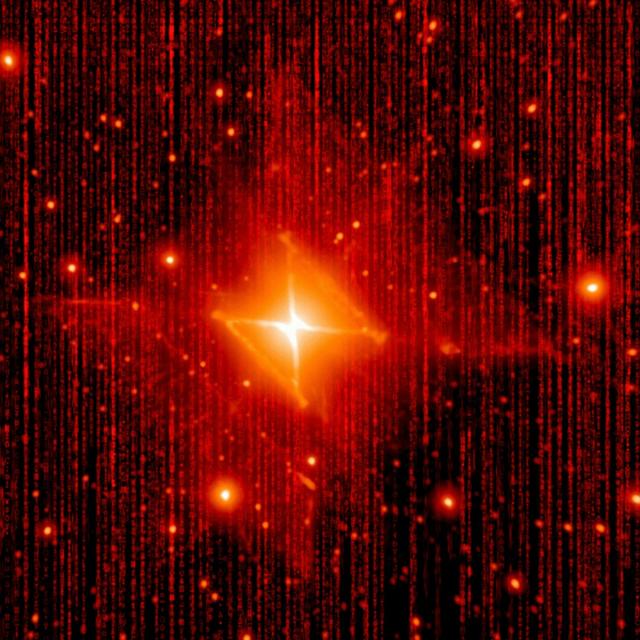
Science is undergoing a data explosion, and astronomy is leading the way. Modern telescopes produce terabytes of data per observation, and the simulations required to model our observable Universe push supercomputers to their limits. To analyse this data scientists need to be able to think computationally to solve problems. In this course you will investigate the challenges of working with large datasets: how to implement algorithms that work; how to use databases to manage your data; and how to learn from your data with machine learning tools. The focus is on practical skills - all the activities will be done in Python 3, a modern programming language used throughout astronomy.

Class Deals by MOOC List - Click here and see Coursera's Active Discounts, Deals, and Promo Codes.

Regardless of whether you’re already a scientist, studying to become one, or just interested in how modern astronomy works ‘under the bonnet’, this course will help you explore astronomy: from planets, to pulsars to black holes.
Each week will also have an interview with a data-driven astronomy expert.
Note that some knowledge of Python is assumed, including variables, control structures, data structures, functions, and working with files.

Syllabus

Week 1
Thinking about data

  • Principles of computational thinking
  • Discovering pulsars in radio images

This module introduces the idea of computational thinking, and how big data can make simple problems quite challenging to solve. We use the example of calculating the median and mean stack of a set of radio astronomy images to illustrate some of the issues you encounter when working with large datasets.

Week 2
Big data makes things slow

  • How to work out the time complexity of algorithms
  • Exploring the black holes at the centres of massive galaxies

In this module we explore the idea of scaling your code. Some algorithms scale well as your dataset increases, but others become impossibly slow. We look at some of the reason for this, and use the example of cross-matching astronomical catalogues to demonstrate what kind of improvements you can make.

Week 3
Querying data using SQL

  • How to use databases to analyse your data
  • Investigating exoplanets in other solar systems

Most large astronomy projects use databases to manage their data. In this module we introduce SQL - the language most commonly used to query databases. We use SQL to query the NASA Exoplanet database and investigate the habitability of planets in other solar systems.

Week 4
Managing your data

  • How to set up databases to manage your data
  • Exploring the lifecycle of stars in our Galaxy

This module introduces the basic principles of setting up databases. We look at how to set up new tables, and then how to combine Python and SQL to get the best out of both approaches. We use these tools to explore the life of stars in a stellar cluster.

Week 5
Learning from data: regression

  • Using machine learning tools to investigate your data
  • Calculating the redshifts of distant galaxies

This module introduces the idea of machine learning. We look at standard methodology for running machine learning experiments, and then apply this to calculating redshifts of distant galaxies using decision trees for regression.

Week 6
Learning from data: classification

  • Using machine learning tools to classify your data
  • Investigating different types of galaxies

In this final module we explore the limitations of decision tree classifiers. We then look at ensemble classifiers, using the random forest algorithm to classify images of galaxies into different types.

Go to Class
MOOC List is learner-supported. When you buy through links on our site, we may earn an affiliate commission.

Related Courses

Origens da Vida no Contexto Cósmico (Coursera) Coursera
Universidade de São Paulo, Brasil

Origens da Vida no Contexto Cósmico (Coursera)

Origens da vida no contexto cósmico é um curso desenvolvido no Instituto de Astronomia, Geofísica e Ciências Atmosféricas da Universidade de São Paulo, com o objetivo de apresentar os mais recentes avanços científicos na compreensão deste intrigante assunto. É um curso com formato multidisciplinar que o levará a compreender melhor os aspectos envolvidos no surgimento de vida na Terra e no possível surgimento de vida em outros planetas.

Aug 3rd 2026
4 Weeks
Teaching in University Science Laboratories (Developing Best Practice) (Coursera) Coursera
University of Amsterdam

Teaching in University Science Laboratories (Developing Best Practice) (Coursera)

This course is developed to improve the effectiveness of laboratory classes in higher education. It aims to support teachers to improve their teaching skills for active learning in university science laboratory courses. It will show you how laboratory sessions can differ with respect to their aim and expected learning outcomes, how to engage students for learning and how to cope with their different levels of pre-knowledge and experience and probe their understanding. Last but not least it will show how you could assess students in laboratory courses.

Aug 3rd 2026
5-12 Weeks
Introduction to Genetics and Evolution (Coursera) Coursera
Duke University

Introduction to Genetics and Evolution (Coursera)

Introduction to Genetics and Evolution is a college-level class being offered simultaneously to new students at Duke University. The course gives interested people a very basic overview of some principles behind these very fundamental areas of biology. We often hear about new "genome sequences," commercial kits that can tell you about your ancestry (including pre-human) from your DNA or disease predispositions, debates about the truth of evolution, why animals behave the way they do, and how people found "genetic evidence for natural selection." This course provides the basic biology you need to understand all of these issues better, tries to clarify some misconceptions, and tries to prepare students for future, more advanced coursework in Biology (and especially evolutionary genetics). No prior coursework is assumed.

Aug 3rd 2026
5-12 Weeks
Statistical Mechanics: Algorithms and Computations (Coursera) Coursera
École normale supérieure

Statistical Mechanics: Algorithms and Computations (Coursera)

In this course you will learn a whole lot of modern physics (classical and quantum) from basic computer programs that you will download, generalize, or write from scratch, discuss, and then hand in. Join in if you are curious (but not necessarily knowledgeable) about algorithms, and about the deep insights into science that you can obtain by the algorithmic approach.

Aug 3rd 2026
5-12 Weeks
Google Cloud Product Fundamentals en Español (Coursera) Coursera
Google Cloud

Google Cloud Product Fundamentals en Español (Coursera)

Este curso, que es una continuación de Business Transformation with Google Cloud, le permitirá conocer la perspectiva tecnológica de la transformación de una organización. Para ser más específicos, explicaremos cómo la tecnología de Google Cloud puede transformar digitalmente una organización en los siguientes aspectos: modernizar la infraestructura de TI; mejorar la forma en que los equipos desarrollan las aplicaciones que utiliza la empresa; saber cómo aprovechar el aprendizaje automático y la inteligencia artificial para generar más valor; advertir el rol fundamental de las herramientas de productividad basadas en la nube, como G Suite, para cumplir con el trabajo, y comprender los desafíos y las oportunidades de la administración de costos que trae aparejados una infraestructura de TI cambiante basada en la nube.

Aug 3rd 2026
5-12 Weeks
The Sun and the Total Eclipse of August 2017 (Coursera) Coursera
University of Colorado Boulder

The Sun and the Total Eclipse of August 2017 (Coursera)

A total eclipse is one of the most spectacular sights you can ever see! It looks like the end of the world may be at hand. There is a black hole in the sky where the sun should be. Pink flames of solar prominences and long silver streamers of the sun's corona stretch across the sky. It gets cold, and animals do strange things. People scream and shout and cheer, and remember the experience their whole life. But total eclipses are important scientifically as well.

Aug 3rd 2026
5-12 Weeks
Big Data Analysis Deep Dive (Coursera) Coursera
Alibaba Cloud Academy

Big Data Analysis Deep Dive (Coursera)

The job market for architects, engineers, and analytics professionals with Big Data expertise continues to increase. The Academy’s Big Data Career path focuses on the fundamental tools and techniques needed to pursue a career in Big Data. This course includes: data processing with python, writing and reading SQL queries, transmitting data with MaxCompute, analyzing data with Quick BI, using Hive, Hadoop, and spark on E-MapReduce, and how to visualize data with data dashboards. Work through our course material, learn different aspects of the Big Data field, and get certified as a Big Data Professional!

Aug 3rd 2026
5-12 Weeks
Getting Started with CyberGIS (Coursera) Coursera
University of Illinois at Urbana-Champaign

Getting Started with CyberGIS (Coursera)

This course is intended to introduce students to CyberGIS—Geospatial Information Science and Systems (GIS)—based on advanced cyberinfrastructure as well as the state of the art in high-performance computing, big data, and cloud computing in the context of geospatial data science. Emphasis is placed on learning the cutting-edge advances of cyberGIS and its underlying geospatial data science principles.

Aug 3rd 2026
4 Weeks
Code Yourself! An Introduction to Programming (Coursera) Coursera
University of Edinburgh,Universidad ORT Uruguay

Code Yourself! An Introduction to Programming (Coursera)

Have you ever wished you knew how to program, but had no idea where to start from? This course will teach you how to program in Scratch, an easy to use visual programming language. More importantly, it will introduce you to the fundamental principles of computing and it will help you think like a software engineer.

Aug 3rd 2026
5-12 Weeks
Science & Religion 101 (Coursera) Coursera
University of Alberta

Science & Religion 101 (Coursera)

This course examines the nature of both science and religion and attempts to explore the possible relationships between them. The primary purpose is to dispel the popular myth that science and religion are entrenched in a never-ending conflict. As a result, this course argues that if the limits of both science and religion are respected, then their relationship can be complementary.

Aug 3rd 2026
5-12 Weeks
Probabilistic Graphical Models 3: Learning (Coursera) Coursera
Stanford University

Probabilistic Graphical Models 3: Learning (Coursera)

Probabilistic graphical models (PGMs) are a rich framework for encoding probability distributions over complex domains: joint (multivariate) distributions over large numbers of random variables that interact with each other. These representations sit at the intersection of statistics and computer science, relying on concepts from probability theory, graph algorithms, machine learning, and more. They are the basis for the state-of-the-art methods in a wide variety of applications, such as medical diagnosis, image understanding, speech recognition, natural language processing, and many, many more. They are also a foundational tool in formulating many machine learning problems.

Aug 3rd 2026
5-12 Weeks