Curanderismo:Influencias Globales de la Medicina Tradicional (Coursera)

Curanderismo:Influencias Globales de la Medicina Tradicional (Coursera)

Bienvenido a Curanderismo: ¡Influencias globales y culturales de la medicina tradicional! Hoy te unes a miles de estudiantes que actualmente están inscritos en el curso. Estoy emocionado de tenerte en la clase y espero tus contribuciones a la comunidad de aprendizaje. Para comenzar, recomiendo tomarse unos minutos para explorar el curso. Revisa el material que cubriremos cada semana y observa la vista previa de las tareas que deberás completar para aprobar el curso.

Class Deals by MOOC List - Click here and see Coursera's Active Discounts, Deals, and Promo Codes.

Haz clic en Discusiones para ver foros donde puedes discutir el material del curso con otros estudiantes que toman la clase.
Si tiene preguntas sobre el contenido del curso, publícalas en los foros para obtener ayuda de otros miembros de la comunidad del curso. Para problemas técnicos con la plataforma Coursera, visita el Centro de ayuda para estudiantes.
¡Buena suerte al comenzar y espero que disfrutes del curso!
Mario del Angel Guevara

What You Will Learn

  • Apreciar las contribuciones de los curanderos de la actualidad por mantener y enseñar la medicina tradicional mexicana a las nuevas generaciones.
  • Evaluar las similitudes y diferencias entre las influencias de las creencias indígenas peruanas con los rituales y hierbas usadas en México
  • Apreciar cómo la cultura mexicana ha honrado y celebrado la memoria de sus antepasados con el día de los muertos.

Syllabus

WEEK 1
Introducción al curanderismo / El último Chenchito, El último de los curanderos fidencistas
En este módulo apreciarás 3 videos únicos sobre el curanderismo. En el primero, el Dr. Eliseo Torres de la Universidad de Nuevo México ofrece una introducción a los elementos, rituales y hierbas que comúnmente se utilizan en la medicina tradicional mexicana y hace referencia a las 3 figuras históricas más importantes dentro de esta tradición. En el segundo y tercer video, podrás aprender sobre la vida y curaciones de uno de los más grandes curanderos de la historia, "El Niño Fidencio", así como también una entrevista a uno de sus discípulos dentro del movimiento Fidencista, Chenchito, quien fue maestro y mentor del Dr. Eliseo Torres

WEEK 2
Limpias energéticas/espirituales de México y de Cuba
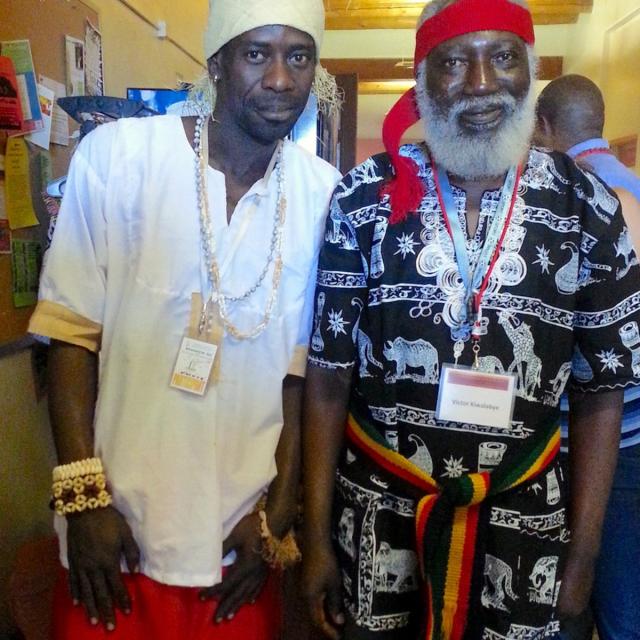
En este módulo, los estudiantes apreciarán las diferentes formas de llevar a cabo una limpia energética/espiritual en 2 países de Latinoamérica: México y Cuba. Los curanderos tradicionales, Laurencio, Rita de México y Pedro y David de Cuba nos hacen una demostración de los métodos que ellos han aprendido y utilizan para limpiar el cuerpo y el espíritu de energías negativas.

WEEK 3
Tratamiento tradicional maya para la mujer / Manteadas y sobadas
En el módulo 3, los estudiantes aprenderán sobre los beneficios que tienen las manteadas en mujeres embarazadas para el cuidado de su bebé. También, se hablará sobre algunas de las condiciones que pueden prevenir el embarazo de acuerdo a la medicina maya y cómo tratarlas. Por último, Rita Navarrete, de la Ciudad de México, nos presenta una demostración de las sobadas en el cuerpo para aliviar el dolor muscular.

WEEK 4
Modalidades de curación afro-puertorriqueña y tabaco sagrado del Perú
El Dr. Ysamur Flores describe el uso de las telas roja y negra que contendrán las vibraciones energéticas durante la realización de la limpia espiritual "Osain". Igualmente, Asheninka Mino realiza una bendición inicial peruana y lleva a cabo un ritual mediante el uso del tabaco sagrado.

WEEK 5
Curación del duelo con el día de los muertos
El Dr. Anselmo Torres nos habla sobre El día de los muertos en México. Se trata de una celebración que muchas familias en México y el suroeste de los Estados Unidos celebran para conmemorar la memoria de sus seres queridos que han fallecido. Como podrás observar, El día de los muertos es una festividad que ayuda al proceso de sanación del duelo ante la pérdida de un ser querido. En el video del módulo, podrás escuchar testimonios de estudiantes sobre como algo tan simple pero poderoso como la conmemoración de un ser querido puede sanar a muchas personas de su duelo.

Go to Class
MOOC List is learner-supported. When you buy through links on our site, we may earn an affiliate commission.

Related Courses

Community Change in Public Health (Coursera) Coursera
Johns Hopkins University

Community Change in Public Health (Coursera)

In bringing about behavior change in public health, we often focus on the individual mother, student, or farmer. We should not forget the community structure and norms constrain for encouraging individual health behaviors. This course examines the community context of the changes needed to promote the public’s health. We begin by examining the various definitions of ‘community’ and the processes by which we ‘diagnose’ or seek to understand the structure and characteristics of different types of communities.

Nov 16th 2026
5-12 Weeks
Systems Science and Obesity (Coursera) Coursera
Johns Hopkins University

Systems Science and Obesity (Coursera)

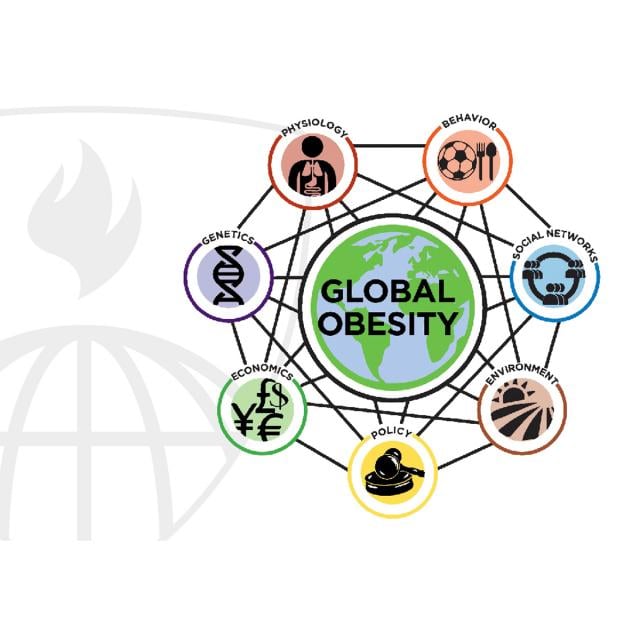
Systems science has been instrumental in breaking new scientific ground in diverse fields such as meteorology, engineering and decision analysis. However, it is just beginning to impact public health. This seminar is designed to introduce students to basic tools of theory building and data analysis in systems science and to apply those tools to better understand the obesity epidemic in human populations.

Nov 16th 2026
4 Weeks
Myths, Rituals, and Cosmos (edX) EdX
Seoul National University,SNUx

Myths, Rituals, and Cosmos (edX)

In this class, we will first think about myths and rituals from the perspective of the comparative study of religion. We will explore the symbolism of sacred time and space, rubrics by which how various religious communities have conceptualized the cosmos. From there, our focus will shift to notions and practices regarding purity and pollution.

Self Paced
Self-Paced
Getting started in cryo-EM (Coursera) Coursera
Caltech

Getting started in cryo-EM (Coursera)

This class covers the fundamental principles underlying cryo-electron microscopy (cryo-EM) starting with the basic anatomy of electron microscopes, an introduction to Fourier transforms, and the principles of image formation. Building upon that foundation, the class then covers the sample preparation issues, data collection strategies, and basic image processing workflows for all 3 basic modalities of modern cryo-EM: tomography, single particle analysis, and 2-D crystallography.

Nov 16th 2026
5-12 Weeks
Herbal Medicine (Coursera) Coursera
University of Minnesota

Herbal Medicine (Coursera)

There is strong demand for alternatives to pharmaceuticals for a variety of common illnesses due to concerns of safety, efficacy, and a desire for more “natural” products. Despite this growing interest, “conventional” healthcare providers may have little to no knowledge about herbal medicines, which is further compounded by the sometimes misleading information in the media and on the internet. This course provides the necessary background for providers to begin to incorporate herbal medicines into their practice, particularly in regards to their therapeutic properties, efficacy (or lack thereof), and safety concerns, including quality control and potential adverse effects.

Oct 21st 2026
5-12 Weeks
Classical papers in molecular genetics (Coursera) Coursera
University of Geneva

Classical papers in molecular genetics (Coursera)

You have all heard about the DNA double helix and genes. Many of you know that mutations occur randomly, that the DNA sequence is read by successive groups of three bases (the codons), that many genes encode enzymes, and that gene expression can be regulated. These concepts were proposed on the basis of astute genetic experiments, as well as often on biochemical results. The original articles were these concepts appeared are however not frequently part of the normal curriculum of biologists, biochemists and medical students.

Nov 16th 2026
5-12 Weeks
Curanderismo: Global & Cultural Influences of Traditional Healing (Coursera) Coursera
University of New Mexico

Curanderismo: Global & Cultural Influences of Traditional Healing (Coursera)

As the last of four courses on Curanderismo, the art of Hispanic/Latino traditional medicine, this course focuses specifically on traditional healing using different techniques of many countries around the world. As an educational and cultural platform, this course will share a number of traditional global perspectives.

Nov 9th 2026
5-12 Weeks
Big Data Science with the BD2K-LINCS Data Coordination and Integration Center (Coursera) Coursera
Icahn School of Medicine at Mount Sinai

Big Data Science with the BD2K-LINCS Data Coordination and Integration Center (Coursera)

In this course we briefly introduce the DCIC and the various Centers that collect data for LINCS. We then cover metadata and how metadata is linked to ontologies. We then present data processing and normalization methods to clean and harmonize LINCS data. This follow discussions about how data is served as RESTful APIs. Most importantly, the course covers computational methods including: data clustering, gene-set enrichment analysis, interactive data visualization, and supervised learning. Finally, we introduce crowdsourcing/citizen-science projects where students can work together in teams to extract expression signatures from public databases and then query such collections of signatures against LINCS data for predicting small molecules as potential therapeutics.

Nov 16th 2026
5-12 Weeks
Global Health at the Human-Animal-Ecosystem Interface (Coursera) Coursera
University of Geneva

Global Health at the Human-Animal-Ecosystem Interface (Coursera)

The University of Geneva, Institute Pasteur, University of Montreal and Centre Virchow-Villermé/University Paris Descartes welcome you to this new MOOC on "Global Health at the Human-Animal-Ecosystem Interface"! Over the next 5 weeks, you will explore and learn about some of the major and current Global Health Challenges at the Human-Animal-Ecosystem Interface: zoonotic emerging infections (e.g. Ebola, Nipah, MERS, Avian Influenza), antimicrobial resistance, neglected tropical diseases (e.g. rabies, leishmaniasis, zoonotic TB), snakebite and other human-animal conflicts etc.

Nov 16th 2026
5-12 Weeks