Creating EV Charging Hubs: Innovative Design (Coursera)

Creating EV Charging Hubs: Innovative Design (Coursera)

Creating EV Charging Hubs - Innovative Infrastructure Design is a comprehensive course aimed at equipping learners with the knowledge and skills necessary to identify key design and implementation elements, of effective charging infrastructure for electric vehicles. As the world shifts towards sustainable transportation, the demand for efficient, accessible, and intelligent charging solutions is on the rise.

Class Deals by MOOC List - Click here and see Coursera's Active Discounts, Deals, and Promo Codes.

This course addresses the critical need for well-designed charging infrastructure and explores the complexities involved in its planning, deployment, and integration with the electrical grid. The course also covers the various smart charging technologies, allowing you to evaluate more advanced methods to reach better operational efficiency. The course also discusses some emerging trends like wireless charging infrastructure and challenges in developing such high-power systems.
Upon completing this course, Learners will be able to identify and evaluate, efficient electric vehicle charging infrastructure designs that meet user needs, comply with regulatory requirements, and contribute to the growth of sustainable transportation.
This course is designed for professionals in the electric vehicle industry, City planners and urban developers, Electrical engineers and technicians, Environmentalists and sustainability advocates, and other Individuals interested in sustainable transportation solutions.
It is recommended to complete the course on electric vehicle charging infrastructure design before enrolling for this course.

What you'll learn

  • Evaluate the importance and significance of electric vehicle charging infrastructure that promotes widespread technology adoption.
  • Examine charging infrastructure components and design for power capacity, site, charger choice, and grid integration.
  • Explore smart charging, including demand response, load management, V2G, and systems for efficient charging.
  • Evaluate different high power charging infrastructure designs for application for urban environments

Syllabus

Creating EV Charging Hubs – Innovative Design
This course addresses the critical need for well-designed charging infrastructure and explores the complexities involved in its planning, deployment, and integration with the electrical grid. The course also covers the various smart charging technologies, allowing you to evaluate more advanced methods to reach better operational efficiency. The course also discusses some emerging trends like wireless charging infrastructure, and challenges in developing such high-power systems.
Go to Class
MOOC List is learner-supported. When you buy through links on our site, we may earn an affiliate commission.

Related Courses

Powering the Drive: Unveiling EV Electronics (Coursera) Coursera
Coursera Instructor Network

Powering the Drive: Unveiling EV Electronics (Coursera)

In the rapidly advancing world of electric vehicles (EVs), understanding the application of power electronics is essential for both professionals and enthusiasts. Welcome to our comprehensive video course on the "Electric Vehicle Power Electronics " This course explores the pivotal role and significance of power electronics in the EV ecosystem. As EVs become a prominent part of the transportation landscape, understanding the intricacies of power electronics is crucial. This course equips you with the knowledge and skills to comprehend, utilize, and optimize power electronics for efficient and sustainable electric vehicle operation.

Sep 21st 2026
1 Week
Behind the Scenes: Exploring EV Core Systems (Coursera) Coursera
Coursera Instructor Network

Behind the Scenes: Exploring EV Core Systems (Coursera)

Electric Vehicle Systems is a comprehensive course designed to provide learners with a broad understanding of the components, propulsion systems, batteries, charging technologies, performance characteristics, and factors influencing electric vehicles (EVs). This course is essential for anyone interested in the future of transportation and sustainable mobility.

Sep 28th 2026
1 Week
Electric Two-and-Three-Wheelers: Steering the Mobility Revolution (FutureLearn) FutureLearn
RWTH Aachen,Transforming Urban Mobility Initiative - TUMI,GIZ,PEM Motion

Electric Two-and-Three-Wheelers: Steering the Mobility Revolution (FutureLearn)

Join this six-week course to explore the surging popularity of electric two-and-three-wheelers across the globe. The electric transportation sector is a rapidly changing industry that relies on innovative leaders to help shape policy and strive to create empowering solutions for the future. This six-week course offers an in-depth look into the surging popularity of electric two-and-three-wheelers across the globe, particularly in the Global South.

Mar 23rd 2026
5-12 Weeks
Electric and Conventional Vehicles (edX) EdX
Chalmers University of Technology,ChalmersX

Electric and Conventional Vehicles (edX)

Learn how electric and conventional powertrains work and methods to analyse their performance and energy consumption. Electric powertrains are estimated to propel a large part of road vehicles in the future, due to their high efficiency and zero tailpipe emissions. But, the cost and weight of batteries and the time to charge them are arguments for the conventional powertrain in many vehicles.

Self Paced
Self-Paced
Hybrid Vehicles (edX) EdX
Chalmers University of Technology,ChalmersX

Hybrid Vehicles (edX)

Learn to design hybrid powertrains which meet the needs of modern vehicles, by combining the strengths of both electric motors and combustion engines. Why are hybrid vehicles still more common than battery electric ones? Why are electric vehicles still more expensive than conventional or hybrid ones? In this course, you will get the answers to this and much more.

Self Paced
Self-Paced
Concevoir pour innover : introduction à la théorie C-K (FUN) FUN
Mines ParisTech

Concevoir pour innover : introduction à la théorie C-K (FUN)

Après le succès des deux premières sessions du MOOC Concevoir pour innover : Introduction à la Théorie C-K, toute l'équipe pédagogique du MOOC est heureuse de vous retrouver sur la plateforme FUN pour l'ouverture d'une troisième session. Face aux enjeux de la compétition par l’innovation, les entreprises doivent s’approprier et développer de nouvelles ingénieries de l’innovation. Elles visent à organiser et maîtriser la conception de nouveaux produits ou systèmes et permettent de concevoir conjointement les dimensions techniques, scientifiques et gestionnaires d’une stratégie d’innovation.

No sessions available
5-12 Weeks
CPS Design for Mechatronics, Healthcare, EV & Robotics (Coursera) Coursera
L&T EduTech

CPS Design for Mechatronics, Healthcare, EV & Robotics (Coursera)

This course covers diverse aspects of mechatronics, electric vehicles (EVs), medical devices, and Cyber-Physical Systems (CPS). The Automotive Mechatronics module provides participants with a deep understanding of essential components, emphasizing the analysis of Electronic Control Units (ECUs) and the application of various sensor types and Advanced Driver Assistance Systems in critical automotive functions.

Sep 21st 2026
4 Weeks
Renewable Energy Futures (Coursera) Coursera
University of Colorado Boulder

Renewable Energy Futures (Coursera)

Renewable energy's future is bright, yet uncertain. Will it continue to grow rapidly? Is current growth sufficient to achieve climate stabilization? How do related technologies, like electric vehicles and heat pumps, fit in? This course will shed light on the many confusing and at-times inconsistent claims and predictions for renewable energy.

Sep 14th 2026
5-12 Weeks
Applications in Engineering Mechanics (Coursera) Coursera
Georgia Institute of Technology

Applications in Engineering Mechanics (Coursera)

This course applies principles learned in my course “Introduction to Engineering Mechanics” to analyze real world engineering structures. You will need to have mastered the engineering fundamentals from that class in order to be successful in this course offering. This course addresses the modeling and analysis of static equilibrium problems with an emphasis on real world engineering systems and problem solving.

Oct 5th 2026
5-12 Weeks
Engineering Systems in Motion: Dynamics of Particles and Bodies in 2D Motion (Coursera) Coursera
Georgia Institute of Technology

Engineering Systems in Motion: Dynamics of Particles and Bodies in 2D Motion (Coursera)

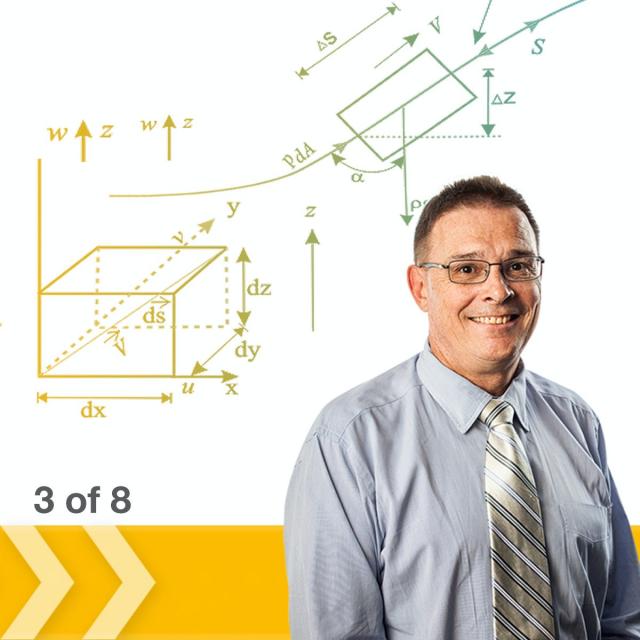
This course is an introduction to the study of bodies in motion as applied to engineering systems and structures. We will study the dynamics of particle motion and bodies in rigid planar (2D) motion. This will consist of both the kinematics and kinetics of motion. Kinematics deals with the geometrical aspects of motion describing position, velocity, and acceleration, all as a function of time. Kinetics is the study of forces acting on these bodies and how it affects their motion.

Oct 5th 2026
5-12 Weeks