BigQuery Fundamentals for Teradata Professionals (Coursera)

Offered by Google Cloud,
BigQuery Fundamentals for Teradata Professionals (Coursera)

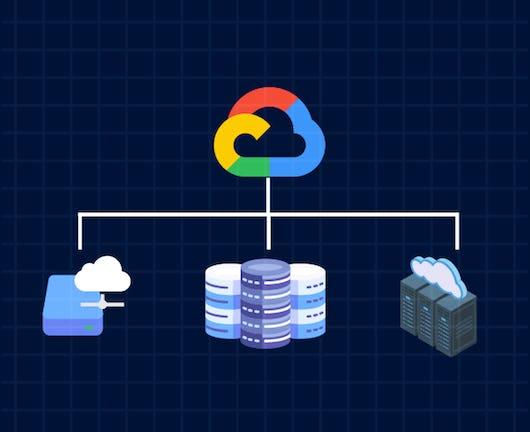
This course covers BigQuery fundamentals for professionals who are familiar with SQL-based cloud data warehouses in Teradata and want to begin working in BigQuery. Through interactive lecture content and hands-on labs, you learn how to provision resources, create and share data assets, ingest data, and optimize query performance in BigQuery. Drawing upon your knowledge of Teradata, you also learn about similarities and differences between Teradata and BigQuery to help you get started with data warehouses in BigQuery.

Class Deals by MOOC List - Click here and see Coursera's Active Discounts, Deals, and Promo Codes.

What You Will Learn

  • Describe BigQuery’s architecture, resource provisioning, and data definition model.
  • Create, secure, and share BigQuery data assets using best practices.
  • Implement common patterns and best practices for designing schemas, ingesting data, and querying data in BigQuery.
  • Compare and contrast the differences and commonalities between Teradata and BigQuery.

Syllabus

WEEK 1
BigQuery Architecture and Resource Provisioning
This introductory module summarizes the key details of BigQuery architecture and resource provisioning including how BigQuery utilizes slots to execute SQL queries and workload management in BigQuery. Drawing upon your knowledge of Teradata, this module also provides a high-level overview of the similarities and differences between Teradata and BigQuery architecture and resource provisioning to help you get started with BigQuery.
BigQuery Data Definition Model
This module summarizes the key details of BigQuery’s resource hierarchy and data definition model, including how to create datasets and tables in BigQuery. Drawing upon your knowledge of Teradata, this module also provides a high-level overview of the similarities and differences between the Teradata and BigQuery resource hierarchies and primary data types to help you start working with data in BigQuery.
BigQuery and Google Cloud IAM
This module summarizes the key details of the Google Cloud Identity and Access Management (IAM) model, including how roles and permissions are applied to datasets and tables in BigQuery. Drawing upon your knowledge of Teradata, this module also provides a high-level overview of the similarities and differences in roles and permissions between Teradata and BigQuery to help you start securing and sharing your data in BigQuery.

WEEK 2
BigQuery Data Ingestion
This module summarizes the primary options and best practices for ingesting data into BigQuery, including batch data loading, streaming ingestion, and queries to external data sources. Drawing upon your knowledge of Teradata, this module also provides a high-level overview of the similarities and differences in data ingestion options between Teradata and BigQuery to help you start reading and loading your data into BigQuery.
BigQuery Schema Design and Optimization
This module summarizes common patterns and best practices for designing and optimizing table schemas in BigQuery, including the use of nested and repeated fields, partitioning, and clustering. Drawing upon your knowledge of Teradata, this module also provides a high-level overview of the similarities and differences in schema usage and design between Teradata and BigQuery to help you start structuring and optimizing your data in BigQuery.
SQL in BigQuery
This module summarizes the key features and operations of the Google Standard SQL dialect used in BigQuery and best practices for optimizing query performance and controlling costs in BigQuery. Drawing upon your knowledge of Teradata, this module also provides a high-level overview of the similarities and differences in the SQL dialects and features between Teradata and BigQuery to help you start running and optimizing queries in BigQuery.
Go to Class
MOOC List is learner-supported. When you buy through links on our site, we may earn an affiliate commission.

Related Courses

MySQL for Data Analytics and Business Intelligence (Coursera) Coursera
Edureka

MySQL for Data Analytics and Business Intelligence (Coursera)

Embark on a thorough educational expedition through the "Fundamentals of Database Management with MySQL" module. This foundational program aims to impart a robust comprehension of MySQL, a prominent Relational Database Management System (RDBMS). Participants will delve into crucial concepts, ranging from the fundamentals of SQL to more advanced topics like data retrieval, relationships, business intelligence, and data visualization.

Aug 10th 2026
1 Week
Introduction to Relational Databases (Coursera) Coursera
Illinois Tech

Introduction to Relational Databases (Coursera)

Database management systems are a crucial part of most large-scale industry and open-source systems. This course will introduce you to important concepts of database systems and design. We will learn what relational databases are, what they are used for, the theory underlying their design, and how to query and modify a database using the declarative SQL language.

Aug 10th 2026
4 Weeks
Snowflake - SnowPro Core Certification Preparation (Coursera) Coursera
Board Infinity

Snowflake - SnowPro Core Certification Preparation (Coursera)

"Snowflake - SnowPro Core Certification Preparation" is a comprehensive course meticulously crafted to guide learners through the essentials of Snowflake, preparing them for the SnowPro Core Certification. Spanning three modules, the course begins with the fundamentals of Snowflake, exploring its architecture, data loading, and modeling. The second module delves into operational and management aspects, including account management, performance optimization, and security.

Aug 17th 2026
3 Weeks
Accounting Data Analytics with Python (Coursera) Coursera
University of Illinois at Urbana-Champaign

Accounting Data Analytics with Python (Coursera)

This course focuses on developing Python skills for assembling business data. It will cover some of the same material from Introduction to Accounting Data Analytics and Visualization, but in a more general purpose programming environment (Jupyter Notebook for Python), rather than in Excel and the Visual Basic Editor. These concepts are taught within the context of one or more accounting data domains (e.g., financial statement data from EDGAR, stock data, loan data, point-of-sale data).

Aug 17th 2026
5-12 Weeks
Understanding Your Google Cloud Costs en Español (Coursera) Coursera
Google Cloud

Understanding Your Google Cloud Costs en Español (Coursera)

Understanding Your Google Cloud Platform (GCP) Costs es más apropiado para quienes desempeñan cargos relacionados con la tecnología o las finanzas, y son responsables de administrar los costos de GCP. Aprenderá a configurar una cuenta de facturación, organizar recursos y administrar permisos de acceso a la facturación.

Aug 17th 2026
3 Weeks
Google Cloud Customer Care Fundamentals (Coursera) Coursera
Google Cloud

Google Cloud Customer Care Fundamentals (Coursera)

This course will teach you how to get the most out of Google Cloud Support. You will learn about the different support services provided by Google Cloud Customer care, how to create and manage support cases, how to view known issues affecting Google Cloud services, and how to communicate effectively with Support Engineers. You will also learn about the different case priorities and Service Level Objectives (SLOs), increase your understanding around case status, and how to escalate a support case if necessary.

Aug 17th 2026
4 Weeks
Introduction to Structured Query Language (SQL) (Coursera) Coursera
University of Michigan

Introduction to Structured Query Language (SQL) (Coursera)

In this course, you'll walk through installation steps for installing a text editor, installing MAMP or XAMPP (or equivalent) and creating a MySql Database. You'll learn about single table queries and the basic syntax of the SQL language, as well as database design with multiple tables, foreign keys, and the JOIN operation. Lastly, you'll learn to model many-to-many relationships like those needed to represent users, roles, and courses.

Aug 3rd 2026
4 Weeks
Uso de bases de datos con Python (Coursera) Coursera
University of Michigan

Uso de bases de datos con Python (Coursera)

Este curso presentará a los estudiantes los conceptos básicos del lenguaje de consulta estructurado (Structured Query Language, SQL), así como el diseño básico de bases de datos para almacenar datos como parte de una iniciativa de varios pasos para recopilar, analizar y procesar datos. El curso utilizará SQLite3 como base de datos. También crearemos rastreadores web y procesos de visualización y recopilación de datos de varios pasos. Utilizaremos la biblioteca D3.js para realizar la visualización básica de datos.

Aug 17th 2026
5-12 Weeks