3D Models for Virtual Reality (Coursera)

3D Models for Virtual Reality (Coursera)

This course will begin your journey to creating Virtual Reality experiences. A Virtual Reality experience is a new world that you step into and are entirely immersed in. Creating a VR experience means creating that world and all the objects in it. In this course you will learn the basics of 3D graphics: how we create objects and how to lay them out to create an environment. You will learn techniques like materials and texturing that make your objects appear realistic. You will also learn about audio techniques to ensure that your experiences sound great as well as looking great.

Class Deals by MOOC List - Click here and see Coursera's Active Discounts, Deals, and Promo Codes.

In all of these topics we will pay attention to the particular requirements of Virtual Reality, including pitfalls and performance issues: making sure your environment runs fast enough in VR.
You will learn all of this using the professional game and VR engine, Unity3D. Unity is one of the most used game engine and is a relatively easy, but fully featured, introduction to 3D development.
The course will culminate in a project in which you will create your own VR scene. VR development is something you can only learn by doing it yourself, so working on your project will be the best way to learn.
Course 2 of 5 in the Virtual Reality Specialization.

Syllabus

WEEK 1
3D Graphics
This week you will begin developing 3D Virtual Reality Environments. We will cover the basics of 3D graphics, including a number of 3D engines and development environments that you can use. We will particularly focus on the Unity3D engine.

WEEK 2
VR Graphics
In this module you will carry on learning about 3D graphics, including how to use transforms to lay out a 3D scene and how to use materials to give your objects a distinctive appearance. You will also submit the first draft of your project.

WEEK 3
VR Audio
In this week you will learn about using sound in Virtual Reality and how you can use advanced 3D Audio techniques to enhance your experience.

WEEK 4
Content Creation: What works in VR?
In this final week of the course, we will put together everything we have learned to think about how to create compelling VR worlds. We will start by looking behind the scenes at how 3D graphics hardware works and why VR can be so demanding of computing power. Then we will think about the particular requirements of content creation for VR. You will finish by submitting the final version of your project for a peer review.

Go to Class
MOOC List is learner-supported. When you buy through links on our site, we may earn an affiliate commission.

Related Courses

Introduction to TCP/IP (Coursera) Coursera
Yonsei University

Introduction to TCP/IP (Coursera)

You use the Internet through your PC (Personal Computer), laptop, tablet, smartpad, and smartphone every day in everything you do. Through your own PC/laptop, you can easily learn everything about the Internet, and that is what this course is focused on. In this course ‘Introduction to TCP/IP,’ you will learn the operational functions of Internet technologies (which include IPv4, IPv6, TCP, UDP, addressing, routing, domain names, etc.) and your PC/laptop's security and gateway Internet setup and basic principles.

Oct 12th 2026
5-12 Weeks
International Cyber Conflicts (Coursera) Coursera
The State University of New York

International Cyber Conflicts (Coursera)

By nature, cyber conflicts are an international issue that span across nation-state borders. By the end of the course, you will be able to apply the knowledge gained for analysis and management of international cyber incidents and conflicts including for activities such as development of policy related to cybercrime and cyberwarfare. Management of cyber incidents and conflicts requires an interdisciplinary perspective including an understanding of: 1) characteristics of the cyber threats and conflicts themselves, 2) international efforts to reduce and improve cyber security, and 3) psychological and sociopolitical factors.

Sep 28th 2026
5-12 Weeks
Client Needs and Software Requirements (Coursera) Coursera
University of Alberta

Client Needs and Software Requirements (Coursera)

This course covers practical techniques to elicit and express software requirements from client interactions. Upon successful completion of this course, you will be able to: Create clear requirements to drive effective software development; visualize client needs using low-fidelity prototypes; maximize the effectiveness of client interactions - adapt to changing product requirements.

Sep 28th 2026
4 Weeks
Design Computing: 3D Modeling in Rhinoceros with Python/Rhinoscript (Coursera) Coursera
University of Michigan

Design Computing: 3D Modeling in Rhinoceros with Python/Rhinoscript (Coursera)

Why should a designer learn to code? As our world is increasingly impacted by the use of algorithms, designers must learn how to use and create design computing programs. Designers must go beyond the narrowly focused use of computers in the automation of simple drafting/modeling tasks and instead explore the extraordinary potential digitalization holds for design culture/practice.

Oct 12th 2026
5-12 Weeks
Operating System Virtualization - Master's (Coursera) Coursera
Illinois Tech

Operating System Virtualization - Master's (Coursera)

Each successful student in this course will become familiar with hypervisors, virtualization terms, infrastructure considerations, and appropriate use cases. While designed to give an overview of today’s Virtualization technologies and methods, students in the course will gain enough practical knowledge to begin deploying various hypervisors and virtual machine environments using current industry standard platforms.

Oct 12th 2026
5-12 Weeks
Image and video processing: From Mars to Hollywood with a stop at the hospital (Coursera) Coursera
Duke University

Image and video processing: From Mars to Hollywood with a stop at the hospital (Coursera)

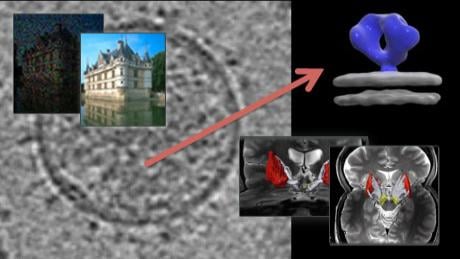
In this course, you will learn the science behind how digital images and video are made, altered, stored, and used. We will look at the vast world of digital imaging, from how computers and digital cameras form images to how digital special effects are used in Hollywood movies to how the Mars Rover was able to send photographs across millions of miles of space.

Oct 5th 2026
5-12 Weeks
Approximation Algorithms Part I (Coursera) Coursera
École normale supérieure

Approximation Algorithms Part I (Coursera)

How efficiently can you pack objects into a minimum number of boxes? How well can you cluster nodes so as to cheaply separate a network into components around a few centers? These are examples of NP-hard combinatorial optimization problems. It is most likely impossible to solve such problems efficiently, so our aim is to give an approximate solution that can be computed in polynomial time and that at the same time has provable guarantees on its cost relative to the optimum.

Sep 28th 2026
5-12 Weeks
Foundations of Objective-C App Development (Coursera) Coursera
University of California, Irvine

Foundations of Objective-C App Development (Coursera)

An introduction to the Objective-C programming language. This will prepare you for more extensive iOS app development and build a foundation for advanced iOS development topics. Objective-C programming requires a Mac laptop or desktop computer. An iOS device is optional if the learner is willing to working exclusively with the simulator. Some learners have been able to work with an OS X virtual machine on Windows, but explaining how to do that is beyond the scope of this course.

Sep 28th 2026
4 Weeks
操作系统原理 (Operating Systems) (Coursera) Coursera
Peking University

操作系统原理 (Operating Systems) (Coursera)

操作系统原理》是针对计算机科学技术专业三年级本科生开设的一门专业基础课程。本课程着重学生系统观的培养,通过重点讲述操作系统的内部结构、工作原理及典型技术的实现,使学生建立起对操作系统的整体及各个功能模块的认识,从而系统掌握计算机的专业知识,进一步提升学生的软件开发能力乃至系统软件开发能力。

Sep 28th 2026
13-24 Weeks
Algorithmic Thinking (Part 1) (Coursera) Coursera
Rice University

Algorithmic Thinking (Part 1) (Coursera)

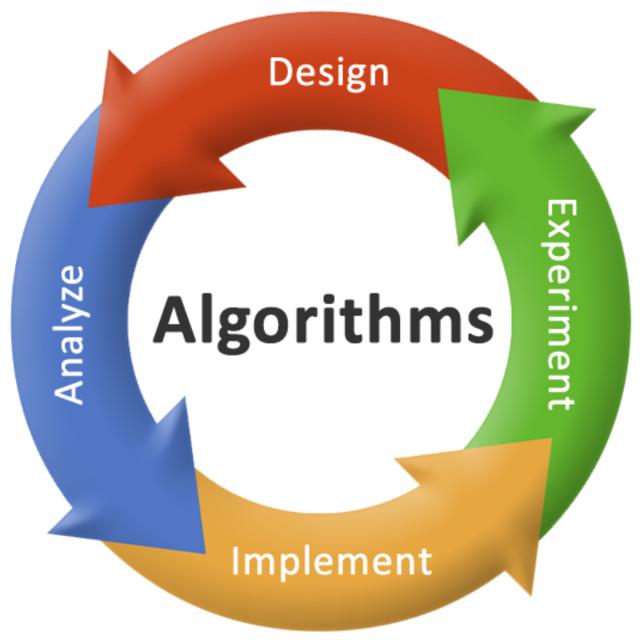
Experienced Computer Scientists analyze and solve computational problems at a level of abstraction that is beyond that of any particular programming language. This two-part class is designed to train students in the mathematical concepts and process of "Algorithmic Thinking", allowing them to build simpler, more efficient solutions to computational problems.

Oct 5th 2026
4 Weeks
Introduction to 3D Modeling (Coursera) Coursera
University of Michigan

Introduction to 3D Modeling (Coursera)

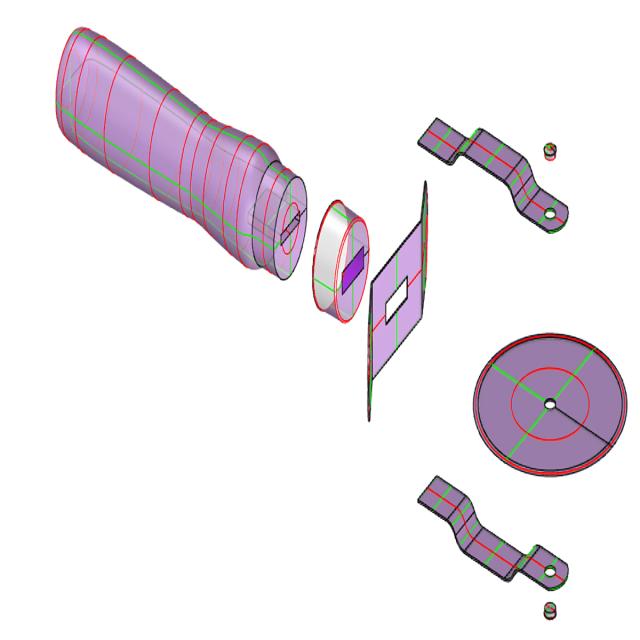
On this four-week practical course from the University of Michigan, you’ll not only learn how to use the Rhino software to create your 3D models, but you’ll also gain basic design skills to help bring your imagination to life. This course will guide you through 3D modeling within Rhino, so you’ll cover the fundamentals of the software as well as 3D modeling in general. You’ll first look at how to navigate the user interface and the different tools that you’ll be using to create models throughout this course. You’ll familiarize yourself with the 3D space and 3D objects before jumping straight in to create your own objects and building blocks.

Oct 5th 2026
4 Weeks