Visual Perception (Coursera)

Offered by Columbia University,
Visual Perception (Coursera)

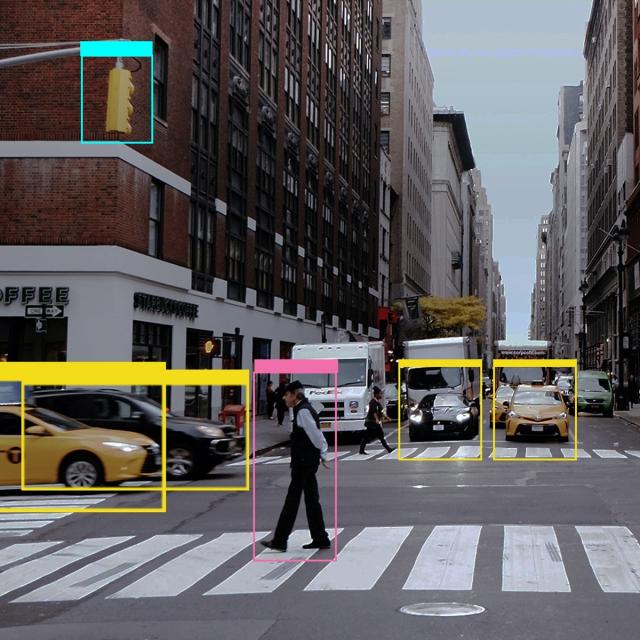
The ultimate goal of a computer vision system is to generate a detailed symbolic description of each image shown. This course focuses on the all-important problem of perception. We first describe the problem of tracking objects in complex scenes. We look at two key challenges in this context. The first is the separation of an image into object and background using a technique called change detection.

Class Deals by MOOC List - Click here and see Coursera's Active Discounts, Deals, and Promo Codes.

The second is the tracking of one or more objects in a video. Next, we examine the problem of segmenting an image into meaningful regions. In particular, we take a bottom-up approach where pixels with similar attributes are grouped together to obtain a region.
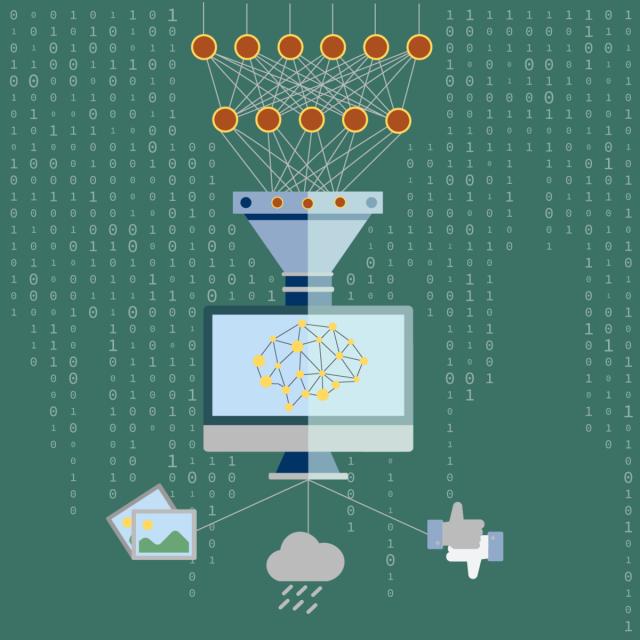
Finally, we tackle the problem of object recognition. We describe two approaches to the problem. The first directly recognize an object and its pose using the appearance of the object. This method is based on the concept of dimension reduction, which is achieved using principal component analysis. The second approach is to use a neural network to solve the recognition problem as one of learning a mapping from the input (image) to the output (object class, object identity, activity, etc.). We describe how a neural network is constructed and how it is trained using the backpropagation algorithm.

What You Will Learn

  • Design algorithms for detecting meaningful changes in a scene
  • Develop methods for tracking objects in a video while the object undergoes changes in pose and illumination
  • Learn several approaches to segmenting an image into meaningful regions
  • Create an end-to-end pipeline for learning and recognizing objects based on their visual appearance

Course 5 of 5 in the First Principles of Computer Vision Specialization

Syllabus

WEEK 1: Getting Started: Visual Perception
WEEK 2: Object Tracking
WEEK 3: Image Segmentation
WEEK 4: Appearance Matching
WEEK 5: Neural Networks

Go to Class
MOOC List is learner-supported. When you buy through links on our site, we may earn an affiliate commission.

Related Courses

Machine Learning Models in Science (Coursera) Coursera
LearnQuest

Machine Learning Models in Science (Coursera)

This course is aimed at anyone interested in applying machine learning techniques to scientific problems. In this course, we'll learn about the complete machine learning pipeline, from reading in, cleaning, and transforming data to running basic and advanced machine learning algorithms. We'll start with data preprocessing techniques, such as PCA and LDA. Then, we'll dive into the fundamental AI algorithms: SVMs and K-means clustering.

Jun 1st 2026
4 Weeks
Machine Learning Using SAS Viya (Coursera) Coursera
SAS

Machine Learning Using SAS Viya (Coursera)

This course covers the theoretical foundation for different techniques associated with supervised machine learning models. In addition, a business case study is defined to guide participants through all steps of the analytical life cycle, from problem understanding to model deployment, through data preparation, feature selection, model training and validation, and model assessment. A series of demonstrations and exercises is used to reinforce the concepts and the analytical approach to solving business problems.

Jun 8th 2026
5-12 Weeks
Introduction to Deep Learning & Neural Networks with Keras (Coursera) Coursera
IBM

Introduction to Deep Learning & Neural Networks with Keras (Coursera)

Looking to start a career in Deep Learning? Look no further. This course will introduce you to the field of deep learning and help you answer many questions that people are asking nowadays, like what is deep learning, and how do deep learning models compare to artificial neural networks? You will learn about the different deep learning models and build your first deep learning model using the Keras library.

Jun 8th 2026
5-12 Weeks
Computer Vision with Embedded Machine Learning (Coursera) Coursera
Edge Impulse

Computer Vision with Embedded Machine Learning (Coursera)

Computer vision (CV) is a fascinating field of study that attempts to automate the process of assigning meaning to digital images or videos. In other words, we are helping computers see and understand the world around us! A number of machine learning (ML) algorithms and techniques can be used to accomplish CV tasks, and as ML becomes faster and more efficient, we can deploy these techniques to embedded systems.

Jun 8th 2026
3 Weeks
Introduction to Computer Vision with Watson and OpenCV (Coursera) Coursera
IBM

Introduction to Computer Vision with Watson and OpenCV (Coursera)

Computer Vision is one of the most exciting fields in Machine Learning and AI. It has applications in many industries such as self-driving cars, robotics, augmented reality, face detection in law enforcement agencies. In this beginner-friendly course you will understand about computer vision, and will learn about its various applications across many industries.

Jun 1st 2026
4 Weeks
Introduction to Deep Learning for Computer Vision (Coursera) Coursera
MathWorks

Introduction to Deep Learning for Computer Vision (Coursera)

Starting with zero deep learning knowledge, this foundational course will guide you to effectively train cutting-edge models for image classification purposes. From analyzing medical images to recognizing traffic signs, classification is important for many applications. Classification models also serve as the backbone for more complicated object detection models.

Jun 8th 2026
4 Weeks
Natural Language Processing with Probabilistic Models (Coursera) Coursera
DeepLearning.AI

Natural Language Processing with Probabilistic Models (Coursera)

In Course 2 of the Natural Language Processing Specialization, offered by deeplearning.ai, you will: a) Create a simple auto-correct algorithm using minimum edit distance and dynamic programming; b) Apply the Viterbi Algorithm for part-of-speech (POS) tagging, which is important for computational linguistics, c) Write a better auto-complete algorithm using an N-gram language model, and d) Write your own Word2Vec model that uses a neural network to compute word embeddings using a continuous bag-of-words model.

Jun 1st 2026
4 Weeks
Getting Started with Machine Learning at the Edge on Arm (Coursera) Coursera
Arm

Getting Started with Machine Learning at the Edge on Arm (Coursera)

The age of machine learning has arrived! Arm technology is powering a new generation of connected devices with sophisticated sensors that can collect a vast range of environmental, spatial and audio/visual data. Typically this data is processed in the cloud using advanced machine learning tools that are enabling new applications reshaping the way we work, travel, live and play.

Jun 8th 2026
5-12 Weeks
Computer Vision Basics (Coursera) Coursera
University at Buffalo,The State University of New York

Computer Vision Basics (Coursera)

By the end of this course, learners will understand what computer vision is, as well as its mission of making computers see and interpret the world as humans do, by learning core concepts of the field and receiving an introduction to human vision capabilities. They are equipped to identify some key application areas of computer vision and understand the digital imaging process. The course covers crucial elements that enable computer vision: digital signal processing, neuroscience and artificial intelligence.

Jun 1st 2026
4 Weeks
Neural Networks and Deep Learning (Coursera) Coursera
DeepLearning.AI

Neural Networks and Deep Learning (Coursera)

If you want to break into cutting-edge AI, this course will help you do so. Deep learning engineers are highly sought after, and mastering deep learning will give you numerous new career opportunities. Deep learning is also a new "superpower" that will let you build AI systems that just weren't possible a few years ago. In this course, you will learn the foundations of deep learning.

Jun 8th 2026
4 Weeks
Deep Learning for Business (Coursera) Coursera
Yonsei University

Deep Learning for Business (Coursera)

Your smartphone, smartwatch, and automobile (if it is a newer model) have AI (Artificial Intelligence) inside serving you every day. In the near future, more advanced “self-learning” capable DL (Deep Learning) and ML (Machine Learning) technology will be used in almost every aspect of your business and industry. So now is the right time to learn what DL and ML is and how to use it in advantage of your company. This course has three parts, where the first part focuses on DL and ML technology based future business strategy including details on new state-of-the-art products/services and open source DL software, which are the future enablers.

Jun 1st 2026
5-12 Weeks