UiPath Orchestrator and Capstone Projects (Coursera)

Offered by UiPath,
UiPath Orchestrator and Capstone Projects (Coursera)

UiPath Orchestrator and Capstone Projects course will provide knowledge about Orchestrator and its capabilities. Further, the learning extends through understanding the Orchestrator user Interface, Contexts of Orchestrator and Assets and Queues in Orchestrator. The Capstone Projects will help you integrate and apply the knowledge gained from completing the RPA specialization. While working on the projects, you will apply critical thinking to solve challenging automation problems and develop skills to build robust automation.

Class Deals by MOOC List - Click here and see Coursera's Active Discounts, Deals, and Promo Codes.

What You Will Learn

  • Orchestrator User Interface and Capabilities
  • Assets
  • Queues

Course 6 of 6 in the Robotic Process Automation (RPA) Specialization.

Syllabus

WEEK 1
Orchestrator Overview
This module introduces Orchestrator and its capabilities.

WEEK 2
Functionalities of Orchestrator
This module explains Orchestrator User Interface, Contexts of Orchestrator and introduces Assets and Queues in Orchestrator.

WEEK 3
Capstone Project
This module comprises Capstone Projects.
Go to Class
MOOC List is learner-supported. When you buy through links on our site, we may earn an affiliate commission.

Related Courses

Assets in Accounting (Coursera) Coursera
Intuit

Assets in Accounting (Coursera)

In this second course, you will dive deeper into the world of bookkeeping and focus on accounting for assets. If you are familiar with bookkeeping basics, such as double entry accounting, you are ready for this course. You will gain an understanding of common asset types, learn how to account for inventory, calculate cost of goods sold, and work with Property, Plant, and Equipment (PP&E).

Jul 6th 2026
4 Weeks
Data Structures & Algorithms I: ArrayLists, LinkedLists, Stacks and Queues (edX) EdX
Georgia Institute of Technology,GTx

Data Structures & Algorithms I: ArrayLists, LinkedLists, Stacks and Queues (edX)

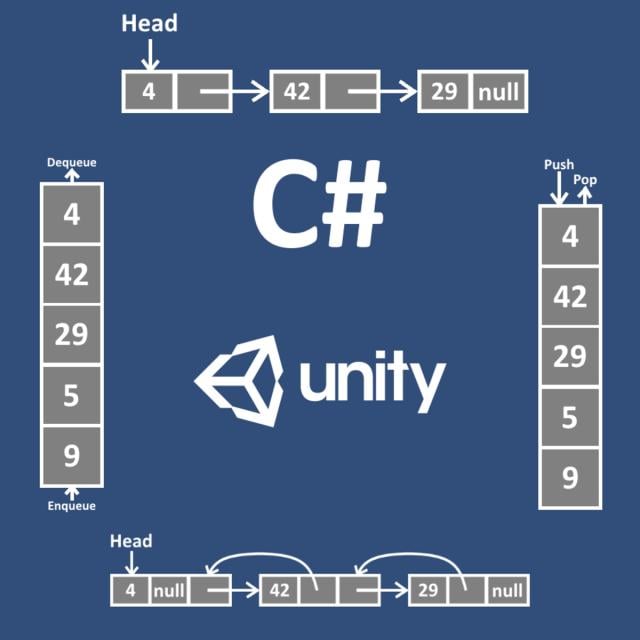
Work with the principles of data storage in Arrays, ArrayLists & LinkedList nodes. Understand their operations and performance with visualizations. Implement low-level linear, linked data structures with recursive methods, and explore their edge cases. Extend these structures to the Abstract Data Types, Stacks, Queues and Deques.

Self Paced
Self-Paced
Step into RPA (Coursera) Coursera
UiPath

Step into RPA (Coursera)

Step into RPA is a 4-hour course where you will learn the basic concepts of Robotic Process Automation, commonly known as RPA, and understand the capabilities of software robots. The course equips you with skills to automate repetitive day-to-day tasks. This course is tailored for non-technical audience who want to learn the basics of Robotic Process Automation and have basic knowledge of computers.

Aug 3rd 2026
1 Week
Assets, Threats, and Vulnerabilities (Coursera) Coursera
Google

Assets, Threats, and Vulnerabilities (Coursera)

This is the fifth course in the Google Cybersecurity Certificate. These courses will equip you with the skills you need to apply for an entry-level cybersecurity job. You’ll build on your understanding of the topics that were introduced in the fourth Google Cybersecurity Certificate course. In this course, you will explore the concepts of assets, threats, and vulnerabilities.

Jul 27th 2026
4 Weeks
计算机辅助翻译原理与实践 Principles and Practice of Computer-Aided Translation (Coursera) Coursera
Peking University

计算机辅助翻译原理与实践 Principles and Practice of Computer-Aided Translation (Coursera)

讲授计算机辅助翻译技术的基本概念,及多种辅助翻译工具的原理和使用方法,锻炼学生在技术环境下从事翻译工作等其他各类语言服务工作的能力,并帮助学生理解信息化时代的语言服务工作。 This course introduces the basic concepts of computer-aided translation technology and helps students learn to use computer-aided translation tools.

Aug 17th 2026
13-24 Weeks
Advanced Data Engineering (Coursera) Coursera
Duke University

Advanced Data Engineering (Coursera)

In this advanced course, you will gain practical expertise in scaling data engineering systems using cutting-edge tools and techniques. This course is designed for data scientists, data engineers, and anyone with a foundational understanding of data handling who desires to escalate their skills to handle larger, more complex datasets efficiently.

Jul 27th 2026
4 Weeks
Automation Business Analyst (Coursera) Coursera
UiPath

Automation Business Analyst (Coursera)

Change is inevitable and so are the digital disruptions in every industry. What’s important from a business perspective is to align and adapt to such digital disruptions. In today’s competitive business market, the key to success is wise data-driven decisions, made based on reliable information. As part of your work responsibilities, you would have discovered, synthesized, and analyzed information collected from various sources at some point in time. This is Business Analysis.

Aug 17th 2026
5-12 Weeks
Genome Sequencing (Bioinformatics II) (Coursera) Coursera
University of California, San Diego

Genome Sequencing (Bioinformatics II) (Coursera)

You may have heard a lot about genome sequencing and its potential to usher in an era of personalized medicine, but what does it mean to sequence a genome? Biologists still cannot read the nucleotides of an entire genome as you would read a book from beginning to end. However, they can read short pieces of DNA. In this course, we will see how graph theory can be used to assemble genomes from these short pieces. We will further learn about brute force algorithms and apply them to sequencing mini-proteins called antibiotics.

Aug 17th 2026
5-12 Weeks
Comparing Genes, Proteins, and Genomes (Bioinformatics III) (Coursera) Coursera
University of California, San Diego

Comparing Genes, Proteins, and Genomes (Bioinformatics III) (Coursera)

Once we have sequenced genomes in the previous course, we would like to compare them to determine how species have evolved and what makes them different. In the first half of the course, we will compare two short biological sequences, such as genes (i.e., short sequences of DNA) or proteins. We will encounter a powerful algorithmic tool called dynamic programming that will help us determine the number of mutations that have separated the two genes/proteins.

Aug 17th 2026
5-12 Weeks