Terrorism and Counterterrorism: Comparing Theory and Practice (Coursera)

Offered by Leiden University,
Terrorism and Counterterrorism: Comparing Theory and Practice (Coursera)

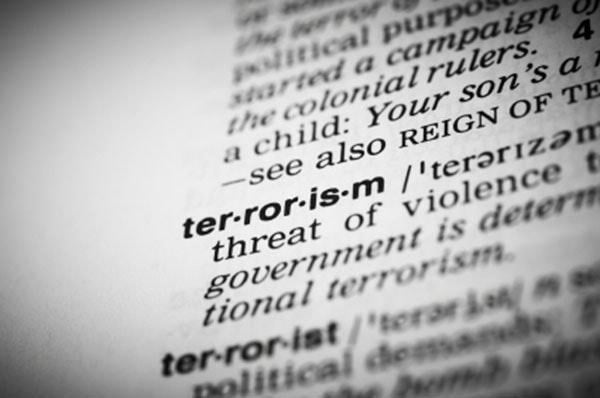
Terrorism has arguably been one of the defining factors of our age. It frequently makes headlines, threatening or attacking governments, private business and ordinary citizens. And in many parts of the world, it has been one of the most important threats to peace, security and stability. But what does this exactly mean? What is the nature of this threat? Who or what is threatened, how, by whom and why? What can be done about it or how can we at least limit the impact of terrorism and make sure that terrorists do not make headlines and manage to scare us? These are just a handful of questions that will be addressed in this course that consists of three parts.

Class Deals by MOOC List - Click here and see Coursera's Active Discounts, Deals, and Promo Codes.

First it focuses on the essence of terrorism as an instrument to achieve certain goals, in addition to an exploration of this phenomenon and the difficulties in defining it.
The second part provides an overview of the state of the art in (counter) terrorism studies. Since ‘9/11’ terrorism studies have grown exponentially, reflecting the rise in perceived threats. But what has academia come up with? What theories, assumptions and conventional wisdom has it produced that could be of help in understanding terrorism and dealing with it? The most interesting results are examined and compared with empirical evidence with the aim to either stress their importance or to debunk them as myths.
The final part looks into the implications and possibilities for policy making. The course ends with a module specifically designed to address one of today's most topical issue: the foreign fighter phenomenon.

Syllabus

WEEK 1
Welcome & the essence of terrorism
In this module, you can find all the information you need in order to be able to successfully complete the course.
After you have familiarised yourself with the course, we move to the content of week 1. You will learn about the definition of terrorism. What exactly is terrorism? Who and where are its victims? After completing this module, you will understand why it is so difficult to arrive at a generally accepted definition of this term.

WEEK 2
Researching Terrorism and Counterterrorism
In this module, you will learn more about terrorism and counterterrorism studies. It is a relatively new field of study that owes much to research in related disciplines. You will get an overview of where the key centres and scholars are located. Also, you will understand the three main approaches that are used in this academic field and recognize their strengths and weaknesses.

WEEK 3
5 Assumptions on Terrorism
The subject of terrorism often falls prey to unfounded assumptions. Media, politicians, but also scholars frequently make far-reaching claims about this topic, such as the notion that terrorism is caused by poverty. In this module, we will critically investigate some of these assumptions to see if they are indeed true, partly true, false or perhaps even a myth (a widely held belief that is nevertheless still false).

WEEK 4
5 Assumptions on Counterterrorism
In this module, we will continue the work of module 3 and look into five assumptions on counterterrorism. It is highly relevant to keep investigating assumptions that underlie CT-policy, both from an effectiveness perspective (is it really countering terrorism?) but also because these policies often have a large impact on societies and might also have unintended consequences.

WEEK 5
Dealing with Terrorism and the Future
After having tested these assumptions, we will make up the balance sheet. What are some of the remaining “un- and underresearched” topics in (counter)terrorism studies? We will also explore the concepts of fear management and resilience. Finally, we will look into the future of terrorism: what can we expect in the years to come?

WEEK 6
Making Headlines Today - Foreign Fighters
The final module of this course will look into a highly topical and politically sensitive issue of today: foreign fighters. Since the beginning of the civil war, high numbers of foreign fighters have joined the struggle, including many from Western countries. In this module, we will see who these people are and why they are going. Also, we will discuss to what extent these fighters pose a threat and which policy options are available to address this phenomenon.

Go to Class
MOOC List is learner-supported. When you buy through links on our site, we may earn an affiliate commission.

Related Courses

International Humanitarian Law in Theory and Practice (Coursera) Coursera
Leiden University,Kalshoven-Gieskes Forum

International Humanitarian Law in Theory and Practice (Coursera)

“International Humanitarian Law in Theory and Practice” is the first MOOC of the Kalshoven-Gieskes Forum on International Humanitarian Law, which is the platform within the Grotius Centre for International Legal Studies of Leiden University for the research, teaching and dissemination of international humanitarian law (IHL).

Aug 10th 2026
5-12 Weeks
The Modern and the Postmodern (Part 2) (Coursera) Coursera
Wesleyan University

The Modern and the Postmodern (Part 2) (Coursera)

This course examines how the idea of "the modern" develops at the end of the 18th century in European philosophy and literature, and how being modern (or progressive, or hip) became one of the crucial criteria for understanding and evaluating cultural change. Are we still in modernity, or have we moved beyond the modern to the postmodern?

Aug 10th 2026
5-12 Weeks
Introduction to Network Security (Coursera) Coursera
University of London,Royal Holloway, University of London

Introduction to Network Security (Coursera)

The security of computer networks is a key element in cyber security. Computer networking provides the foundational connectivity services that are used for the world wide web, distributed computer applications and services, operations and manufacturing, and national infrastructure. This course provides understanding of key technologies used in computer networks and infrastructure. This includes protocols, computer networks, data centres, operational technologies that form key infrastructure critical to the success of organisations and services from a local to an international scale.

Aug 10th 2026
5-12 Weeks
Exploring Beethoven’s Piano Sonatas Part 2 (Coursera) Coursera
Curtis Institute of Music

Exploring Beethoven’s Piano Sonatas Part 2 (Coursera)

Welcome to Part 2 of Exploring Beethoven's Piano Sonatas! I'm delighted to launch another set of new lectures of this course as Part 2. As before, this class is meant for people of all levels of experience with Beethoven's music (including no experience at all!). Remember that you are able to watch the lectures as many times as you like, at whatever pace is comfortable for you.

Aug 10th 2026
5-12 Weeks
Implementing a Risk Management Framework (Coursera) Coursera
University System of Georgia

Implementing a Risk Management Framework (Coursera)

The ultimate destination for a security manager is the Chief Information Security Officer (or Chief Security Officer) a senior executive role responsible for all cybersecurity operations in the organization. But how do you get from entry-level IT or security employee to the CISO’s office and what do you need to know when you get there? This course examines the career path and requirements to be an effective CISO, as well as the roles and responsibilities of the position.

Aug 10th 2026
5-12 Weeks
Malware Analysis and Introduction to Assembly Language (Coursera) Coursera
IBM

Malware Analysis and Introduction to Assembly Language (Coursera)

Malicious software, or malware, is typically delivered over a network and is designed to cause disruption to a computer, client, server, or network. Disruptions can include leaked private information, unauthorized access to information or systems, blocked user access, interference with security and privacy, or numerous other variations of attacking systems.

Aug 10th 2026
5-12 Weeks
Global Diplomacy – Diplomacy in the Modern World (Coursera) Coursera
University of London,SOAS University of London

Global Diplomacy – Diplomacy in the Modern World (Coursera)

The Global Diplomacy course is a unique offering to the MOOC environment. Bringing together cutting edge research in the broad fields of Diplomatic and International Studies, award winning distance learning delivery and the instructors previous experience of delivering a successful MOOC. Please see the volume Global Diplomacy: Theories, Types and Models authored with Dr Alison Holmes, (Westview, 2016), and the Understanding Research Methods MOOC from Coursera.

Aug 10th 2026
5-12 Weeks
AWS Cloud Practitioner Essentials (Coursera) Coursera
AWS

AWS Cloud Practitioner Essentials (Coursera)

Welcome to AWS Cloud Practitioner Essentials. If you’re new to the cloud, whether you’re in a technical or non-technical role such as finance, legal, sales, marketing, this course will provide you with an understand of fundamental AWS Cloud concepts to help you gain confidence to contribute to your organization’s cloud initiatives. This course is also the starting point to prepare for your AWS Certified Cloud Practitioner certification whenever it’s convenient for you.

Aug 10th 2026
5-12 Weeks
Violences et religions (Coursera) Coursera
University of Geneva

Violences et religions (Coursera)

La question « violences et religions » est d’actualité, et pas seulement depuis les attentats d’Al-Qaïda ou de Daech. Pour bien la comprendre, ce cours propose de prendre du recul et de l’envisager sous un angle historique et comparatiste. Le domaine concerné étant l’espace euro-méditerranéen, ce sont essentiellement le christianisme et l’islam qui seront traités (quelques séquences sont également consacrées au judaïsme).

Aug 10th 2026
5-12 Weeks
Capstone: Autonomous Runway Detection for IoT (Coursera) Coursera
EIT Digital

Capstone: Autonomous Runway Detection for IoT (Coursera)

The students will develop a larger system using the learning outcomes from these courses, and the students will evaluate the developed system in a real-world programming environment. This course is a true engineering task in which the student must, not only implement the algorithm code, but also handle the interfaces between many different actors and hardware platforms.

Aug 10th 2026
3 Weeks