Pressure, Force, Motion, and Humidity Sensors (Coursera)

Pressure, Force, Motion, and Humidity Sensors (Coursera)

This is our third course in our specialization on Embedding Sensor and Motors. To get the most out of this course, you should first take our first course entitled Sensors and Sensor Circuits. Our first course gives you a tutorial on how to use the hardware and software development kit we have chosen for the lab exercises. This third course assumes that you already know how to use the kit.

Class Deals by MOOC List - Click here and see Coursera's Active Discounts, Deals, and Promo Codes.

After taking this course, you will be able to:
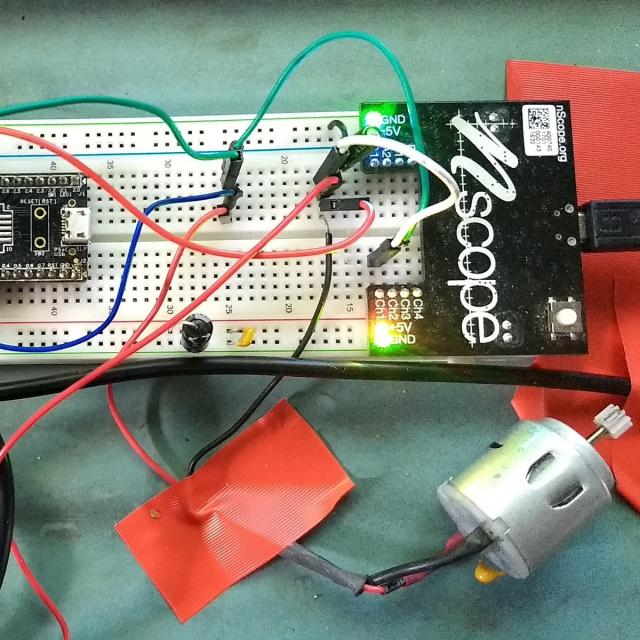
● Understand how to specify the proper AC or DC motor for a machine design.
● Integrate the motor to a machine, based on analysis of motor equations for voltage, current, torque and speed.
● Implement the motor and accompanying rotary sensor into a motor control circuit in both hardware and software.
● Add a motor and motor control circuit into a microprocessor based development kit.
● Create hardware and firmware to process motor feedback data to a microprocessor for further evaluation.
After taking this course, you will be able to:
● Understand how to specify the proper pressure, force, strain, position, motion, acceleration, occupancy, and humidity sensors for taking real-time process data.
● Implement these sensors into an embedded system in both hardware and software.
● Add the sensor and sensor interface into a microprocessor based development kit.
● Create hardware and firmware to process sensor signals and feed data to a microprocessor for further evaluation.
Course 3 of 4 in the Embedding Sensors and Motors Specialization.

What You Will Learn

  • Choose the right pressure, force, strain, position, motion, acceleration, occupancy, and humidity sensor for an application
  • Design these sensors into an embedded circuit.

Syllabus

WEEK 1
Pressure Sensors
In module 1 you will learn how to specify and use various types of pressure sensors for an embedded circuit. First, you will learn about piezoresistive, capacitive, and vacuum sensors. This includes a deep dive into the piezoresistive effect and how a Wheatstone bridge is used in these systems. This is followed by a discussion on pressure transmitters and how to calculate an error budget. Finally, we will give you examples of commercial pressure sensors and explain what you need to know to purchase them on a web site.

WEEK 2
Force and Strain Sensors and Touch Screens
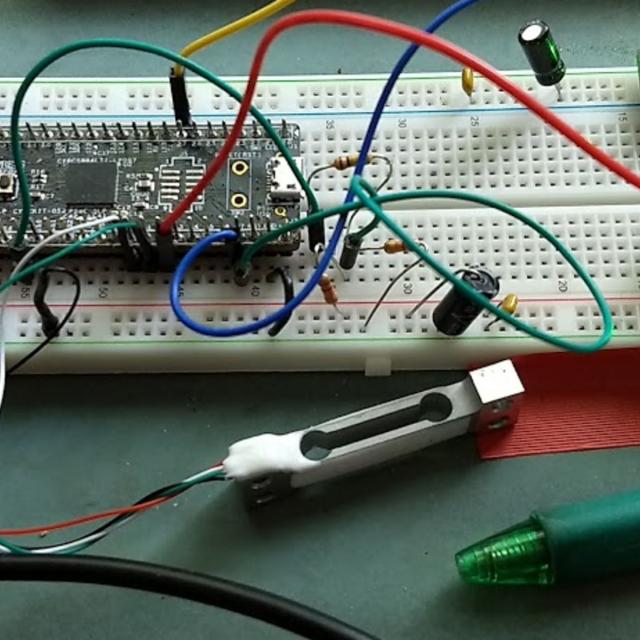
In module 2 you will learn how to specify and use various types of force and strain sensors for an embedded circuit. First, you will learn about how strain gauges use the piezoresistive effect and Wheatstone bridges to output a strain signal. Then you will learn how load cells use strain gauges to output a force signal. We have a video on a teardown of a weight scale for you to watch, where we teach you how the strain gauges are arranged in an unusual bridge circuit. Finally, we teach you about how touch screens used in kiosks, PC's and smart phones work. We have a lab exercise for you to perform on strain gauges, where you will get hands-on experience wiring the gauges into the PSoC system, and writing code to read the gauges.

WEEK 3
Position, Acceleration and Velocity Sensors
In module 3 you will first learn how magnetic detection sensors such as Hall sensors and LVDT's work, as well as how capacitive detection sensors. Then you will learn how to specify and use accelerometers in an embedded circuit. We will discuss how the first accelerometers used the piezoelectric effect to output a sinusoidal signal. We will review the key principles and equations involved in vibrational measurement. Then you will learn later accelerometers used the piezoresistive effect and internal strain gauges to output a sinusoidal signal representative of force, as opposed to acceleration. Then we will explain how accelerometers are now using MEMS technology and changes in capacitive to output the signal. We teach you about gyroscopes, both traditional mechanical ones, still used in aircraft for angular position sensing, and modern MEMS ones used to determine angular velocity.

WEEK 4
Motion, Distance and Humidity Sensors
In module 4 you will learn how to specify and use position and motion detectors in an embedded circuit. First, you will learn about the pyroelectric effect. Then you will learn how Passive Infrared motion detectors use the pyroelectric effect in commercial burglar alarms. Then you will learn how ultrasonic distance detection is accomplished, the same principles that whales, dolphins and bats use to navigate their worlds. We tackle microwave detection sensors last, as these are the most complex sensors that we cover in the course. They are used in long range position detection sensors and commercial security sensors for outdoors use.

WEEK 5
Course Projects
This module contains the materials you need to complete the Strain Gauge lab assignment.
Go to Class
MOOC List is learner-supported. When you buy through links on our site, we may earn an affiliate commission.

Related Courses

Intelligent Machining (Coursera) Coursera
University at Buffalo,The State University of New York

Intelligent Machining (Coursera)

Manufacturers are increasingly utilizing machine tools that are self-aware – they perceive their own states and the state of the surrounding environment – and are able to make decisions related to machine activity processes. This is called intelligent machining, and through this course students will receive a primer on its background, tools and related terminology.

Jun 15th 2026
4 Weeks
Introduction to Systems Engineering (Coursera) Coursera
UNSW Sydney - University of New South Wales

Introduction to Systems Engineering (Coursera)

"Introduction to Systems Engineering" uses a structured yet flexible approach to provide a holistic, solid foundation to the successful development of complicated systems. The course takes you step by step through the system life cycle, from design to development, production and management. You will learn how the different components of a system interrelate, and how each contributes to a project’s goals and success.

Jun 15th 2026
5-12 Weeks
Fundamentals of Engineering Exam Review (Coursera) Coursera
Georgia Institute of Technology

Fundamentals of Engineering Exam Review (Coursera)

The purpose of this course is to review the material covered in the Fundamentals of Engineering (FE) exam to enable the student to pass it. It will be presented in modules corresponding to the FE topics, particularly those in Civil and Mechanical Engineering. Each module will review main concepts, illustrate them with examples, and provide extensive practice problems.

Jun 15th 2026
5-12 Weeks
Sensors and Sensor Circuit Design (Coursera) Coursera
University of Colorado Boulder

Sensors and Sensor Circuit Design (Coursera)

After taking this course, you will be able to: understand how to specify the proper thermal, flow, or rotary sensor for taking real-time process data; implement thermal sensors into an embedded system in both hardware and software; add the sensor and sensor interface into a microprocessor based development kit; create hardware and firmware to process sensor signals and feed data to a microprocessor for further evaluation; study sensor signal noise and apply proper hardware techniques to reduce it to acceptable levels.

Jun 15th 2026
5-12 Weeks
Applications in Engineering Mechanics (Coursera) Coursera
Georgia Institute of Technology

Applications in Engineering Mechanics (Coursera)

This course applies principles learned in my course “Introduction to Engineering Mechanics” to analyze real world engineering structures. You will need to have mastered the engineering fundamentals from that class in order to be successful in this course offering. This course addresses the modeling and analysis of static equilibrium problems with an emphasis on real world engineering systems and problem solving.

Jun 15th 2026
5-12 Weeks
Advanced Engineering Systems in Motion: Dynamics of Three Dimensional (3D) Motion (Coursera) Coursera
Georgia Institute of Technology

Advanced Engineering Systems in Motion: Dynamics of Three Dimensional (3D) Motion (Coursera)

This course is an advanced study of bodies in motion as applied to engineering systems and structures. We will study the dynamics of rigid bodies in 3D motion. This will consist of both the kinematics and kinetics of motion. Kinematics deals with the geometrical aspects of motion describing position, velocity, and acceleration, all as a function of time. Kinetics is the study of forces acting on these bodies and how it affects their motion.

Jun 15th 2026
5-12 Weeks
Cyber Security in Manufacturing (Coursera) Coursera
University at Buffalo,The State University of New York

Cyber Security in Manufacturing (Coursera)

The nature of digital manufacturing and design (DM&D), and its heavy reliance on creating a digital thread of product and process data and information, makes it a prime target for hackers and counterfeiters. This course will introduce students to why creating a strong and secure infrastructure should be of paramount concern for anyone operating in the DM&D domain, and measures that can be employed to protect operational technologies, systems and resources.

Jun 15th 2026
4 Weeks
Advanced Manufacturing Process Analysis (Coursera) Coursera
University at Buffalo,The State University of New York

Advanced Manufacturing Process Analysis (Coursera)

Extreme variability is a fact of life in manufacturing environments, impacting product quality and yield. Through this course, students will learn why performing advanced analysis of manufacturing processes is integral for diagnosing and correcting operational flaws in order to improve yields and reduce costs. Gain insights into the best ways to collect, prepare and analyze data, as well as computational platforms that can be leveraged to collect and process data over sustained periods of time. Become better prepared to participate as a member of an advanced analysis team and share valuable inputs on effective implementation.

Jun 15th 2026
3 Weeks
Nanotechnology: A Maker’s Course (Coursera) Coursera
Duke University,University of North Carolina,North Carolina State University

Nanotechnology: A Maker’s Course (Coursera)

How can we create nano-structures that are 10,000 times smaller than the diameter of a human hair? How can we “see” at the nano-scale? Through instruction and lab demonstrations, in this course you will obtain a rich understanding of the capabilities of nanotechnology tools, and how to use this equipment for nano-scale fabrication and characterization.

Jun 15th 2026
5-12 Weeks
Engineering Systems in Motion: Dynamics of Particles and Bodies in 2D Motion (Coursera) Coursera
Georgia Institute of Technology

Engineering Systems in Motion: Dynamics of Particles and Bodies in 2D Motion (Coursera)

This course is an introduction to the study of bodies in motion as applied to engineering systems and structures. We will study the dynamics of particle motion and bodies in rigid planar (2D) motion. This will consist of both the kinematics and kinetics of motion. Kinematics deals with the geometrical aspects of motion describing position, velocity, and acceleration, all as a function of time. Kinetics is the study of forces acting on these bodies and how it affects their motion.

Jun 15th 2026
5-12 Weeks