Photography Fundamentals for Beginners (Udemy)

Photography Fundamentals for Beginners (Udemy)

Learn the exposure triangle (aperture, shutter speed, ISO) and basic composition rules in this easy photography course. You want to take better photos, right? If terms like aperture, shutter speed, ISO, and the exposure triangle aren't familiar - then this photography for beginners course is perfect for you. Whether you have a DSLR, mirrorless, bridge, point and shoot, or even just a smartphone, you should learn these main settings and rules that all professional photographers use.

Class Deals by MOOC List - Click here and see Udemy's Active Discounts, Deals, and Promo Codes.

What you'll learn

  • You will learn how to use the manual settings on your camera to properly expose a photo.
  • You will learn basic composition rules that will automatically improve your photography.
  • You will learn what aperture is, and how to use it creatively.
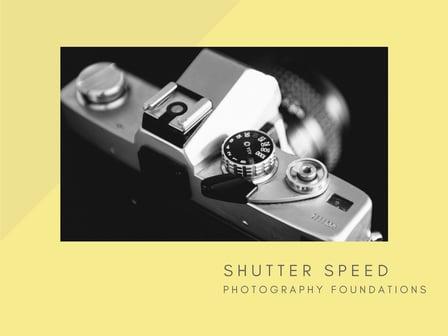
  • You will learn what shutter speed is, and how to prevent common beginner mistakes.
  • You will learn what ISO is, and how to prevent 'noisy' photos.
  • You will learn about the different photo settings and resolutions.
  • You will understand the basic settings and rules that all pro photographers once learned.

Requirements

  • There are no prerequisites for this course. This course is all about the basic settings and rules you should know as you start taking photos.
  • Most DSLR, mirrorless, point and shoot, and bridge camera users will benefit from this course. Even smartphone photographers might benefit from taking this course, though not all the settings will be available on all cameras.

With this Photography Fundamentals course, you'll understand how your camera actually works
After taking this beginner photography course, you'll know:

  • Aperture - Adjusting your f-stop, and what this does creatively to your photo
  • Shutter Speed - How to prevent a common beginner mistake with this setting
  • ISO - Preventing photos with digital noise and grain
  • Exposure - How to use aperture, shutter speed, ISO, lights, and filters to take well-exposed photos
  • Composition - Basic rules to follow... and when to break them
  • White Balance - Make sure your photo's colors look natural
  • Photo Quality & File Types - Best scenarios to use different file types

Who is the photography instructor?
My name is Phil Ebiner, I wanted to create this course for absolute beginners who want to know the basic settings and rules no matter what camera you're using.
I hope you enjoy my little course!
Phil

Who this course is for:

  • You are a beginner photographer, who doesn't understand things like aperture, shutter speed, or ISO.
  • You always use the automatic settings on your camera, and want to learn how to use the manual settings.
  • You are NOT an advanced photographer who knows how to manually expose your images.
Go to Class
MOOC List is learner-supported. When you buy through links on our site, we may earn an affiliate commission.

Related Courses

Photography Techniques: Light, Content, and Sharing (Coursera) Coursera
Michigan State University

Photography Techniques: Light, Content, and Sharing (Coursera)

Welcome to Course FOUR! In Modules 1-4 you will cover the final elements of the Specialization necessary to round out this introduction to the fundamentals of Photography, and prepare you for creating your own exciting project in the Capstone! You have come a long way since the beginning of this journey from Smartphone Basics to DSLR and Beyond. Just think of all the information you have absorbed and put to use in your assignments and quizzes, and the confidence you have gained that you CAN control the camera to make pictures you are proud to share.

Nov 30th 2026
4 Weeks
Nightscapes: Landscape Astrophotography (Skillshare) Skillshare
Skillshare

Nightscapes: Landscape Astrophotography (Skillshare)

Gain a new perspective on your universe that most people will never experience firsthand. This class will teach you all the tools necessary to photograph beautiful nighttime landscapes under the Milky Way. Whether you are a beginner that just got their first Digital SLR or a professional photographer looking to branch out into astrophotography for the first time, NIGHTSCAPES will teach you a unique form of photography that pushes the bounds of what you thought was possible with your camera.

Self Paced
Self-Paced
Camera Control (Coursera) Coursera
Michigan State University

Camera Control (Coursera)

Welcome to Course Two of Photography Basics and Beyond: From Smartphone to DSLR! Now that you have a broad understanding of the various types of cameras, the importance of seeing up Menus and Functions to gain control in your photography, and the difference between Auto and Program exposure modes, you are ready to move into even greater Camera Control!

Nov 30th 2026
4 Weeks
Stereoscopy: An Introduction to Victorian Stereo Photography (FutureLearn) FutureLearn
University of Edinburgh,National Museum of Scotland

Stereoscopy: An Introduction to Victorian Stereo Photography (FutureLearn)

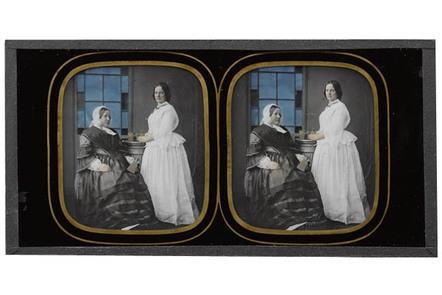
Discover why the stereoscope and stereo photography mesmerised Victorians when they first appeared at 1851’s Great Exhibition. Following its presentation to the world at the Great Exhibition in London in 1851, the stereoscope – a device that makes images appear 3D – mesmerised Victorians. Collecting and viewing stereo photographs became a craze.

No sessions available
2 Weeks
Creating a Digital Cultural Heritage Community (edX) EdX
KU Leuven University,KULeuvenX

Creating a Digital Cultural Heritage Community (edX)

Learn how to create a community for digital cultural heritage through innovative practices for user engagement. Do you want to know what happens behind the scenes of museums, archives and libraries? Have you ever wondered what these organisations do to share their collections with audiences? Would you like to learn how to build a strong digital community for cultural heritage?

Self Paced
Self-Paced
Introductory Photography Course (Udemy) Udemy
Instructor Made Course

Introductory Photography Course (Udemy)

The fastest way to get off 'Auto' mode and unlock the creative potential of your camera. I've been running this 1 day photography course around Australia & New Zealand since 2009, helping several thousand people gain more enjoyment from their passion - one small group at a time. However, as we're now busier than ever running our Photography Tours, time has come to throw open the doors and let everyone enjoy it!

Self Paced
Self-Paced
Intro to HDR Photography: Shooting and Editing High Dynamic Range | Learn with macphun (Skillshare) Skillshare
Skillshare

Intro to HDR Photography: Shooting and Editing High Dynamic Range | Learn with macphun (Skillshare)

Just what is HDR photography all about? Join photographer Matt Suess in an Arizona ghost town, and learn how he creates artistic, high-contrast scenes that jump off the screen. HDR stands for high dynamic range, a photography technique that mimics what the eye can see, merging multiple bracketed exposures into one vibrant image. Perfect for scenic landscapes, building interiors, and – in this case – vintage Americana, HDR allows you to bring out surreal detail in your highlights and shadows.

Self Paced
Self-Paced
Mastering Lightroom for Nature Photographers - 200 Level (Exciting) (Skillshare) Skillshare
Skillshare

Mastering Lightroom for Nature Photographers - 200 Level (Exciting) (Skillshare)

What would you give to stand shoulder-to-shoulder with Ansel Adams in the darkroom? To watch him wave his hand beneath focused beams of light as a reverse image of Full Moon over Half Dome burned into the paper's silver surface. No two prints would ever be precisely the same. He was as much an artist here as he was in the field.

Self Paced
Self-Paced
Writing and Disseminating Grey Literature (Coursera) Coursera
Indian Institute for Human Settlements

Writing and Disseminating Grey Literature (Coursera)

If you are a researcher, academic, student, development sector professional or a practitioner who is keen to reach the research-based knowledge you have created to a wider audience, this course is for you. Vast amounts of knowledge are produced by educational and research institutions through rigorous research and fieldwork. Yet, there is a dearth of access to this knowledge among non-academic communities (which includes practitioners, policymakers, and citizens) due to the language used. Researchers can bring visibility to grey literature if they engage with alternate public writing forms.

Dec 21st 2026
5-12 Weeks