Javascript Foundations (Aquent)

Offered by Aquent,
Javascript Foundations (Aquent)

JavaScript Foundations will teach you the fundamentals of programming with JavaScript and get started on the road to its mastery.

In this course, you will learn how to create code that can make basic decisions; employ efficient debugging techniques with browser developer tools; access and modify HTML elements and CSS styles on a page; and use JavaScript to communicate with a server. This course will also introduce you to the rapidly growing world of JavaScript libraries, and you'll get a chance to create a simple application with Backbone.js.
COURSE OUTLINE:

  • Lesson One: JavaScript Basics

This lesson focuses on the bare basics of what you need to know about JavaScript: working with variables, types of data in JavaScript, how to handle text and numbers, and even how to let your code make its own decisions. We’ll also talk about tools you need to get started, and how to begin debugging your code.

  • Lesson Two: More JavaScript Basics

In this lesson, you’ll learn about functions, a couple of new data types as well as arrays, and objects. We also get into events and advanced debugging. By the end, you'll be able to create small programs with more complex behavior that can react to user input.

  • Lesson Three: The DOM (Document Object Model)

The Document Object Model, or DOM, is a model of an HTML document, where each HTML element is represented by a JavaScript object. In this lesson, we’re going to show you how to use JavaScript to manipulate the DOM.

  • Lesson Four: Creating Elements, Fragments, And Templates

In this lesson, we'll take manipulation of the DOM a step further-creating brand new HTML elements, adding them to a page, removing existing elements from a page, and even moving elements around to rearrange a page. We'll also look at building and deploying document fragments.

  • Lesson Five: Server Communication

So far, we’ve been developing all our projects in a sandbox. In this lesson, we’ll move beyond the sandbox and begin communicating with the outside world by sending data to and receiving data from servers on the Web.

  • Lesson Six: Advanced Concepts

In this lesson, we wrap up by covering the subject of scope, going into a few basic concepts of application design, and then finally, looking at some application frameworks and doing a bit of hands-on work with one of those frameworks, Backbone JS.

Go to Class
MOOC List is learner-supported. When you buy through links on our site, we may earn an affiliate commission.

Related Courses

Programming Reactive Systems (Scala 2 version) (Coursera) Coursera
École Polytechnique Fédérale de Lausanne

Programming Reactive Systems (Scala 2 version) (Coursera)

Reactive programming is a set of techniques for implementing scalable, resilient and responsive systems as per the Reactive Manifesto. Such systems are based on asynchronous message-passing, and their basic building-blocks are event handlers. This course teaches how to implement reactive systems in Scala and Akka by using high-level abstractions, such as actors, asynchronous computations, and reactive streams.

Nov 30th 2026
5-12 Weeks
Programming Languages, Part A (Coursera) Coursera
University of Washington

Programming Languages, Part A (Coursera)

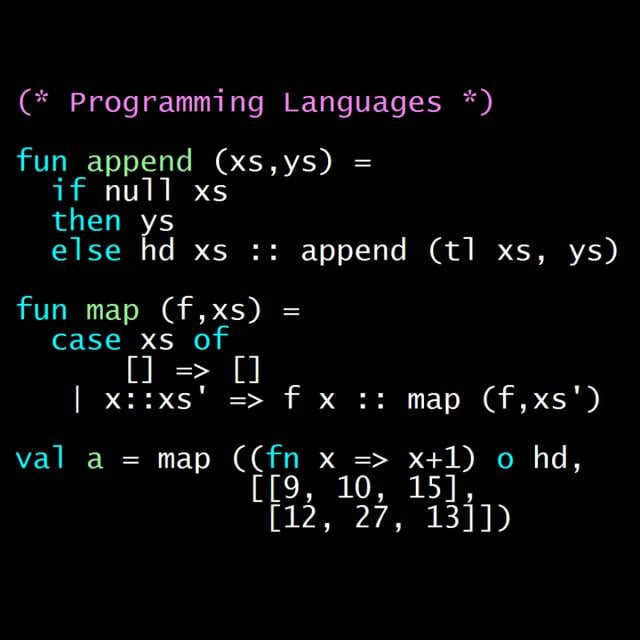
This course is an introduction to the basic concepts of programming languages, with a strong emphasis on functional programming. The course uses the languages ML, Racket, and Ruby as vehicles for teaching the concepts, but the real intent is to teach enough about how any language “fits together” to make you more effective programming in any language -- and in learning new ones.

Nov 30th 2026
5-12 Weeks
Modern Web Design (Aquent) Aquent Gymnasium
Aquent

Modern Web Design (Aquent)

Modern Web Design will prepare you to be a front-end developer by walking you through the basics of HTML, CSS and JavaScript. This course is an introduction to front-end development for the web. You will learn how to mark up content with HTML, use CSS as a design tool, and add interactivity to your web pages with JavaScript. You will also learn the basics of building a responsive website for mobile devices and tablets, as well as for the desktop.

Self Paced
Self-Paced
An Introduction to Interactive Programming in Python (Part 1) (Coursera) Coursera
Rice University

An Introduction to Interactive Programming in Python (Part 1) (Coursera)

This two-part course is designed to help students with very little or no computing background learn the basics of building simple interactive applications. Our language of choice, Python, is an easy-to learn, high-level computer language that is used in many of the computational courses offered on Coursera. To make learning Python easy, we have developed a new browser-based programming environment that makes developing interactive applications in Python simple.

Nov 30th 2026
5-12 Weeks
Computer Science: Algorithms, Theory, and Machines (Coursera) Coursera
Princeton University

Computer Science: Algorithms, Theory, and Machines (Coursera)

This course introduces the broader discipline of computer science to people having basic familiarity with Java programming. It covers the second half of our book Computer Science: An Interdisciplinary Approach (the first half is covered in our Coursera course Computer Science: Programming with a Purpose, to be released in the fall of 2018). Our intent is to demystify computation and to build awareness about the substantial intellectual underpinnings and rich history of the field of computer science.

Nov 30th 2026
5-12 Weeks
Foundations of Data Science: K-Means Clustering in Python (Coursera) Coursera
University of London,Goldsmiths, University of London

Foundations of Data Science: K-Means Clustering in Python (Coursera)

This MOOC, designed by an academic team from Goldsmiths, University of London, will quickly introduce you to the core concepts of Data Science to prepare you for intermediate and advanced Data Science courses. It focuses on the basic mathematics, statistics and programming skills that are necessary for typical data analysis tasks.

Nov 30th 2026
5-12 Weeks
Learn Bootstrap (Coursera) Coursera
Scrimba

Learn Bootstrap (Coursera)

This instructional course guides you through the essential knowledge required to build comprehensive websites using Bootstrap v4. Bootstrap is an open-source front-end framework designed for responsive development, prioritizing mobile-first websites and web applications. The Scrimba course offers interactive code engagement within tutorials, providing an opportunity to reinforce concepts as you learn.

Nov 30th 2026
1 Week
Programming Fundamentals (Coursera) Coursera
Duke University

Programming Fundamentals (Coursera)

Programming is an increasingly important skill, whether you aspire to a career in software development, or in other fields. This course is the first in the specialization Introduction to Programming in C, but its lessons extend to any language you might want to learn. This is because programming is fundamentally about figuring out how to solve a class of problems and writing the algorithm, a clear set of steps to solve any problem in its class.

Nov 30th 2026
4 Weeks
Build LLM Apps with LangChain.js (Coursera) Coursera
DeepLearning.AI

Build LLM Apps with LangChain.js (Coursera)

JavaScript is the world’s most popular programming language, and now developers can program in JavaScript to build powerful LLM apps. This course will show webdevs how to expand their toolkits with LangChain.js, a popular JavaScript framework for building with LLMs, and will cover useful concepts for creating powerful, context-aware applications.

Nov 30th 2026
1 Week
Functional Program Design in Scala (Scala 2 version) (Coursera) Coursera
École Polytechnique Fédérale de Lausanne

Functional Program Design in Scala (Scala 2 version) (Coursera)

In this course you will learn how to apply the functional programming style in the design of larger Scala applications. You'll get to know important new functional programming concepts, from lazy evaluation to structuring your libraries using monads. We'll work on larger and more involved examples, from state space exploration to random testing to discrete circuit simulators. You’ll also learn some best practices on how to write good Scala code in the real world. Finally, you will learn how to leverage the ability of the compiler to infer values from types.

Nov 30th 2026
5-12 Weeks