Java for Android (Coursera)

Offered by Vanderbilt University,
Java for Android (Coursera)

This MOOC teaches you how to program core features and classes from the Java programming language that are used in Android, which is the dominant platform for developing and deploying mobile device apps. In particular, this MOOC covers key Java programming language features that control the flow of execution through an app (such as Java’s various looping constructs and conditional statements), enable access to structured data (such as Java's built-in arrays and common classes in the Java Collections Framework, such as ArrayList and HashMap), group related operations and data into classes and interfaces (such as Java's primitive and user-defined types, fields, methods, generic parameters, and exceptions), customize the behavior of existing classes via inheritance and polymorphism (such as subclassing and overriding virtual methods).

Class Deals by MOOC List - Click here and see Coursera's Active Discounts, Deals, and Promo Codes.

Learners will apply these Java features in the context of core Android components (such as Activities and basic UI elements) by applying common tools (such as Android Studio) needed to develop Java programs and useful Android apps. Learners will work on several hands-on projects throughout the MOOC, i.e., each week will require learners to write solutions to programming assignments that reinforce the material covered in the lecture videos. There will be roughly 4-6 hours of student engagement time per week, including video lectures, quizzes, and programming assignments.
Course 1 of 5 in the Android App Development Specialization

Syllabus

WEEK 1
Module 1: MOOC Overview
Summarizes the organization of the MOOC and the topics it covers. It also discusses the MOOC prerequisites, workload, and learning strategies needed to complete the MOOC successfully. It then presents an overview of key features in the Java language, outlining its support for object-oriented programming concepts that guide the development of Android apps.
Module 2: Introduction to Android Studio
Provides an overview of Android Studio, explaining how to install it and apply it to develop a simple app using basic Java and Android features presented in this MOOC.
Module 3: Writing a Simple Android App Using Basic Java Features
Shows how to write a simple Android app that defines variables using primitive Java data types, shows how to assign values to those variables, and output them to the Android display using Java classes and methods.

WEEK 2
Module 4: Control Flow
Covers Java’s looping constructs (e.g., for loops, while loops, and do/while loops), as well as its conditional statements (e.g., if/else statements).
Module 5: Structured Data
Provides more detail on common data structures supported by Java, including built-in arrays, as well as core classes in the Java Collections Framework, such as ArrayList and HashMap.

WEEK 3
Module 6: Classes and Interfaces
Covers Java classes and interfaces, focusing on data types, fields, methods, generic parameters, and exceptions.
ModuIe 7: Inheritance and Polymorphism
Examines Java's inheritance and polymorphism features (e.g., extending classes and virtual methods).

WEEK 4
Module 8: Android Calculator App Mini-Project Assignment
Guides learners through the creation of an Android app that implements a simple calculator, which provides features for adding, subtracting, multiplying, and dividing numbers input by various means (e.g., via numbers and buttons on the Android user interface).


Go to Class
MOOC List is learner-supported. When you buy through links on our site, we may earn an affiliate commission.

Related Courses

Programming for Everybody (Getting Started with Python) (Coursera) Coursera
University of Michigan

Programming for Everybody (Getting Started with Python) (Coursera)

This course aims to teach everyone the basics of programming computers using Python. We cover the basics of how one constructs a program from a series of simple instructions in Python. The course has no pre-requisites and avoids all but the simplest mathematics. Anyone with moderate computer experience should be able to master the materials in this course.

Jul 27th 2026
5-12 Weeks
Programming Mobile Applications for Android Handheld Systems: Part 2 (Coursera) Coursera
University of Maryland, College Park

Programming Mobile Applications for Android Handheld Systems: Part 2 (Coursera)

This course introduces you to the design and implementation of Android applications for mobile devices. You will build upon concepts from the prior course, including handling notifications, using multimedia and graphics and incorporating touch and gestures into your apps.

Aug 3rd 2026
5-12 Weeks
Introduction to Genetics and Evolution (Coursera) Coursera
Duke University

Introduction to Genetics and Evolution (Coursera)

Introduction to Genetics and Evolution is a college-level class being offered simultaneously to new students at Duke University. The course gives interested people a very basic overview of some principles behind these very fundamental areas of biology. We often hear about new "genome sequences," commercial kits that can tell you about your ancestry (including pre-human) from your DNA or disease predispositions, debates about the truth of evolution, why animals behave the way they do, and how people found "genetic evidence for natural selection." This course provides the basic biology you need to understand all of these issues better, tries to clarify some misconceptions, and tries to prepare students for future, more advanced coursework in Biology (and especially evolutionary genetics). No prior coursework is assumed.

Aug 3rd 2026
5-12 Weeks
Orientação a Objetos com Java (Coursera) Coursera
Instituto Tecnológico de Aeronáutica

Orientação a Objetos com Java (Coursera)

Neste curso, assumimos que você já sabe desenvolver programas pequenos em Java, mas você talvez não se sinta ainda confortável em projetar programas mais complexos com método e organização. O objetivo deste curso é fazer você compreender os princípios de orientação a objetos por meio da linguagem Java e saber como eficientemente aplicar esses princípios na prática quando projetando e desenvolvendo software de maneira ágil. Os conceitos discutidos e experimentados por você neste curso serão a base para você poder compreender os novos conceitos apresentados nos cursos seguintes desta especialização.

Aug 3rd 2026
5-12 Weeks
Introduction and Programming with IoT Boards (Coursera) Coursera
Pohang University of Science and Technology - POSTECH

Introduction and Programming with IoT Boards (Coursera)

Internet of Things (IoT) is an emerging area of information and communications technology (ICT) involving many disciplines of computer science and engineering including sensors/actuators, communications networking, server platforms, data analytics and smart applications. IoT is considered to be an essential part of the 4th Industrial Revolution along with AI and Big Data. This course will be very useful to senior undergraduate and graduate students as well as engineers who are working in the industry.

Aug 3rd 2026
5-12 Weeks
Fundamentals of Materials Science (Coursera) Coursera
Shanghai Jiao Tong University

Fundamentals of Materials Science (Coursera)

Materials are the physical foundations for the development of science and technology. The human civilizations are historically designated by the evolution of materials, such as the Stone Age, the Bronze Age and the Iron Age. Nowadays, materials science and technology support most of the industrial sectors, including aerospace, telecommunications, transportation, architecture, infrastructure and so on. Fundamentals of Materials Science is a core module for undergraduates majored in materials science and engineering.

Aug 3rd 2026
13-24 Weeks
Development of Real-Time Systems (Coursera) Coursera
EIT Digital

Development of Real-Time Systems (Coursera)

This course is intended for the Master's student and computer engineer who likes practical programming and problem solving! After completing this course, you will have the knowledge to plan and set-up a real-time system both on paper and in practice. The course centers around the problem of achieving timing correctness in embedded systems, which means to guarantee that the system reacts within the real-time requirements.

Jul 27th 2026
5-12 Weeks
VLSI CAD Part II: Layout (Coursera) Coursera
University of Illinois at Urbana-Champaign

VLSI CAD Part II: Layout (Coursera)

A modern VLSI chip is a remarkably complex beast: billions of transistors, millions of logic gates deployed for computation and control, big blocks of memory, embedded blocks of pre-designed functions designed by third parties (called “intellectual property” or IP blocks). How do people manage to design these complicated chips? Answer: a sequence of computer aided design (CAD) tools takes an abstract description of the chip, and refines it step-wise to a final design.

Jul 27th 2026
5-12 Weeks
Programming Languages, Part B (Coursera) Coursera
University of Washington

Programming Languages, Part B (Coursera)

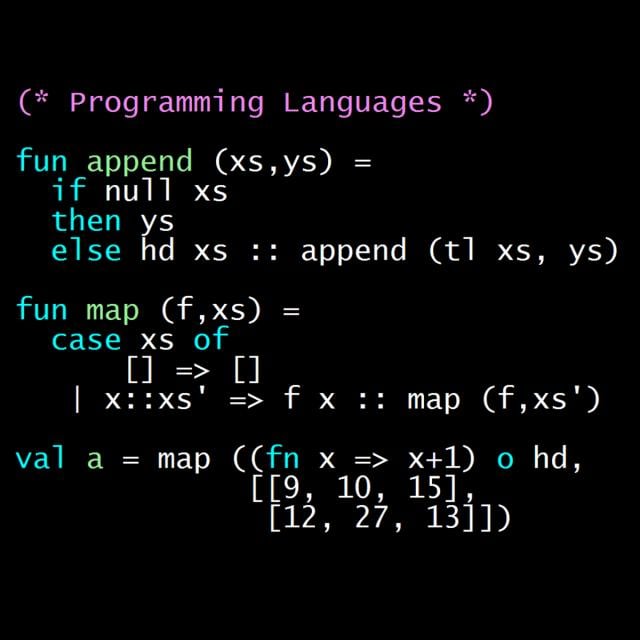
This course is an introduction to the basic concepts of programming languages, with a strong emphasis on functional programming. The course uses the languages ML, Racket, and Ruby as vehicles for teaching the concepts, but the real intent is to teach enough about how any language “fits together” to make you more effective programming in any language -- and in learning new ones. This course is neither particularly theoretical nor just about programming specifics -- it will give you a framework for understanding how to use language constructs effectively and how to design correct and elegant programs.

Jul 27th 2026
3 Weeks
Aprenda a ensinar programação com o Programaê! (Coursera) Coursera
Fundação Lemann,Fundação Telefônica

Aprenda a ensinar programação com o Programaê! (Coursera)

O curso "Aprenda a ensinar programação com o Programaê!" tem como objetivo apoiar professores no desenvolvimento de suas aulas com o ‘Programaê!’, um movimento que quer aproximar a programação do cotidiano de jovens de todo o Brasil por meio de um portal prático, agregador de ideias, soluções, dicas e planos de aula estruturados para professores.

Jul 27th 2026
3 Weeks