Introduction to HTML5 (Coursera)

Introduction to HTML5 (Coursera)

Thanks to a growing number of software programs, it seems as if anyone can make a webpage. But what if you actually want to understand how the page was created? There are great textbooks and online resources for learning web design, but most of those resources require some background knowledge. This course is designed to help the novice who wants to gain confidence and knowledge. We will explore the theory (what actually happens when you click on a link on a webpage?), the practical (what do I need to know to make my own page?), and the overlooked (I have a page, what do I do now?).

Class Deals by MOOC List - Click here and see Coursera's Active Discounts, Deals, and Promo Codes.

Throughout the course there will be a strong emphasis on adhering to syntactic standards for validation and semantic standards to promote wide accessibility for users with disabilities. The textbook we use is available online, “The Missing Link: An Introduction to Web Development and Programming” by Michael Mendez.
This course will appeal to a wide variety of people, but specifically those who would like a step-by-step description of the basics. There are no prerequisites for this course and it is assumed that students have no prior programming skills or IT experience. The course will culminate in a small final project that will require the completion of a very simple page with links and images. The focus of this course is on the basics, not appearance.
This is the first course in the Web Design For Everybody specialization. Subsequent courses focus on the marketable skills of styling the page with CSS3, adding interactivity with JavaScript and enhancing the styling with responsive design.
Course 1 of 5 in the Web Design for Everybody: Basics of Web Development & Coding Specialization.

Syllabus

WEEK 1
This week we will uncover the "mystery" behind the Internet. What happens when you type a URL into your browser so that a webpage magically appears? What is HTML5 and what happened to HTML 1 - 4? We will also cover some practical concepts that you need to master before you begin coding your own pages.

WEEK 2
This week you will need to take a deep breath and jump into coding. I will cover a large number of HTML tags, but it is important that you do more than just listen to these video and read the text book material. You need to practice (and fail!) in order to learn. Believe it or not, once you master the basic idea of using tags and attributes you will know everything you need to use any HTML5 tag. The page may not look the way you want it to look yet, but you will be able to use text, links, images, tables, and even music and videos! If you want to refer to a textbook this week for reinforcement of concepts, we will be using the Shay Howe online textbook as a reference. I will include links after the lectures, but some students prefer to read before the videos. (My preferred approach is to read/watch/read again.)

WEEK 3
Okay, you created a file...what now? This week we will begin by covering the important but often overlooked concepts of validation and accessibility. Did you follow the DOM structure when you created your page? Did you use semantic tags to make sure that page viewers can access all of the information, even if they have physical or cognitive disabilities? This is knowledge you can use if you would like to pursue a career as a web accessibility specialist. Finally I will briefly cover the steps needed to post your site to the web. There are many free and paid services that you can use to get your work off your computer and on to the Internet.
Go to Class
MOOC List is learner-supported. When you buy through links on our site, we may earn an affiliate commission.

Related Courses

Programming Languages, Part A (Coursera) Coursera
University of Washington

Programming Languages, Part A (Coursera)

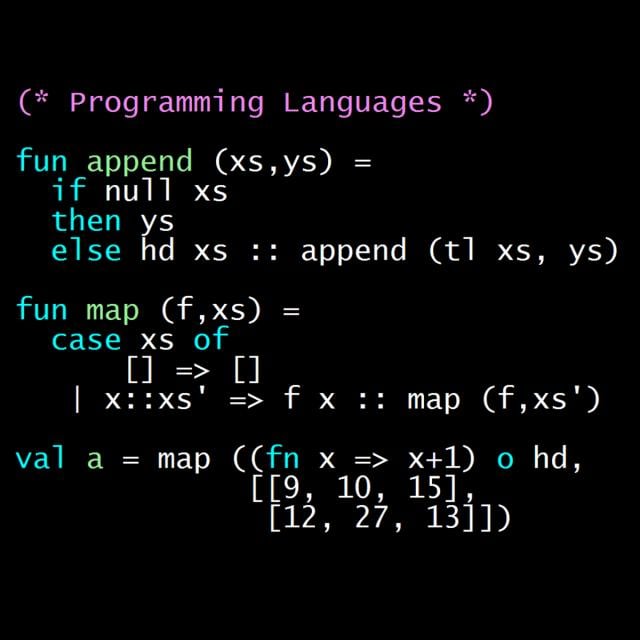
This course is an introduction to the basic concepts of programming languages, with a strong emphasis on functional programming. The course uses the languages ML, Racket, and Ruby as vehicles for teaching the concepts, but the real intent is to teach enough about how any language “fits together” to make you more effective programming in any language -- and in learning new ones.

Aug 10th 2026
5-12 Weeks
An Introduction to Interactive Programming in Python (Part 2) (Coursera) Coursera
Rice University

An Introduction to Interactive Programming in Python (Part 2) (Coursera)

This two-part course is designed to help students with very little or no computing background learn the basics of building simple interactive applications. Our language of choice, Python, is an easy-to learn, high-level computer language that is used in many of the computational courses offered on Coursera. To make learning Python easy, we have developed a new browser-based programming environment that makes developing interactive applications in Python simple.

Aug 10th 2026
4 Weeks
Foundations of Data Science: K-Means Clustering in Python (Coursera) Coursera
University of London,Goldsmiths, University of London

Foundations of Data Science: K-Means Clustering in Python (Coursera)

This MOOC, designed by an academic team from Goldsmiths, University of London, will quickly introduce you to the core concepts of Data Science to prepare you for intermediate and advanced Data Science courses. It focuses on the basic mathematics, statistics and programming skills that are necessary for typical data analysis tasks.

Aug 10th 2026
5-12 Weeks
HTML & CSS Crash Course (Coursera) Coursera
Scrimba

HTML & CSS Crash Course (Coursera)

Are you interested in delving into the realm of web development but find yourself unsure of where to start? Do you aspire to acquire the skills needed to build your own websites? Have previous attempts to grasp HTML and CSS through conventional courses left you disinterested or overwhelmed? If your response aligns with a resounding "YES" to any of these inquiries, then this course is perfectly tailored to meet your needs!

Aug 10th 2026
1 Week
Introduction à la programmation orientée objet (en Java) (Coursera) Coursera
École Polytechnique Fédérale de Lausanne

Introduction à la programmation orientée objet (en Java) (Coursera)

Ce cours introduit la programmation orientée objet (encapsulation, abstration, héritage, polymorphisme) en l'illustrant en langage Java. Il présuppose connues les bases de la programmation (variables, types, boucles, fonctions, ...). Il est conçu comme la suite du cours « Initiation à la programmation (en Java) ».

Aug 16th 2026
5-12 Weeks
Computer Science: Programming with a Purpose (Coursera) Coursera
Princeton University

Computer Science: Programming with a Purpose (Coursera)

The basis for education in the last millennium was “reading, writing, and arithmetic;” now it is reading, writing, and computing. Learning to program is an essential part of the education of every student, not just in the sciences and engineering, but in the arts, social sciences, and humanities, as well. Beyond direct applications, it is the first step in understanding the nature of computer science’s undeniable impact on the modern world.

Aug 10th 2026
5-12 Weeks
AI for Efficient Programming: Harnessing the Power of LLMs (Coursera) Coursera
Fred Hutchinson Cancer Center

AI for Efficient Programming: Harnessing the Power of LLMs (Coursera)

This course on Artificial Intelligence (AI) for software development explores the use of AI large language models such as ChatGPT, Bard, and others and their potential benefits and challenges. Through examples and hands-on activities, you will develop an understanding of the ways in which AI can speed up software development tasks and free up time for more creative and strategic work.

Aug 10th 2026
4 Weeks
Parallel programming (Scala 2 version) (Coursera) Coursera
École Polytechnique Fédérale de Lausanne

Parallel programming (Scala 2 version) (Coursera)

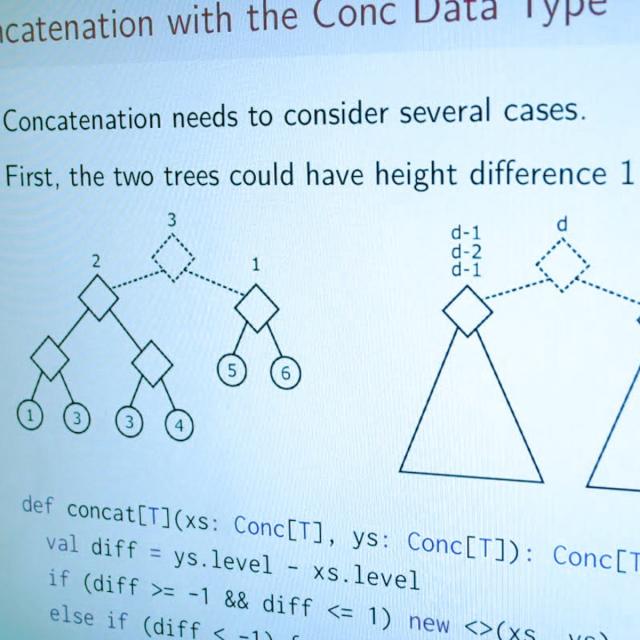
With every smartphone and computer now boasting multiple processors, the use of functional ideas to facilitate parallel programming is becoming increasingly widespread. In this course, you'll learn the fundamentals of parallel programming, from task parallelism to data parallelism. In particular, you'll see how many familiar ideas from functional programming map perfectly to to the data parallel paradigm. We'll start the nuts and bolts how to effectively parallelize familiar collections operations, and we'll build up to parallel collections, a production-ready data parallel collections library available in the Scala standard library.

Aug 10th 2026
4 Weeks
An Introduction to Interactive Programming in Python (Part 1) (Coursera) Coursera
Rice University

An Introduction to Interactive Programming in Python (Part 1) (Coursera)

This two-part course is designed to help students with very little or no computing background learn the basics of building simple interactive applications. Our language of choice, Python, is an easy-to learn, high-level computer language that is used in many of the computational courses offered on Coursera. To make learning Python easy, we have developed a new browser-based programming environment that makes developing interactive applications in Python simple.

Aug 10th 2026
5-12 Weeks