Internet of Things V2: DragonBoard™ bring up and community ecosystem (Coursera)

Internet of Things V2: DragonBoard™ bring up and community ecosystem (Coursera)

Do you want to develop skills to prototype embedded products using state-of-the-art technologies? In this course you will build a hardware and software development environment to guide your journey through the Internet of Things specialization courses. We will use the DragonBoard™ 410c single board computer (SBC).

Class Deals by MOOC List - Click here and see Coursera's Active Discounts, Deals, and Promo Codes.

This is the first in a series of courses where you will learn both the theory and get the hands-on development practice needed to prototype Internet of Things products. This course is suitable for a broad range of learners.
This course is for you if:

  • You want to learn how to use learn how to use Linux for embedded purposes.
  • You want to pivot your career towards the design and development of Internet of Things enabled products
  • You are an entrepreneur, innovator or member of a DIY community

Learning Goals:
After completing this course, you will be able to:
1) Know where you can find resources and help in the 96Boards ecosystem.
2) Describe the DragonBoard™ 410c peripherals, I/O expansion capabilities, Compute (CPU and Graphics) capabilities, and Connectivity capabilities.
3) Understand how to navigate and make use of the Linux terminal.
4) Configure at least one integrated development environment (IDE) for developing software.
5) Make use of Git and GitHub for version control purposes.
6) Create and build projects that interface with sensors and actuators through GPIO and Arduino.
Course 2 of 6 in the Internet of Things Specialization.

Syllabus

WEEK 1
Introduction and Supplemental Materials
Welcome to the Internet of Things! Before diving into this course give us a chance to let you know what it is all about! We will walk you through a module by module outline that will give you highlights on the interesting aspects of the course. In this course, you will see a lot of new words and acronyms you might not be familiar with. If you feel comfortable with your knowledge of tech terminology, feel free to skip these lessons since they will not affect the overall integrity of the course. If you see something that you want to know a little more about, feel free to watch the video to gain insight on some basic concepts. We do expect you to know the majority of this material before going into the next module, we would recommend going through the lessons as a quick brush up.

WEEK 2
DragonBoard Bringup and Ecosystem

WEEK 3
Mezzanines and Sensors (Canned Demos w/ software)
We will teach about the Linux operating system, the Sensors Mezzanine, version control and showcase projects that you should try out yourself.

WEEK 4
Advanced Projects and Code
We will be learning about building different operating systems from scratch and showcasing some advanced projects.

WEEK 5
Changing your Operating System (Supplemental / Optional)
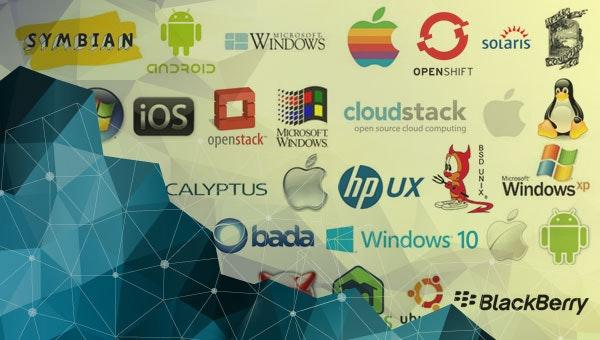
The DragonBoard™ 410c is capable of running a variety of different operating systems, that being said you are free to chose the operating system that you find is best fit for you. Now, we understand that there is a diverse user base for this board and would like to cover as much as possible in this lesson so everyone can enjoy it! Whether you are a Windows user or a Mac user, or prefer Android over Ubuntu, there is a video or two here for you! In this lesson we will help you choose an operating system to best fit for your needs, we will then cover the download, flashing and installation process for all currently available operating systems. Because of the diverse nature of this board we will teach you multiple ways to flash your new operating system and provide a pro's and con's list for the different methods. By the end of this lesson switching between operating system will be easy and exciting for users of all skill levels.
Rescuing your Bricked Board (Supplemental / Optional)
No one expects to damage their new DragonBoard™ 410c, but sometimes accidents happen. This module is dedicated to helping you not only prevent these accidents from happening, but also to fixing any problems should your board become damaged in any way. Here we will go over the difference between a soft brick and a hard brick and why they are two things you want to avoid.

Go to Class
MOOC List is learner-supported. When you buy through links on our site, we may earn an affiliate commission.

Related Courses

Linux Server Management and Security (Coursera) Coursera
University of Colorado System

Linux Server Management and Security (Coursera)

Whether you are accessing a bank website, Netflix or your home router, chances are that your computer is interacting with a Linux system. The world runs on Linux. In this course, we will dive into how Linux works from an enterprise perspective. In week 1 we will look at what Linux is used for in the enterprise. By the end of week 1, you will be able to differentiate between different versions of Linux and understand how they are used in an enterprise environment. In week 2, we will explore how Linux systems are configured.

Jun 1st 2026
5-12 Weeks
Rapid Prototyping of Embedded Interface Designs (Coursera) Coursera
University of Colorado Boulder

Rapid Prototyping of Embedded Interface Designs (Coursera)

Rapid Prototyping is the second of three classes in the Embedded Interface Design (EID) specialization, an online version of the on-campus EID class taught in graduate embedded systems design. This course is focused on rapid prototyping of devices and systems and the related methods, practices, and principles that will help ensure your embedded interface designs are what your users both need and want.

Jun 1st 2026
4 Weeks
Applied Industrial Internet of Things (Coursera) Coursera
L&T EduTech

Applied Industrial Internet of Things (Coursera)

Today, there exists a changing paradigm for every organization towards Digital Transformation in alignment with rapid growth of Industrial Automation. As automation impacts the business-returns directly, every organization, be it Designing, Manufacturing, Assembling or Logistics sector, sincerely is getting transformed as Digital Industries. The major objective of this course is to equip learners with advanced technical process of Data Collection in such Digital Industries. Thus, comprehensive course on “Applied Industrial IoT” provides a deep dive into the evolution of industrialization, from the phases of the Industrial Revolution to the transformative landscape of the Industrial Internet of Things (IIoT).

Jun 1st 2026
5-12 Weeks
Embedded Hardware and Operating Systems (Coursera) Coursera
EIT Digital

Embedded Hardware and Operating Systems (Coursera)

This course is intended for the Bachelor and Master's students, who like practical programming and making IoTs applications! In this course we will talk about two components of a cyber physical system, namely hardware and operating systems. After completing this course, you will have the knowledge of both hardware components and operating systems. You are able to plan and use embedded operating systems in resource-constraint devices for Internet-of-Things (cyber physical system) applications.

Jun 1st 2026
4 Weeks
IoT Devices (Coursera) Coursera
University of Illinois at Urbana-Champaign

IoT Devices (Coursera)

The Internet of Things (IoT) stands to be the next revolution in computing. Billions of data-spouting devices connected to the Internet are already fundamentally changing the way we live and work. This course teaches a deep understanding of IoT technologies from the ground up. Students will learn IoT device programming (Arduino and Raspberry Pi), sensing and actuating technologies, IoT protocol stacks (Zigbee, 5G, NFC, MQTT, etc), networking backhaul design and security enforcement, data science for IoT, and cloud-based IoT platforms such as AWS IoT.

Jun 1st 2026
4 Weeks
IoT Communications (Coursera) Coursera
University of Illinois at Urbana-Champaign

IoT Communications (Coursera)

This course builds on the previous course: IoT Devices. After we have built and programmed a small self-driving vehicle, now it's time get into more advanced territory and enhance the device's connectivity further. To do so you will study radio frequency (RF) communication, the MAC layer, Mesh Networking as well as distributed algorithms for use with geographic locations. These techniques will be applied to your device in the lab, which is composed of four steps, one in each week of the course.

Jun 1st 2026
4 Weeks
Securing Linux Systems (Coursera) Coursera
LearnQuest

Securing Linux Systems (Coursera)

In this course, we look at security and the Linux operating system. The course material is a good for anyone preparing for the Linux Foundation Certified IT Associate (LFCA) exam or just interested in learning more about Linux. This course is the third course in a series that aims to prepare you for working as an information technology professional. In this course, you will be introduced to ownership, authentication, and authorization. We will drill into creating security through backups and redundancy. We concluded by looking at how to secure the perimeter of our network and systems.

Jun 1st 2026
4 Weeks
IoT Cloud (Coursera) Coursera
University of Illinois at Urbana-Champaign

IoT Cloud (Coursera)

This course is the last course in our series of four courses and builds on the previous three courses: IoT Devices, IoT Communications, and IoT Networking. After we have built and programmed a small self-driving vehicle, we then set out to enhance its connectivity and add important security infrastructure. In this course we will now look closer into various remaining types of decentralized network topography. In the lab, we will additionally cover important cloud technologies based on machine-learning. In the first two weeks' lectures, we will cover important components of networks.

Jun 1st 2026
4 Weeks
Python and Rust with Linux Command Line Tools (Coursera) Coursera
Duke University

Python and Rust with Linux Command Line Tools (Coursera)

This course is designed for beginners and those with some programming experience in either Python or Rust that want to implement automation and utilities in the command-line. Although no prior knowledge of Python or Rust is required, basic programming knowledge is recommended as well as some familiarity with the command-line interface (CLI).

Jun 1st 2026
4 Weeks
IoT Networking (Coursera) Coursera
University of Illinois at Urbana-Champaign

IoT Networking (Coursera)

This course builds on the first two courses in this series: IoT Devices and IoT Communications. Here you will begin to learn enterprise IoT. Enterprise networks, from first-hop access to backend IoT services are critical because they allow your IoT devices to reach the Internet and achieve their true intelligence. IoT places extreme demands on first-hop access - ultra-dense deployments challenge spectrum allocation, the need to provide strong segmentation yet let devices reach into IoT services such as gateways and databases.

Jun 1st 2026
4 Weeks
Operating Systems and You: Becoming a Power User (Coursera) Coursera
Google

Operating Systems and You: Becoming a Power User (Coursera)

In this course, you’ll learn how to use the major operating systems, Windows and Linux, which are a core component of IT. Through a combination of video lectures, demonstrations, and hands-on practice, you’ll learn about the main components of an operating system and how to perform critical tasks like managing software and users, and configuring hardware.

Jun 1st 2026
5-12 Weeks
Foundations of Secure IoT Architecture (Coursera) Coursera
LearnQuest

Foundations of Secure IoT Architecture (Coursera)

This course is designed for professionals and students are seeking a comprehensive understanding of IoT security. Participants will define IoT ecosystem components, identify security challenges, and explore threats and vulnerabilities. They will learn threat modeling techniques, differentiate risk assessment methodologies, and recognize best practices while understanding IoT security standards and controls.

Jun 1st 2026
3 Weeks