How Computers Work: Demystifying Computation (FutureLearn)

How Computers Work: Demystifying Computation (FutureLearn)

Explore the fundamentals of computing - computer architecture, binary logic, data processing, circuits, and more. Understand computation, the basis of every computer system. On this course, you’ll gain an understanding of how computers work at a fundamental level.

Class Deals by MOOC List - Click here and see FutureLearn's Active Discounts, Deals, and Promo Codes.

You’ll explore system architecture, along with how computers use binary and logic. Once you’ve examined the von Neumann model of computer architecture and the Fetch-Execute cycle, you’ll learn to build a range of simple circuits for maths, and then simulate various logic gates.
Ultimately you’ll complete the course with an understanding of the processes that underpin every modern computer - from supercomputers to smartphones, and everything in between.

Syllabus

Week 1: What is a computer anyway?
Week 2: Logic Gates
Week 3: Mathematics with circuits
Week 4: How Computers Work

Learning on this course
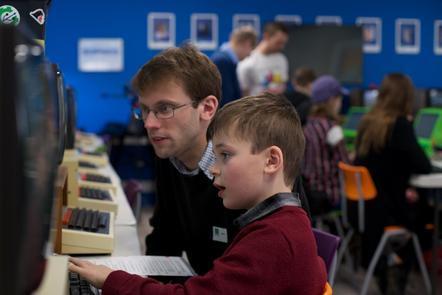
You can take this self-guided course and learn at your own pace. On every step of the course you can meet other learners, share your ideas and join in with active discussions in the comments.

What will you achieve?
By the end of the course, you'll be able to...

  • Explore how transistors can act as digital switches and be combined to create logic gates
  • Produce truth tables for AND, NOT and OR gates, individually or combined
  • Explore how computers use binary arithmetic
  • Explore how logic gates can be combined to produce digital circuits that can perform a calculation
  • Investigate Von Neuman Architecture and the Fetch-Execute cycle

Who is the course for?
This course would suit teachers of KS3 and GCSE Computer Science - plus educators from other countries that teach at an equivalent level.
Go to Class
MOOC List is learner-supported. When you buy through links on our site, we may earn an affiliate commission.

Related Courses

Data Wrangling with Python Project (Coursera) Coursera
University of Colorado Boulder

Data Wrangling with Python Project (Coursera)

The "Data Wrangling Project" course provides students with an opportunity to apply the knowledge gained throughout the specialization in a real-life data wrangling project of their interest. Participants will follow the data wrangling pipeline step by step, from identifying data sources to processing and integrating data, to achieve a fine dataset ready for analysis. This course enables students to gain hands-on experience in the data wrangling process and prepares them to handle complex data challenges in real-world scenarios.

Sep 14th 2026
5-12 Weeks
Network Analysis in Systems Biology (Coursera) Coursera
Icahn School of Medicine at Mount Sinai

Network Analysis in Systems Biology (Coursera)

An introduction to data integration and statistical methods used in contemporary Systems Biology, Bioinformatics and Systems Pharmacology research. The course covers methods to process raw data from genome-wide mRNA expression studies (microarrays and RNA-seq) including data normalization, differential expression, clustering, enrichment analysis and network construction. The course contains practical tutorials for using tools and setting up pipelines, but it also covers the mathematics behind the methods applied within the tools.

Sep 28th 2026
5-12 Weeks
Introduction to Computer Science and Programming (edX) EdX
Tokyo Institute of Technology,TokyoTechX

Introduction to Computer Science and Programming (edX)

The term “Computation” refers to the action performed by a computer. A computation can be a basic operation and it can also be a sophisticated computer simultation requiring a large amount of data and substantial resources. This course aims at introducing learners with no prior knowledge to basics and key concepts of computer science. By following the lectures and exercises of this course you will have an understanding of algorithms and you will get a real experience of programming using the language Ruby.

Self Paced
Self-Paced
The Total Data Quality Framework (Coursera) Coursera
University of Michigan

The Total Data Quality Framework (Coursera)

By the end of this first course in the Total Data Quality specialization, learners will be able to: identify the essential differences between designed and gathered data and summarize the key dimensions of the Total Data Quality (TDQ) Framework; define the three measurement dimensions of the Total Data Quality framework, and describe potential threats to data quality along each of these dimensions for both gathered and designed data; define the three representation dimensions of the Total Data Quality framework, and describe potential threats to data quality along each of these dimensions for both gathered and designed data; and ; describe why data analysis defines an important dimension of the Total Data Quality framework, and summarize potential threats to the overall quality of an analysis plan for designed and/or gathered data.

Sep 14th 2026
4 Weeks
Computational Thinking for Problem Solving (Coursera) Coursera
University of Pennsylvania

Computational Thinking for Problem Solving (Coursera)

Computational thinking is the process of approaching a problem in a systematic manner and creating and expressing a solution such that it can be carried out by a computer. But you don't need to be a computer scientist to think like a computer scientist! In fact, we encourage students from any field of study to take this course. Many quantitative and data-centric problems can be solved using computational thinking and an understanding of computational thinking will give you a foundation for solving problems that have real-world, social impact.

Sep 14th 2026
4 Weeks
Dataplex by Google Cloud (Coursera) Coursera
Board Infinity

Dataplex by Google Cloud (Coursera)

Welcome to "Dataplex By Google Cloud " a comprehensive course designed to provide a thorough understanding of Google Cloud Dataplex, a platform for managing, monitoring, and analyzing data across various data systems in Google Cloud. Spanning two modules, the course begins with the fundamentals of Dataplex, including its setup, configuration, and basic functionalities.

Sep 14th 2026
2 Weeks
Developing FPGA-accelerated cloud applications with SDAccel: Theory (Coursera) Coursera
Politecnico di Milano

Developing FPGA-accelerated cloud applications with SDAccel: Theory (Coursera)

This course is for anyone passionate in learning how to develop FPGA-accelerated applications with SDAccel! We are entering in an era in which technology progress induces paradigm shifts in computing! As a tradeoff between the two extreme characteristics of GPP and ASIC, we can find a new concept, a new idea of computing... the reconfigurable computing, which has combined the advantages of both the previous worlds.

Sep 21st 2026
4 Weeks
Predictive Modeling and Machine Learning with MATLAB (Coursera) Coursera
MathWorks

Predictive Modeling and Machine Learning with MATLAB (Coursera)

In this course, you will build on the skills learned in Exploratory Data Analysis with MATLAB and Data Processing and Feature Engineering with MATLAB to increase your ability to harness the power of MATLAB to analyze data relevant to the work you do. These skills are valuable for those who have domain knowledge and some exposure to computational tools, but no programming background.

Sep 14th 2026
4 Weeks
Serverless Data Processing with Dataflow: Develop Pipelines (Coursera) Coursera
Google Cloud

Serverless Data Processing with Dataflow: Develop Pipelines (Coursera)

In this second installment of the Dataflow course series, we are going to be diving deeper on developing pipelines using the Beam SDK. We start with a review of Apache Beam concepts. Next, we discuss processing streaming data using windows, watermarks and triggers. We then cover options for sources and sinks in your pipelines, schemas to express your structured data, and how to do stateful transformations using State and Timer APIs.

Sep 21st 2026
3 Weeks