EdX

The History of Ancient Environments, Climate, and Life (edX)

Offered by MIT, MITx,
The History of Ancient Environments, Climate, and Life (edX)

A survey Earth's early history of life and environments through a combination of classroom lecture and virtual field trips to Northern Minnesota, Svalbard, Norway, and the Death Valley area. At these key sites, students explore the interactions between Earth's early environments and ancient life.

Class Deals by MOOC List - Click here and see EdX's Active Discounts, Deals, and Promo Codes.

Students explore the co-evolution of Earth's environment and life from ~2 billion years ago to 500 million years ago by examining rocks from several field location around the world. This course is designed to give students an introductory understanding of Earth history and geology through a series of lectures, virtual field trips, and interviews with experienced geologists. Virtual field sites include the early-mid Proterozoic of Minnesota, and the Neoproterozoic and early Phanerozoic of Svalbard (Norway) and the Death Valley region (eastern California).

What you'll learn

  • Describe key aspects of the rock and fossil record over Earth’s early history
  • Look at a sedimentary rock and describe key features
  • Use those observations to make inferences about the depositional environment
  • Understand how geology from the field can aid understanding of Earth’s history
Go to Class
MOOC List is learner-supported. When you buy through links on our site, we may earn an affiliate commission.

Related Courses

Journey of the Universe: The Unfolding of Life (Coursera) Coursera
Yale University

Journey of the Universe: The Unfolding of Life (Coursera)

Journey of the Universe weaves together the discoveries of the evolutionary sciences together with humanities such as history, philosophy, art, and religion. The course draws on the Emmy-award winning film, Journey of the Universe, and the book from Yale University Press. Journey explores cosmic evolution as a creative process based on connection, interdependence, and emergence. It examines a range of dynamic interactions in the unfolding of galaxies, Earth, life, and human communities. It investigates ways in which we understand evolutionary processes and the implications for humans and our ecological future.

Aug 17th 2026
5-12 Weeks
#EarthOptimism (edX) EdX
Smithsonian,SmithsonianX

#EarthOptimism (edX)

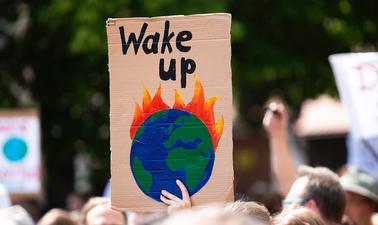
A 5-session workshop focused on identifying conservation success stories and sharing them on Twitter.Join others from around the world who care about changing the conversation around conservation from one of doom and gloom to one of hope and optimism...and who believe that change is positively possible.

Self Paced
Self-Paced
The Worldview of Thomas Berry: The Flourishing of the Earth Community (Coursera) Coursera
Yale University

The Worldview of Thomas Berry: The Flourishing of the Earth Community (Coursera)

Thomas Berry (1914-2009) was a historian of world religions and an early voice awakening moral sensibilities to the environmental crisis. He is known for articulating a “new story” of the universe that explores the implications of the evolutionary sciences and cultural traditions for creating a flourishing future. This course investigates Berry’s life and thought in relation to the Journey of the Universe project.

Aug 17th 2026
5-12 Weeks
Sensing Planet Earth – From Core to Outer Space (edX) EdX
Chalmers University of Technology,ChalmersX

Sensing Planet Earth – From Core to Outer Space (edX)

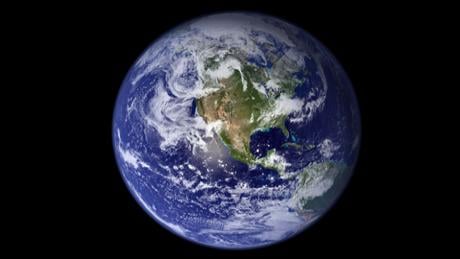
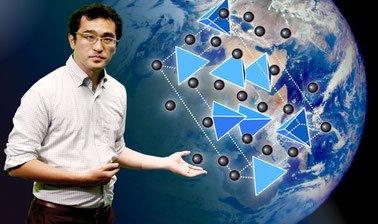
Will this year be the hottest year ever? What is the current rate of global sea level rise? How fast is the rain forest disappearing? … Learn about the essential tools for measuring and monitoring our planet. In this course, we will take you on a virtual journey covering different Earth observation tools. In the course modules, we cover the most essential measurement tools for solid Earth, the atmosphere, and the biosphere. Our experts will give you first-hand insights why, where, and how those techniques are applied and they will show you how sensors work in space, on aircrafts, and on the ground.

Self Paced
5-12 Weeks
Remote Sensing of Wildfires (edX) EdX
University of Alaska Fairbanks,AlaskaX

Remote Sensing of Wildfires (edX)

Learn how satellite imagery and the science of remote sensing allows us to detect wildfires, help manage their spread, and guide ecological restoration. Wildfires are a natural and essential part of our ecosystem, recycling soil nutrients and renewing healthy forests. In Alaska, around one million acres (4000 km2) burn every year, and record years have seen as many as six million acres burned. Most of these fires are allowed to spread naturally.

Self Paced
Self-Paced
Climate Action in Biodiverse Landscapes (edX) EdX
Wageningen University,WageningenX

Climate Action in Biodiverse Landscapes (edX)

There is no planet B. It's time to take effective climate action for which collaboration and innovation are key. This online course will boost your knowledge and skills to help you move from analysis to action in order to develop climate smart landscapes across the world. The question is no longer WHY should we take climate action, but rather HOW we can take action. In this course you will learn how to take joint action to understand and address climate change impacts in your landscape or work.

Self Paced
Self-Paced
Act on Climate: Steps to Individual, Community, and Political Action (Coursera) Coursera
University of Michigan

Act on Climate: Steps to Individual, Community, and Political Action (Coursera)

Are you concerned about climate change? Would you like to learn how to address and respond to this challenge? If so, this course is for you. Act on Climate: Steps to Individual, Community, and Political Action is intended to help learners understand, address and respond to climate change as individuals and in partnership with their communities and political leaders.

Aug 10th 2026
5-12 Weeks
Climate Change: The Science (edX) EdX
The University of British Columbia,UBCx

Climate Change: The Science (edX)

Master the basics of climate science so you can better understand the news, evaluate scientific evidence, and explain global warming to anyone. Do you want to talk about climate change from an informed perspective? Are you interested in how global warming works? Climate change is the biggest challenge of our time, and climate science is critical to finding solutions. How can we make the best decisions about our present and future? By taking this course, you can be part of the global conversation.

No sessions available
5-12 Weeks
Organising an Empire: The Assyrian Way (Coursera) Coursera
Ludwig-Maximilians-Universität München

Organising an Empire: The Assyrian Way (Coursera)

Discover the mighty kingdom of Assyria, which came to be the world’s first great empire three thousand years ago. From the 9th to the 7th centuries BC, during the imperial phase of Assyria’s long history, modern day northern Iraq was the central region of a state reaching from the Mediterranean Sea to the Persian Gulf, and incorporating what is now Iraq, Syria, and Lebanon, as well as half of Israel, and wide parts of south-eastern Turkey, and Western Iran.

Aug 10th 2026
5-12 Weeks
Introduction to the Orbital Perspective (Coursera) Coursera
University of Florida,University of Arizona,Drexel University

Introduction to the Orbital Perspective (Coursera)

The goals of this course are to develop the student’s critical thinking skills, global awareness, and ability to work as an integral part of a team in an increasingly complex global job market. The course provides a foundation in such skills as team building, collaboration, and elevated empathy using real-world scenarios from some of world’s most effective collaborative projects including the Earthrise-2068 Project.

Aug 17th 2026
5-12 Weeks