EdX

Hello (Real) World with ROS – Robot Operating System (edX)

Hello (Real) World with ROS – Robot Operating System (edX)

Learn the fundamentals of ROS, Robot Operating System, to create advanced robotic systems. Are you interested in taking your first steps in robotics? Do you seek a practical approach and want to learn by doing? Join our course and learn how to program a complete real-world robotic system with ROS!

Class Deals by MOOC List - Click here and see EdX's Active Discounts, Deals, and Promo Codes.

The Robot Operating System (ROS) enables you to quickly build robotic applications through access to a large set of open-source software and tools. Over the years, ROS has become the essential tool for roboticists. A large community surrounds ROS and there has been extensive input from industrial users in the development of these tools.
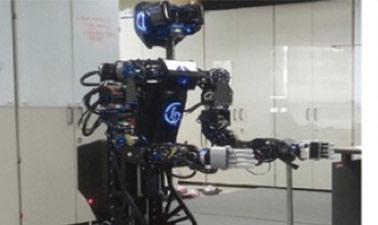
Many of the new advanced robot capabilities for manipulation, perception, and navigation have been developed using ROS. Companies such as Airbus and Boeing are using ROS for several of their applications. And we at Delft University of Technology won the Amazon Robotics Challenge 2016 with a robotic system developed with ROS.
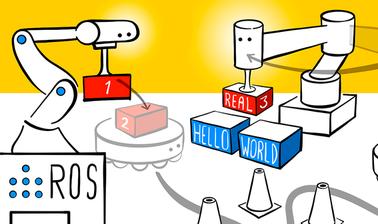
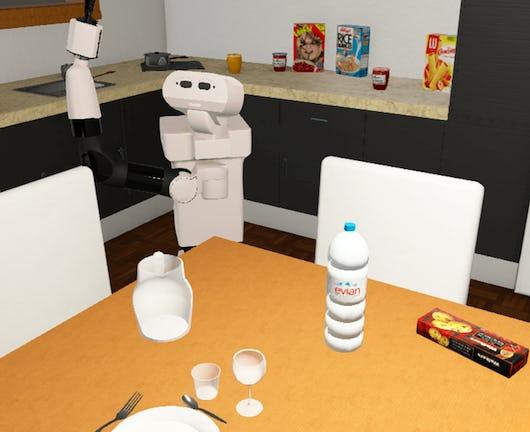
In this course, you will learn to use different ROS tools to create a complete robotic application. You will be working with your own standalone Ubuntu-Linux installation and with industrial and mobile robots on the physics-based simulation engine, Gazebo. You will learn to program and configure basic robotic tasks such as pick-and-place objects, and navigate through obstacles. You will then integrate all this knowledge to build an industrial production line with two robotic arms and a mobile robot.
Are you ready to make your robot say "Hello" to the (real) world with ROS?

What you'll learn

  • How to use ROS communication tools (topics, services, actions) to exchange information between functional modules
  • Visualization and creation of a custom environment with a robot
  • Mapping of the robot environment and navigation with a mobile robot
  • How to implement a pick-and-place function with industrial robot arms
  • Design of a complete robotic application with state machines

Prerequisites:
Basic programming in Python (variables, conditionals, loops and functions)
A computer ready for Ubuntu-Linux installation
The knowledge of basic Linear Algebra, computer science concepts and Linux command line is preferred, but students may also choose to learn these skills on their own along the course.

Syllabus

Week 0: Course setup
Installation of Ubuntu-Linux, course simulation setup and supporting software.

Week 1: ROS Essentials
Introduction to ROS Topics, Services, Actions, and Nodes. Simple interaction with the course simulation environment.

Week 2: Build your own robot environment
Software representation of a Robot using Unified Robot Description Format (URDF), ROS parameter server and adding real-world object representations to the simulation environment.

Week 3: Autonomous Navigation
Map creation with GMapping package, autonomously navigate a known map with ROS navigation.

Week 4: Manipulation
Motion planning, pick and place behaviors using industrial robots with ROS MoveIt!

Week 5: Robot Vision
Object detection, pose estimation.

Week 6: Final Project
ROS file system, basic concepts of behavior design with state machines, build a production line application with two industrial robot arms and a mobile robot.
Go to Class
MOOC List is learner-supported. When you buy through links on our site, we may earn an affiliate commission.

Related Courses

Contratación y mercado digital. Aspectos legales y otras cuestiones de interés (Coursera) Coursera
Universitat Autònoma de Barcelona

Contratación y mercado digital. Aspectos legales y otras cuestiones de interés (Coursera)

¿Te has preguntado alguna vez si existen normas en internet? ¿Te has planteado cómo se pueden solucionar los conflictos que puedan surgir entre las personas cuando interactúan en el mercado digital? ¿Has considerado cambiar de profesión o darle una nueva perspectiva a tu desarrollo laboral? Si es así, bienvenido a este curso en el que te proporcionaremos las claves para entender, analizar, evaluar y responder a todos los interrogantes que te hayas planteado.

Jun 15th 2026
5-12 Weeks
Robotics: Vision Intelligence and Machine Learning (edX) EdX
University of Pennsylvania,PennX

Robotics: Vision Intelligence and Machine Learning (edX)

Learn how to design robot vision systems that avoid collisions, safely work with humans and understand their environment. How do robots “see”, respond to and learn from their interactions with the world around them? This is the fascinating field of visual intelligence and machine learning. Visual intelligence allows a robot to “sense” and “recognize” the surrounding environment. It also enables a robot to “learn” from the memory of past experiences by extracting patterns in visual signals.

No sessions available
5-12 Weeks
Robotics: Computational Motion Planning (Coursera) Coursera
University of Pennsylvania

Robotics: Computational Motion Planning (Coursera)

Robotic systems typically include three components: a mechanism which is capable of exerting forces and torques on the environment, a perception system for sensing the world and a decision and control system which modulates the robot's behavior to achieve the desired ends. In this course we will consider the problem of how a robot decides what to do to achieve its goals.

Jan 6th 2025
4 Weeks
Modern Robotics, Course 5: Robot Manipulation and Wheeled Mobile Robots (Coursera) Coursera
Northwestern University

Modern Robotics, Course 5: Robot Manipulation and Wheeled Mobile Robots (Coursera)

Do you want to know how robots work? Are you interested in robotics as a career? Are you willing to invest the effort to learn fundamental mathematical modeling techniques that are used in all subfields of robotics? If so, then the "Modern Robotics: Mechanics, Planning, and Control" specialization may be for you. This specialization, consisting of six short courses, is serious preparation for serious students who hope to work in the field of robotics or to undertake advanced study. It is not a sampler.

Jun 8th 2026
4 Weeks
Future Robots. Towards a Robotic Science of Human Beings (edX) EdX
University of Naples Federico II,FedericaX

Future Robots. Towards a Robotic Science of Human Beings (edX)

Learn Robots as a new science for the understanding of human beings and the affects of robotics in the real world. Following historic human achievements in steam power, electricity, and digital information, Robotics is now considered by many to be the fourthindustrial revolution. This course explores robotics not simply as advanced technology, but as a new scientific discipline that can lead to a deeper understanding of human behavior.

Self Paced
Self-Paced
Modern Robotics, Course 2: Robot Kinematics (Coursera) Coursera
Northwestern University

Modern Robotics, Course 2: Robot Kinematics (Coursera)

Do you want to know how robots work? Are you interested in robotics as a career? Are you willing to invest the effort to learn fundamental mathematical modeling techniques that are used in all subfields of robotics? If so, then the "Modern Robotics: Mechanics, Planning, and Control" specialization may be for you. This specialization, consisting of six short courses, is serious preparation for serious students who hope to work in the field of robotics or to undertake advanced study. It is not a sampler.

Jun 15th 2026
4 Weeks
Robotics: Perception (Coursera) Coursera
University of Pennsylvania

Robotics: Perception (Coursera)

How can robots perceive the world and their own movements so that they accomplish navigation and manipulation tasks? In this module, we will study how images and videos acquired by cameras mounted on robots are transformed into representations like features and optical flow. Such 2D representations allow us then to extract 3D information about where the camera is and in which direction the robot moves. You will come to understand how grasping objects is facilitated by the computation of 3D posing of objects and navigation can be accomplished by visual odometry and landmark-based localization.

Jan 13th 2025
4 Weeks
Factory Automation: Shaping the Future of Manufacturing (Coursera) Coursera
Starweaver

Factory Automation: Shaping the Future of Manufacturing (Coursera)

This course provides a comprehensive understanding of factory automation, covering foundational concepts to practical applications. Participants explore the evolution of automation technology, including robotics and control systems, witnessing its role in optimizing production processes and enhancing productivity. Through real-world case studies, they learn how automation improves efficiency, safety, and innovation in manufacturing.

May 25th 2026
4 Weeks