Hands-on Introduction to Linux Commands and Shell Scripting (Coursera)

Offered by IBM,
Hands-on Introduction to Linux Commands and Shell Scripting (Coursera)

This mini-course provides a practical introduction to commonly used Linux / UNIX shell commands and teaches you basics of Bash shell scripting to automate a variety of tasks. The course includes both video-based lectures as well as hands-on labs to practice and apply what you learn. You will have no-charge access to a virtual Linux server that you can access through your web browser, so you don't need to download and install anything to perform the labs.

Class Deals by MOOC List - Click here and see Coursera's Active Discounts, Deals, and Promo Codes.

In this course you will work with general purpose commands like id, date, uname, ps, top, echo, man; directory manageent commands such as pwd, cd, mkdir, rmdir, find, df; file management commands like cat, wget, more, head, tail, cp, mv, touch, tar, zip, unzip; access control command chmod; text processing commands - wc, grep, tr; as well as networking commands - hostname, ping, ifconfig and curl.
You will create simple to more advanced shell scripts that involve Metacharacters, Quoting, Variables, Command substitution, I/O Redirection, Pipes & Filters, and Command line arguments. You will also schedule cron jobs using crontab.
This course is ideal for data engineers, data scientists, software developers, and cloud practitioners who want to get familiar with frequently used commands on Linux, MacOS and other Unix-like operating systems as well as get started with creating shell scripts.
Completing this course will count towards your learning in any of the following programs:

What You Will Learn

  • Define what a shell is and recall common shell commands
  • Outline what a script is and describe the ‘shebang’ interpreter directive
  • Describe and use pipes and filters
  • Schedule cron jobs with crontab and understand the cron syntax

Syllabus

WEEK 1
Introduction to Linux Commands and Shell Scripting
In this module, you will learn about the attributes of Linux commands and shell scripting. You will discover the different Linux commands and their outputs, Bash scripting, and how to schedule jobs using crontab. You will learn how to work with filters, pipes, and variables.

Go to Class
MOOC List is learner-supported. When you buy through links on our site, we may earn an affiliate commission.

Related Courses

Securing Digital Democracy (Coursera) Coursera
University of Michigan

Securing Digital Democracy (Coursera)

In this course, you'll learn what every citizen should know about the security risks--and future potential — of electronic voting and Internet voting. We'll take a look at the past, present, and future of election technologies and explore the various spaces intersected by voting, including computer security, human factors, public policy, and more.

Oct 19th 2026
5-12 Weeks
CompTIA a+ Network (Coursera) Coursera
CompTIA

CompTIA a+ Network (Coursera)

Explore the dynamic world of network systems with the CompTIA a+ Network course. This complete networking course is explicitly designed for beginners and will equip you with foundational knowledge and hands-on skills in network installation, network support and application support. Today, network technicians are in-demand and job opportunities are plenty.

Oct 26th 2026
5-12 Weeks
操作系统原理 (Operating Systems) (Coursera) Coursera
Peking University

操作系统原理 (Operating Systems) (Coursera)

操作系统原理》是针对计算机科学技术专业三年级本科生开设的一门专业基础课程。本课程着重学生系统观的培养,通过重点讲述操作系统的内部结构、工作原理及典型技术的实现,使学生建立起对操作系统的整体及各个功能模块的认识,从而系统掌握计算机的专业知识,进一步提升学生的软件开发能力乃至系统软件开发能力。

Oct 26th 2026
13-24 Weeks
Introduction to Big Data with Spark and Hadoop (Coursera) Coursera
IBM

Introduction to Big Data with Spark and Hadoop (Coursera)

Bernard Marr defines Big Data as the digital trace that we are generating in this digital era. In this course, you will learn about the characteristics of Big Data and its application in Big Data Analytics. You will gain an understanding about the features, benefits, limitations, and applications of some of the Big Data processing tools. You’ll explore how Hadoop and Hive help leverage the benefits of Big Data while overcoming some of the challenges it poses.

Oct 12th 2026
5-12 Weeks
Python Project for Data Engineering (Coursera) Coursera
IBM

Python Project for Data Engineering (Coursera)

This mini-course is intended to apply foundational Python skills by implementing different techniques to collect and work with data. Assume the role of a Data Engineer and extract data from multiple file formats, transform it into specific datatypes, and then load it into a single source for analysis. Continue with the course and test your knowledge by implementing webscraping and extracting data with APIs all with the help of multiple hands-on labs. After completing this course you will have acquired the confidence to begin collecting large datasets from multiple sources and transform them into one primary source, or begin web scraping to gain valuable business insights all with the use of Python.

Oct 12th 2026
1 Week
Embedded Hardware and Operating Systems (Coursera) Coursera
EIT Digital

Embedded Hardware and Operating Systems (Coursera)

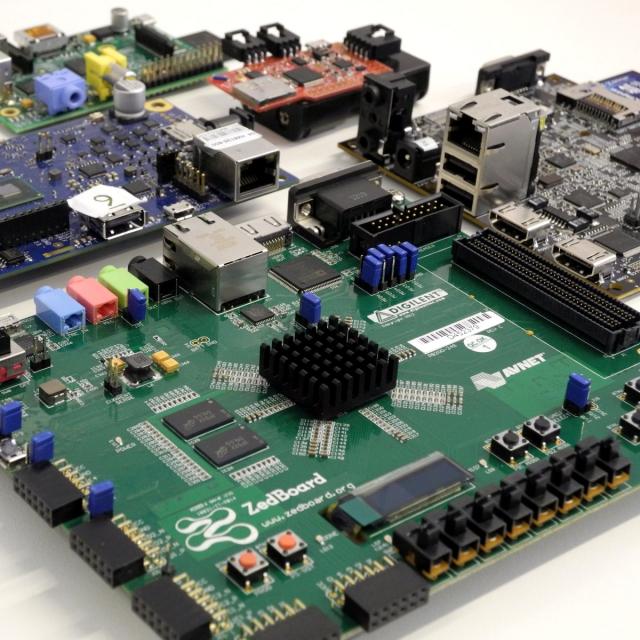
This course is intended for the Bachelor and Master's students, who like practical programming and making IoTs applications! In this course we will talk about two components of a cyber physical system, namely hardware and operating systems. After completing this course, you will have the knowledge of both hardware components and operating systems. You are able to plan and use embedded operating systems in resource-constraint devices for Internet-of-Things (cyber physical system) applications.

Oct 19th 2026
4 Weeks
Operating System Virtualization - Bachelor's (Coursera) Coursera
Illinois Tech

Operating System Virtualization - Bachelor's (Coursera)

Each successful student in this course will become familiar with hypervisors, virtualization terms, infrastructure considerations, and appropriate use cases. While designed to give an overview of today’s Virtualization technologies and methods, students in the course will gain enough practical knowledge to begin deploying various hypervisors and virtual machine environments using current industry standard platforms.

Oct 26th 2026
5-12 Weeks
Competencias digitales. Conceptos y herramientas básicas (Coursera) Coursera
Universitat Autònoma de Barcelona

Competencias digitales. Conceptos y herramientas básicas (Coursera)

Los continuos cambios tecnológicos, sobre todo en aquellos aspectos vinculados a las tecnologías de la información y la comunicación (TIC) hacen que las personas tengan la necesidad de actualizarse de forma continua para que sus conocimientos no queden obsoletos. En este contexto, para las empresas se convierte en algo imprescindible disponer de profesionales que tengan las competencias necesarias para ejercer con éxito las actividades que requieren en su lugar de trabajo.

Oct 26th 2026
4 Weeks
Introduction to Data Engineering (Coursera) Coursera
IBM

Introduction to Data Engineering (Coursera)

This course introduces you to the core concepts, processes, and tools you need to know in order to get a foundational knowledge of data engineering. You will gain an understanding of the modern data ecosystem and the role Data Engineers, Data Scientists, and Data Analysts play in this ecosystem. The Data Engineering Ecosystem includes several different components. It includes disparate data types, formats, and sources of data.

Oct 12th 2026
4 Weeks
Linux on LinuxONE (Coursera) Coursera
IBM

Linux on LinuxONE (Coursera)

This course is for Linux Systems Administrators, Architects and Developers who are already familiar with Linux components and everyday tasks, but need a primer on how to best take advantage of the LinuxONE platform. This includes working with the hardware, software, facilities, and processes unique to LinuxONE. It is comprised of videos, links to online resources, and a final test for a badge.

Oct 12th 2026
5-12 Weeks
Real-Time Embedded Systems Concepts and Practices (Coursera) Coursera
University of Colorado Boulder

Real-Time Embedded Systems Concepts and Practices (Coursera)

This course can also be taken for academic credit as ECEA 5315, part of CU Boulder’s Master of Science in Electrical Engineering degree. Course Description: In this course, students will design and build a microprocessor-based embedded system application using a real-time operating system or RT POSIX extensions with Embedded Linux. The course focus is on the process as well as fundamentals of integrating microprocessor-based embedded system elements for digital command and control of typical embedded hardware systems.

Oct 12th 2026
4 Weeks