Genomic Data Science and Clustering (Bioinformatics V) (Coursera)

Genomic Data Science and Clustering (Bioinformatics V) (Coursera)

How do we infer which genes orchestrate various processes in the cell? How did humans migrate out of Africa and spread around the world? In this class, we will see that these two seemingly different questions can be addressed using similar algorithmic and machine learning techniques arising from the general problem of dividing data points into distinct clusters.

Class Deals by MOOC List - Click here and see Coursera's Active Discounts, Deals, and Promo Codes.

In the first half of the course, we will introduce algorithms for clustering a group of objects into a collection of clusters based on their similarity, a classic problem in data science, and see how these algorithms can be applied to gene expression data.
In the second half of the course, we will introduce another classic tool in data science called principal components analysis that can be used to preprocess multidimensional data before clustering in an effort to greatly reduce the number dimensions without losing much of the "signal" in the data.
Finally, you will learn how to apply popular bioinformatics software tools to solve a real problem in clustering.

Course 5 of 7 in the Bioinformatics Specialization.

Syllabus

WEEK 1
Introduction to Clustering Algorithms
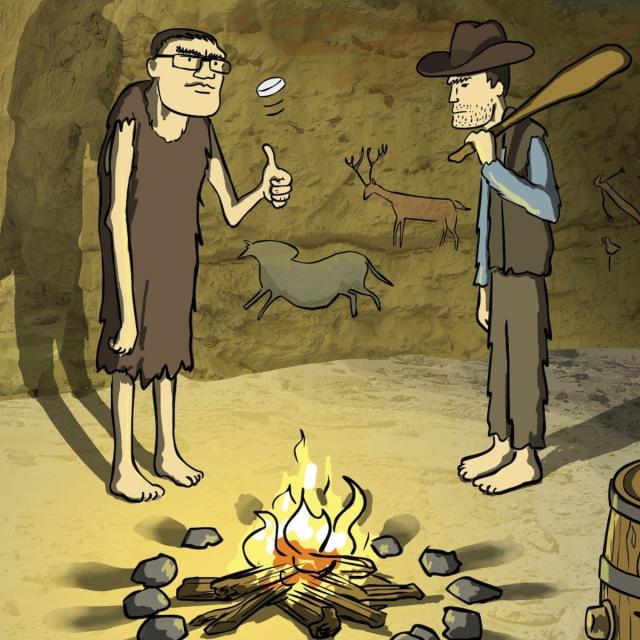
At the beginning of the class, we will see how algorithms for clustering a set of data points will help us determine how yeast became such good wine-makers. At the bottom of this email is the Bioinformatics Cartoon for this chapter, courtesy of . How did the monkey lose a wine-drinking contest to a tiny mammal? Why have Pavel and Phillip become cavemen? And will flipping a coin help them escape their eternal boredom until they can return to the present? Start learning to find out!

WEEK 2
Advanced Clustering Techniques
This week, we will see how we can move from a "hard" assignment of points to clusters toward a "soft" assignment that allows the boundaries of the clusters to blend. We will also see how to adapt the Lloyd algorithm that we encountered in the first week in order to produce an algorithm for soft clustering. We will also see another clustering algorithm called "hierarchical clustering" that groups objects into larger and larger clusters.

WEEK 3
Introductory Algorithms in Population Genetics

Go to Class
MOOC List is learner-supported. When you buy through links on our site, we may earn an affiliate commission.

Related Courses

Big Data Integration and Processing (Coursera) Coursera
University of California, San Diego

Big Data Integration and Processing (Coursera)

At the end of the course, you will be able to: Retrieve data from example database and big data management systems; Describe the connections between data management operations and the big data processing patterns needed to utilize them in large-scale analytical applications; Identify when a big data problem needs data integration; Execute simple big data integration and processing on Hadoop and Spark platforms.

Jul 27th 2026
5-12 Weeks
Foundations of Data Science: K-Means Clustering in Python (Coursera) Coursera
University of London,Goldsmiths, University of London

Foundations of Data Science: K-Means Clustering in Python (Coursera)

This MOOC, designed by an academic team from Goldsmiths, University of London, will quickly introduce you to the core concepts of Data Science to prepare you for intermediate and advanced Data Science courses. It focuses on the basic mathematics, statistics and programming skills that are necessary for typical data analysis tasks.

Aug 10th 2026
5-12 Weeks
Artificial Intelligence for Breast Cancer Detection (Coursera) Coursera
Johns Hopkins University

Artificial Intelligence for Breast Cancer Detection (Coursera)

Through interactive lectures and module exercises, this course illustrates the potential of artificial intelligence in breast imaging. Topics include an introduction of breast cancer and breast imaging, introduction to artificial intelligence in image analysis and computer image processing of cancer detection. The course intends to provide students basic understanding of artificial intelligence approaches to breast cancer detection.

Aug 10th 2026
4 Weeks
Machine Learning (Coursera) Coursera
Stanford University

Machine Learning (Coursera)

Machine learning is the science of getting computers to act without being explicitly programmed. In the past decade, machine learning has given us self-driving cars, practical speech recognition, effective web search, and a vastly improved understanding of the human genome. Machine learning is so pervasive today that you probably use it dozens of times a day without knowing it. Many researchers also think it is the best way to make progress towards human-level AI. In this class, you will learn about the most effective machine learning techniques, and gain practice implementing them and getting them to work for yourself. More importantly, you'll learn about not only the theoretical underpinnings of learning, but also gain the practical know-how needed to quickly and powerfully apply these techniques to new problems.

Jul 27th 2026
5-12 Weeks
Making Data Science Work for Clinical Reporting (Coursera) Coursera
Genentech

Making Data Science Work for Clinical Reporting (Coursera)

This course is aimed to demonstrate how principles and methods from data science can be applied in clinical reporting. By the end of the course, learners will understand what requirements there are in reporting clinical trials, and how they impact on how data science is used. The learner will see how they can work efficiently and effectively while still ensuring that they meet the needed standards.

Aug 10th 2026
4 Weeks
Ferramentas para Ciência de Dados: Introdução ao R (Coursera) Coursera
FIA Business School

Ferramentas para Ciência de Dados: Introdução ao R (Coursera)

Nossas boas-vindas ao Curso Ferramentas para Ciência de Dados: Introdução ao R. Neste curso, você aprenderá que o mundo evoluiu muito quando o assunto é tomada de decisão baseada em dados e já não é possível comparar a quantidade de informações a que temos acesso atualmente com o que tínhamos disponíveis décadas atrás.

Aug 10th 2026
4 Weeks
Advanced Linear Models for Data Science 1: Least Squares (Coursera) Coursera
Johns Hopkins University

Advanced Linear Models for Data Science 1: Least Squares (Coursera)

Welcome to the Advanced Linear Models for Data Science Class 1: Least Squares. This class is an introduction to least squares from a linear algebraic and mathematical perspective. Before beginning the class make sure that you have the following: a basic understanding of linear algebra and multivariate calculus; a basic understanding of statistics and regression models; at least a little familiarity with proof based mathematics; basic knowledge of the R programming language.

Jul 27th 2026
5-12 Weeks
Understanding China, 1700-2000: A Data Analytic Approach, Part 1 (Coursera) Coursera
The Hong Kong University of Science and Technology - HKUST

Understanding China, 1700-2000: A Data Analytic Approach, Part 1 (Coursera)

The purpose of this course is to summarize new directions in Chinese history and social science produced by the creation and analysis of big historical datasets based on newly opened Chinese archival holdings, and to organize this knowledge in a framework that encourages learning about China in comparative perspective. Our course demonstrates how a new scholarship of discovery is redefining what is singular about modern China and modern Chinese history.

Aug 3rd 2026
5-12 Weeks
Introduction to Big Data (Coursera) Coursera
University of California, San Diego

Introduction to Big Data (Coursera)

Interested in increasing your knowledge of the Big Data landscape? This course is for those new to data science and interested in understanding why the Big Data Era has come to be. It is for those who want to become conversant with the terminology and the core concepts behind big data problems, applications, and systems. It is for those who want to start thinking about how Big Data might be useful in their business or career. It provides an introduction to one of the most common frameworks, Hadoop, that has made big data analysis easier and more accessible -- increasing the potential for data to transform our world!

Jul 27th 2026
3 Weeks
Introducción a la Minería de Datos (Coursera) Coursera
Pontificia Universidad Católica de Chile

Introducción a la Minería de Datos (Coursera)

En este curso, aprenderás de manera gradual y práctica los conceptos básicos de Minería de Datos, junto a los algoritmos más utilizados hoy en día. Al finalizar el curso, serás capaz de entender la importancia de manejar la información y de explorar por ti mismo distintas bases de datos reales. Este curso es el primer paso para convertirte en un/a profesional con habilidades básicas de un científico de datos o Data Scientist, de manera tal que puedas abrirle la puerta al futuro.

Aug 10th 2026
5-12 Weeks
Cluster Analysis in Data Mining (Coursera) Coursera
University of Illinois at Urbana-Champaign

Cluster Analysis in Data Mining (Coursera)

Discover the basic concepts of cluster analysis, and then study a set of typical clustering methodologies, algorithms, and applications. This includes partitioning methods such as k-means, hierarchical methods such as BIRCH, and density-based methods such as DBSCAN/OPTICS. Moreover, learn methods for clustering validation and evaluation of clustering quality. Finally, see examples of cluster analysis in applications.

Jul 27th 2026
4 Weeks
Data Science in Real Life (Coursera) Coursera
Johns Hopkins University

Data Science in Real Life (Coursera)

Have you ever had the perfect data science experience? The data pull went perfectly. There were no merging errors or missing data. Hypotheses were clearly defined prior to analyses. Randomization was performed for the treatment of interest. The analytic plan was outlined prior to analysis and followed exactly. The conclusions were clear and actionable decisions were obvious. Has that every happened to you? Of course not. Data analysis in real life is messy. How does one manage a team facing real data analyses? In this one-week course, we contrast the ideal with what happens in real life. By contrasting the ideal, you will learn key concepts that will help you manage real life analyses.

Jul 27th 2026
1 Week