Develop and Deploy Windows Applications on Google Cloud Platform (Coursera)

Offered by Google Cloud,
Develop and Deploy Windows Applications on Google Cloud Platform (Coursera)

Learn to deploy and run Microsoft Windows® applications on Google Cloud Platform (GCP). Through lectures and hands-on labs, learn how to configure and run Microsoft Windows and Microsoft SQL Server in Google Compute Engine. You will also learn how to develop and deploy ASP.NET applications and deploy them to Google Compute Engine, Google App Engine, and Google Container Engine.

Class Deals by MOOC List - Click here and see Coursera's Active Discounts, Deals, and Promo Codes.

Course objectives
This course teaches participants the following skills:
• Configuring Microsoft Windows and Microsoft SQL Server in Google Compute Engine
• Deploying ASP.NET MVC applications to Google Compute Engine
• Deploying .NET Core applications to Google Compute Engine, Google Compute Engine, and Google Container Engine

Pre-requisites
• System-administration or application-development experience with Microsoft Windows
• A general familiarity with cloud computing

Syllabus

WEEK 1
Module 1: Introduction to Google Cloud Platform
Get to know the basics of Google Cloud Platform and how to create Windows virtual machines. You'll learn about the scope and structure of GCP, options for Windows deployment on GCP, and GCP interfaces.
Module 2: Windows Workloads on Google Compute Engine
You'll learn about Google Compute Engine virtual machine options, integrating Active Directory with Google Compute Engine virtual machines, and running SQL Server in Google Compute Engine for high availability.
Module 3: Developing ASP.NET MVC applications
You'll learn about the model-view-controller structure, using Microsoft Visual Studio’s Web Project template to develop in ASP.NET, and deploying applications to Microsoft Internet Information Server (IIS) in GCE.
Module 4: Configuring Resilient Workloads
You'll learn about deploying instances across GCP zones, using instance groups to create pools of virtual machines, and load balancing Windows applications.
Module 5: Delivering Next-Generation ASP.NET Core on GCP
Finally, you'll learn about .NET Core and EF Core, options for deploying ASP.NET Core applications on Google Cloud Platform, and how to deploy ASP.NET Core applications on Google Compute Engine, Google Container Engine, and Google App Engine.
Go to Class
MOOC List is learner-supported. When you buy through links on our site, we may earn an affiliate commission.

Related Courses

Introduction to Containers w/ Docker, Kubernetes & OpenShift (Coursera) Coursera
IBM

Introduction to Containers w/ Docker, Kubernetes & OpenShift (Coursera)

Throughout the course you will apply what you learn with hands-on labs. From getting started with Docker, to orchestration and scaling with Kubernetes, and simplifying deployments with OpenShift. The labs are performed using your web browser on IBM Cloud and Skills Network Labs environments, that are made available to you at no charge. in the project at the end of the course you will build a container image and deploy and scale it on Cloud using OpenShift. This course is of interest to anyone who wants to be a cloud practitioner - cloud developers, cloud architects, cloud system engineers, devops engineers, cloud networking specialists and many other roles.

Sep 28th 2026
5-12 Weeks
Optimizing Your Google Cloud Costs en Español (Coursera) Coursera
Google Cloud

Optimizing Your Google Cloud Costs en Español (Coursera)

Optimizing Your Google Cloud Platform (GCP) Costs es el segundo curso de una serie de dos partes sobre los conceptos básicos de la administración de costos y facturación de GCP. Este curso está destinado principalmente a personas que se desempeñan en funciones relacionadas con finanzas o TI, y que están a cargo de optimizar la infraestructura de nube de sus organizaciones.

Oct 12th 2026
3 Weeks
Cyber Threats and Attack Vectors (Coursera) Coursera
University of Colorado System

Cyber Threats and Attack Vectors (Coursera)

Data breaches occur nearly every day. From very large retailers, down to your fantasy football website, and anywhere in between, they have been compromised in some way. How did the attackers get in? What did they do with the data they compromised? What should I be concerned with in my own business or my systems? This course is the second course in the Practical Computer Security. It will discuss types of threats and attack vectors commonly seen in today’s environment.

Sep 28th 2026
5-12 Weeks
Cyber Incident Response (Coursera) Coursera
Infosec

Cyber Incident Response (Coursera)

The Cyber Incident Response course will give students an understanding of how incidents are responded to at a high level, as well as allow them to build important technical skills through the hands-on labs and projects. This course starts with a high-level discussion of what happens at each phase of responding to an incident, followed by a technical deep dive into some of the more exciting parts of memory, network, and host analysis and forensics. This course is for anyone wishing to apply learned forensics and offensive knowledge such as ethical hacking to the incident response process.

Oct 5th 2026
3 Weeks
Programming Reactive Systems (Coursera) Coursera
École Polytechnique Fédérale de Lausanne

Programming Reactive Systems (Coursera)

Reactive programming is a set of techniques for implementing scalable, resilient and responsive systems. The basic building-block of such systems is event handlers. This course teaches how to implement reactive systems in Scala by using high-level abstractions based on event-handlers. You will learn how to: use, transform and sequence asynchronous computations using Future values; write concurrent systems based on Actors, using untyped Akka and Akka Typed; design systems resilient to failures; implement systems that can scale out according to a varying workload; transform and consume infinite and intermittent streams of data with Akka Stream; understand how back-pressure controls flows of data

Oct 5th 2026
5-12 Weeks
Introduction to .NET Core (Coursera) Coursera
Board Infinity

Introduction to .NET Core (Coursera)

This course is an introductory-level course for software developers who want to learn the basics of developing applications with .NET Core. .NET Core is a cross-platform, open-source development platform that allows developers to create applications for Windows, Linux, and macOS. Throughout this course, students will learn the fundamental concepts of .NET Core, including its architecture, programming model, and tools. They will also learn how to create, build, and deploy applications using .NET Core.

Oct 5th 2026
3 Weeks
Big Data Analytical Platform on Alibaba Cloud (Coursera) Coursera
Alibaba Cloud Academy

Big Data Analytical Platform on Alibaba Cloud (Coursera)

Building an Analytical Platform on Alibaba Cloud can empower how you take in, analyze, and demonstrate clear metrics from a set of Big Data. This course is designed to teach engineers how to use Alibaba Cloud Big Data products. It covers basic distributed system theory and Alibaba Cloud's core products like MaxCompute, DataWorks, E-MapReduce as well as a bundle of ecosystem tools.

Sep 28th 2026
5-12 Weeks
Classical Cryptosystems and Core Concepts (Coursera) Coursera
University of Colorado System

Classical Cryptosystems and Core Concepts (Coursera)

Welcome to Introduction to Applied Cryptography. Cryptography is an essential component of cybersecurity. The need to protect sensitive information and ensure the integrity of industrial control processes has placed a premium on cybersecurity skills in today’s information technology market. Demand for cybersecurity jobs is expected to rise 6 million globally by 2019, with a projected shortfall of 1.5 million, according to Symantec, the world’s largest security software vendor. According to Forbes, the cybersecurity market is expected to grow from $75 billion in 2015 to $170 billion by 2020.

Sep 28th 2026
3 Weeks
Peer-to-Peer Protocols and Local Area Networks (Coursera) Coursera
University of Colorado System

Peer-to-Peer Protocols and Local Area Networks (Coursera)

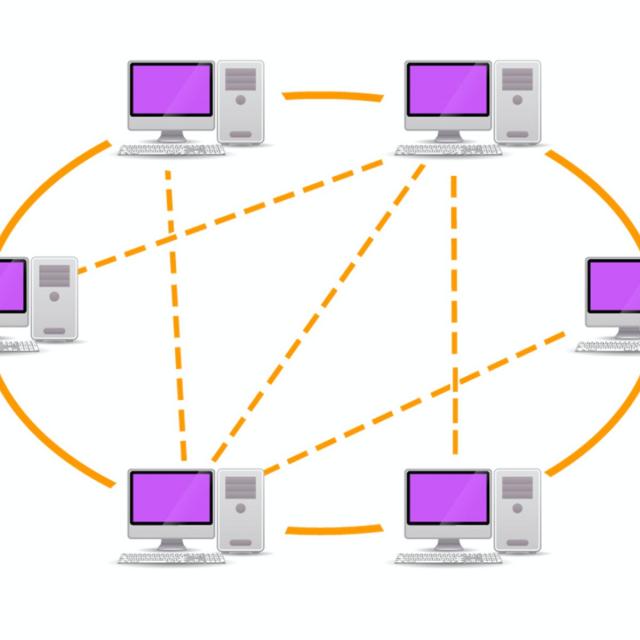
In this course, we discuss peer-to-peer protocols and local area networks. Part one in this course is to answer the question of how does a peer-to-peer protocol deliver reliable data transfer service across unreliable transmission lines or networks. We focus on several medium access control protocols and their performance analysis. In the second part, we discuss how medium access control protocols coordinate the access to the communication channel so that information gets through from a source to a destination in the same broadcast local area network. We further discuss local area network and wireless LAN.

Sep 28th 2026
5-12 Weeks
Software Design as an Element of the Software Development Lifecycle (Coursera) Coursera
University of Colorado System

Software Design as an Element of the Software Development Lifecycle (Coursera)

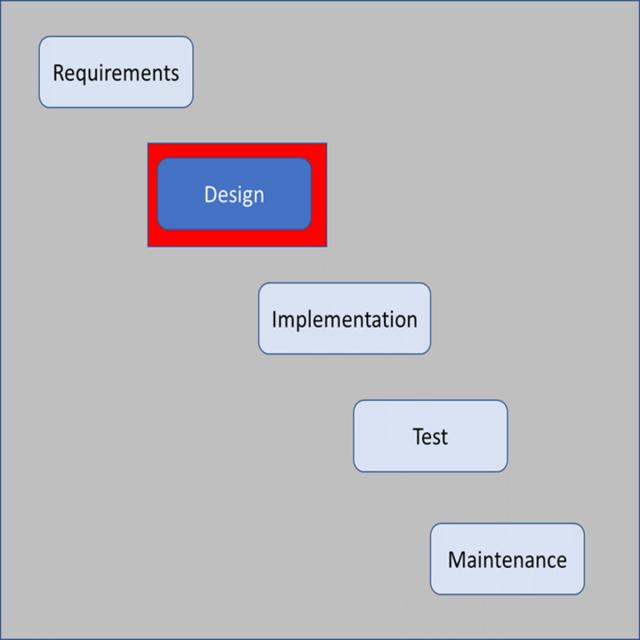
This course talks about software development lifecycles a description/prescription for how we write software. Design is a step in this life cycle, and the course explores the implications of this. Design has a role in the life cycle; it is always there, regardless of the kind of life cycle we’re talking about. Why is that? Why was design considered as a step in this life cycle?

Sep 28th 2026
5-12 Weeks
Azure Infrastructure Fundamentals (Coursera) Coursera
LearnQuest

Azure Infrastructure Fundamentals (Coursera)

Microsoft Azure is a service created by Microsoft to provide cloud computing for creating and managing applications and services using a cloud environment. Azure provides software as a service (SaaS), platform as a service (PaaS) and infrastructure as a service (IaaS). The platform supports many programming languages and frameworks and can be used alone or in a multi-vendor cloud environment.

Oct 12th 2026
5-12 Weeks
Google Workspace Security (Coursera) Coursera
Google Cloud

Google Workspace Security (Coursera)

Google Workspace Security is the third course in the Google Workspace Administration series. In this course you will focus on the various aspects of G Suite Security including user password policies and how to enable and enforce two step verification (2SV) for your users. You will learn about application security and understand how to whitelist and block API access to your account. You will see how G Suite can easily be integrated with a number of predefined 3rd party applications. You will also become familiar with the SSO options in G Suite. Finally you will understand how to spot potential security risks within your organization and learn how to address them using the tools available in the admin console.

Sep 28th 2026
1 Week