Data Structures in C (Coursera)

Data Structures in C (Coursera)

Covering dynamic memory allocation for optimizing memory utilization, Data Structures in C explores ways to handle multiple variables collectively. In this course, you’ll delve into the central concept of pointers for managing the storage and retrieval of memory. Explore and understand structures, a C-specific user-defined data type combining assorted data items.

Class Deals by MOOC List - Click here and see Coursera's Active Discounts, Deals, and Promo Codes.

This course is part of the C Programming for Everybody Specialization.

What you'll learn

  • Create data structures in C
  • Understand the difference in structures between C and Python
  • Learn the potential security holes associated with C

Syllabus

Intro to Pointers
Pointers and Arrays
Part 1: Structures
Part 2: Structures

Go to Class
MOOC List is learner-supported. When you buy through links on our site, we may earn an affiliate commission.

Related Courses

Programming and Application Foundations (Coursera) Coursera
Illinois Tech

Programming and Application Foundations (Coursera)

This course introduces the students to the creation and deployment of modern, standards-compliant web pages written in HTML, CSS, and JavaScript in the context of the client-server architecture of the web. The course also covers the fundamentals of programming in a modern programming language, basic data modeling, database design, implementation, and administration of single-user and shared multi-user database applications using a contemporary relational database management system.

Aug 17th 2026
5-12 Weeks
Introduction to Python Programming (Coursera) Coursera
University of Pennsylvania

Introduction to Python Programming (Coursera)

This course provides an introduction to programming and the Python language. Students are introduced to core programming concepts like data structures, conditionals, loops, variables, and functions. This course includes an overview of the various tools available for writing and running Python, and gets students coding quickly. It also provides hands-on coding exercises using commonly used data structures, writing custom functions, and reading and writing to files.

Aug 3rd 2026
4 Weeks
Data Processing Using Python (Coursera) Coursera
Nanjing University

Data Processing Using Python (Coursera)

This course is mainly for non-computer majors. It starts with the basic syntax of Python, to how to acquire data in Python locally and from network, to how to present data, then to how to conduct basic and advanced statistic analysis and visualization of data, and finally to how to design a simple GUI to present and process data, advancing level by level.

Aug 10th 2026
5-12 Weeks
Introduction to Java and Object-Oriented Programming (Coursera) Coursera
University of Pennsylvania

Introduction to Java and Object-Oriented Programming (Coursera)

This course provides an introduction to the Java language and object-oriented programming, including an overview of Java syntax and how it differs from a language like Python. Students will learn how to write custom Java classes and methods, and how to test their code using unit testing and test-driven development. Topics include basic data structures like Arrays and ArrayLists and overloading methods.

Aug 3rd 2026
3 Weeks
Intermediate Object-Oriented Programming for Unity Games (Coursera) Coursera
University of Colorado System

Intermediate Object-Oriented Programming for Unity Games (Coursera)

This course is the third course in the specialization about learning how to develop video games using the C# programming language and the Unity game engine on Windows or Mac. Why use C# and Unity instead of some other language and game engine? Well, C# is a really good language for learning how to program and then programming professionally. Also, the Unity game engine is very popular with indie game developers; Unity games were downloaded 16,000,000,000 times in 2016! Finally, C# is one of the programming languages you can use in the Unity environment.

Aug 3rd 2026
4 Weeks
Excel/VBA for Creative Problem Solving, Part 2 (Coursera) Coursera
University of Colorado Boulder

Excel/VBA for Creative Problem Solving, Part 2 (Coursera)

Excel/VBA for Creative Problem Solving, Part 2" builds off of knowledge and skills obtained in "Excel/VBA for Creative Problem Solving, Part 1" and is aimed at learners who are seeking to augment, expand, optimize, and increase the efficiency of their Excel spreadsheet skills by tapping into the powerful programming, automation, and customization capabilities available with Visual Basic for Applications (VBA).

Aug 10th 2026
4 Weeks
Programming Fundamentals (Coursera) Coursera
Duke University

Programming Fundamentals (Coursera)

Programming is an increasingly important skill, whether you aspire to a career in software development, or in other fields. This course is the first in the specialization Introduction to Programming in C, but its lessons extend to any language you might want to learn. This is because programming is fundamentally about figuring out how to solve a class of problems and writing the algorithm, a clear set of steps to solve any problem in its class.

Aug 10th 2026
4 Weeks
More C# Programming and Unity (Coursera) Coursera
University of Colorado System

More C# Programming and Unity (Coursera)

This course is the second course in the specialization about learning how to develop video games using the C# programming language and the Unity game engine on Windows or Mac. Why use C# and Unity instead of some other language and game engine? Well, C# is a really good language for learning how to program and then programming professionally. Also, the Unity game engine is very popular with indie game developers; Unity games were downloaded 16,000,000,000 times in 2016! Finally, C# is one of the programming languages you can use in the Unity environment.

Aug 3rd 2026
4 Weeks
Real-Time Embedded Systems Concepts and Practices (Coursera) Coursera
University of Colorado Boulder

Real-Time Embedded Systems Concepts and Practices (Coursera)

This course can also be taken for academic credit as ECEA 5315, part of CU Boulder’s Master of Science in Electrical Engineering degree. Course Description: In this course, students will design and build a microprocessor-based embedded system application using a real-time operating system or RT POSIX extensions with Embedded Linux. The course focus is on the process as well as fundamentals of integrating microprocessor-based embedded system elements for digital command and control of typical embedded hardware systems.

Aug 3rd 2026
4 Weeks
The Arduino Platform and C Programming (Coursera) Coursera
University of California, Irvine

The Arduino Platform and C Programming (Coursera)

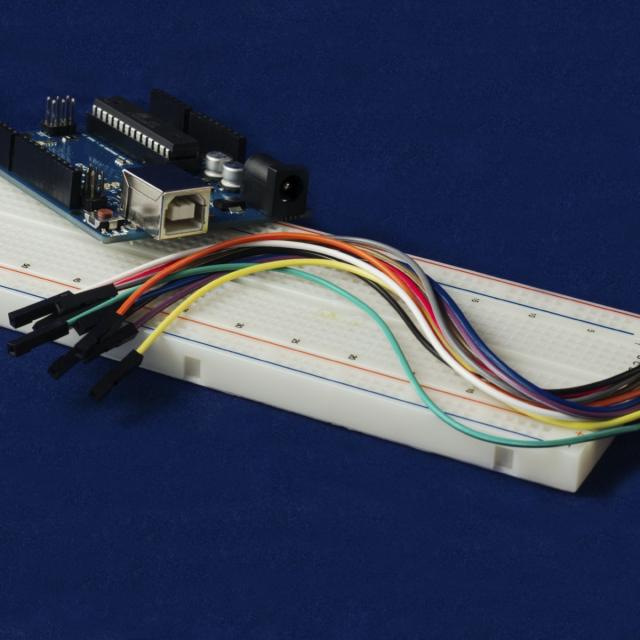
The Arduino is an open-source computer hardware/software platform for building digital devices and interactive objects that can sense and control the physical world around them. In this class you will learn how the Arduino platform works in terms of the physical board and libraries and the IDE (integrated development environment). You will also learn about shields, which are smaller boards that plug into the main Arduino board to perform other functions such as sensing light, heat, GPS tracking, or providing a user interface display. The course will also cover programming the Arduino using C code and accessing the pins on the board via the software to control external devices.

Aug 3rd 2026
4 Weeks