Data Processing and Feature Engineering with MATLAB (Coursera)

Offered by MathWorks,
Data Processing and Feature Engineering with MATLAB (Coursera)

In this course, you will build on the skills learned in Exploratory Data Analysis with MATLAB to lay the foundation required for predictive modeling. This intermediate-level course is useful to anyone who needs to combine data from multiple sources or times and has an interest in modeling.

Class Deals by MOOC List - Click here and see Coursera's Active Discounts, Deals, and Promo Codes.

These skills are valuable for those who have domain knowledge and some exposure to computational tools, but no programming background. To be successful in this course, you should have some background in basic statistics (histograms, averages, standard deviation, curve fitting, interpolation) and have completed Exploratory Data Analysis with MATLAB.
Throughout the course, you will merge data from different data sets and handle common scenarios, such as missing data. In the last module of the course, you will explore special techniques for handling textual, audio, and image data, which are common in data science and more advanced modeling. By the end of this course, you will learn how to visualize your data, clean it up and arrange it for analysis, and identify the qualities necessary to answer your questions. You will be able to visualize the distribution of your data and use visual inspection to address artifacts that affect accurate modeling.
Course 1 of 1 in the Practical Data Science with MATLAB Specialization.

Syllabus

WEEK 1
Surveying Your Data
In this module you'll apply the skills gained in Exploratory Data Analysis with MATLAB on a new dataset. You'll explore different types of distributions and calculate quantities like the skewness and interquartile range. You'll also learn about more types of plots for visualizing multi-dimensional data.

WEEK 2
Organizing Your Data
In this module you'll learn to prepare data for analysis. Often data is not recorded as required. You'll learn to manipulate string variables to extract key information. You'll create a single datetime variable from date and time information spread across multiple columns in a table. You'll efficiently load and combine data from multiple files to create a final table for analysis.

WEEK 3
Cleaning Your Data
In this module you'll clean messy data. Missing data, outliers, and variables with very different scales can obscure trends in the data. You'll find and address missing data and outliers in a data set. You'll compare variables with different scales by normalizing variables.

WEEK 4
Finding Features that Matter
In this module you'll create new features to better understand your data. You'll evaluate features to determine if a feature is potentially useful for making predictions.

WEEK 5
Domain-Specific Feature Engineering
In this module you'll apply the concepts from Modules 1 through 4 to different domains. You'll create and evaluate features using time-based signals such as accelerometer data from a cell phone. You'll use Apps in MATLAB to perform image processing and create features based on segmented images. You'll also use text processing techniques to find features in unstructured text.
Go to Class
MOOC List is learner-supported. When you buy through links on our site, we may earn an affiliate commission.

Related Courses

Computational Neuroscience (Coursera) Coursera
University of Washington

Computational Neuroscience (Coursera)

This course provides an introduction to basic computational methods for understanding what nervous systems do and for determining how they function. We will explore the computational principles governing various aspects of vision, sensory-motor control, learning, and memory. Specific topics that will be covered include representation of information by spiking neurons, processing of information in neural networks, and algorithms for adaptation and learning.

Sep 14th 2026
5-12 Weeks
Mastering Programming with MATLAB (Coursera) Coursera
Vanderbilt University

Mastering Programming with MATLAB (Coursera)

The course builds on the foundation laid by the first course of the Specialization called “Introduction to Programming with MATLAB.” It covers more advanced programming concepts such as recursion, vectorization, function handles, algorithm efficiency and others. At the same time, it presents many features that make MATLAB a powerful programming environment for engineering and scientific computing, such as its support for object oriented programming, the new user interface design environment and Live Scripts.

Sep 14th 2026
5-12 Weeks
Mathematics for Engineers: The Capstone Course (Coursera) Coursera
The Hong Kong University of Science and Technology - HKUST

Mathematics for Engineers: The Capstone Course (Coursera)

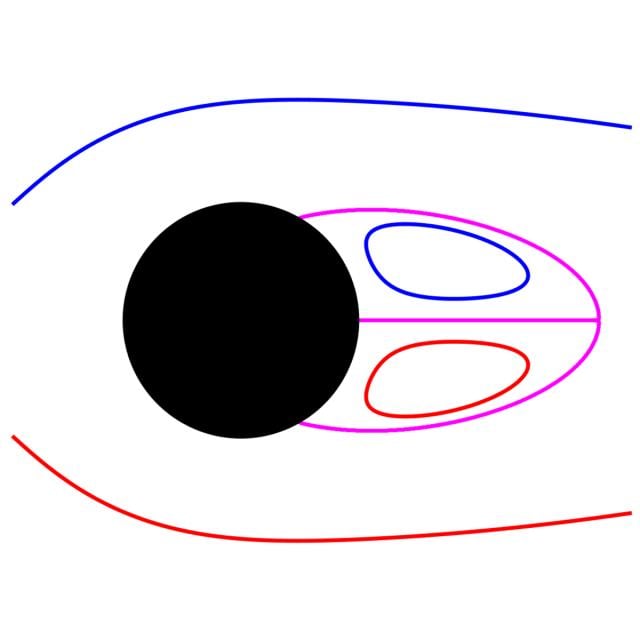
Mathematics for Engineers: The Capstone Course provides a capstone project for students who are completing the Mathematics for Engineers specialization. Students will first learn some basic concepts in computational fluid dynamics, and then apply these concepts to compute the fluid flow around a cylinder. Access to MATLAB online and the MATLAB grader is given to all students who enroll.

Sep 21st 2026
3 Weeks
Introdução ao Controle Moderno (Coursera) Coursera
Instituto Tecnológico de Aeronáutica

Introdução ao Controle Moderno (Coursera)

Este curso lhe dará a base necessária para entender técnicas mais avançadas de controle moderno. Você aprenderá como representar a dinâmica de um sistema no espaço de estados, como analisar um sistema no espaço de estados, como projetar uma realimentação de estado e como projetar um observador de estado.

Sep 21st 2026
5-12 Weeks
Serverless Data Processing with Dataflow: Operations en Español (Coursera) Coursera
Google Cloud

Serverless Data Processing with Dataflow: Operations en Español (Coursera)

En esta última parte de la serie de cursos de Dataflow, presentaremos los componentes del modelo operativo de Dataflow. Examinaremos las herramientas y técnicas que permiten solucionar problemas y optimizar el rendimiento de las canalizaciones. Luego, revisaremos las prácticas recomendadas de las pruebas, la implementación y la confiabilidad en relación con las canalizaciones de Dataflow.

Sep 21st 2026
2 Weeks
Object Tracking and Motion Detection with Computer Vision (Coursera) Coursera
MathWorks

Object Tracking and Motion Detection with Computer Vision (Coursera)

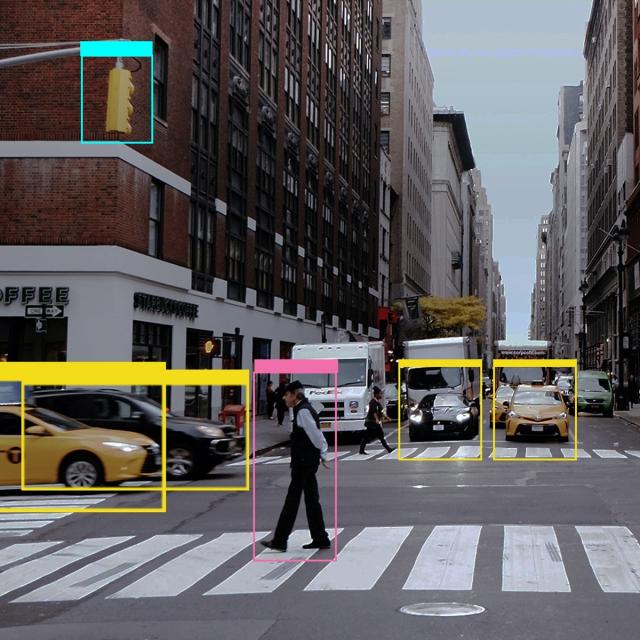
In the third and final course of the Computer Vision for Engineering and Science specialization, you will learn to track objects and detect motion in videos. Tracking objects and detecting motion are difficult tasks but are required for applications as varied as microbiology and autonomous systems. To track objects, you first need to detect them. You’ll use pre-trained deep neural networks to perform object detection. You’ll also use optical flow to detect motion and use the results to detect moving objects.

Sep 21st 2026
4 Weeks
Data Processing Using Python (Coursera) Coursera
Nanjing University

Data Processing Using Python (Coursera)

This course is mainly for non-computer majors. It starts with the basic syntax of Python, to how to acquire data in Python locally and from network, to how to present data, then to how to conduct basic and advanced statistic analysis and visualization of data, and finally to how to design a simple GUI to present and process data, advancing level by level.

Sep 14th 2026
5-12 Weeks
Machine Learning for Computer Vision (Coursera) Coursera
MathWorks

Machine Learning for Computer Vision (Coursera)

In the second course of the Computer Vision for Engineering and Science specialization, you will perform two of the most common computer vision tasks: classifying images and detecting objects. You will apply the entire machine learning workflow, from preparing your data to evaluating your results. By the end of this course, you’ll train machine learning models to classify images of street signs and detect material defects.

Sep 21st 2026
4 Weeks
Modern Robotics, Course 6: Capstone Project, Mobile Manipulation (Coursera) Coursera
Northwestern University

Modern Robotics, Course 6: Capstone Project, Mobile Manipulation (Coursera)

The capstone project of the Modern Robotics specialization is on mobile manipulation: simultaneously controlling the motion of a wheeled mobile base and its robot arm to achieve a manipulation task. This project integrates several topics from the specialization, including trajectory planning, odometry for mobile robots, and feedback control. Beginning from the Modern Robotics software library provided to you (written in Python, Mathematica, and MATLAB), and software you have written for previous courses, you will develop software to plan and control the motion of a mobile manipulator to perform a pick and place task.

Sep 14th 2026
4 Weeks
Data Science Project: MATLAB for the Real World (Coursera) Coursera
MathWorks

Data Science Project: MATLAB for the Real World (Coursera)

Like most subjects, practice makes perfect in Data Science. In the capstone project, you will apply the skills learned across courses in the Practical Data Science with MATLAB specialization to explore, process, analyze, and model data. You will choose your own pathway to answer key questions with the provided data. To complete the project, you must have mastery of the skills covered in other courses in the specialization. The project will test your ability to import and explore your data, prepare the data for analysis, train a predictive model, evaluate and improve your model, and communicate your results.

Sep 21st 2026
4 Weeks
Serverless Data Processing with Dataflow: Develop Pipelines (Coursera) Coursera
Google Cloud

Serverless Data Processing with Dataflow: Develop Pipelines (Coursera)

In this second installment of the Dataflow course series, we are going to be diving deeper on developing pipelines using the Beam SDK. We start with a review of Apache Beam concepts. Next, we discuss processing streaming data using windows, watermarks and triggers. We then cover options for sources and sinks in your pipelines, schemas to express your structured data, and how to do stateful transformations using State and Timer APIs.

Sep 21st 2026
3 Weeks