Crowdfunding 101 (FinTech School)

Offered by FinTech School,
Crowdfunding 101 (FinTech School)

Learn the basics of equity and debt crowdfunding, and a roadmap for implementing a crowdfunding campaign. This intro course will cover, a broad introduction to US equity and debt crowdfunding, the basic mechanics of a crowdfunding campaign, the anatomy of a crowdfunding portal and an industry landscape covering trends, investment data and key players.

The JOBS Act, or otherwise known as the Crowdfunding Act, has been passing into law since 2012 with the most recent development, Regulation CF, enacted in May of 2016 which has opened up investing in privately-held businesses to the average investor. Previously, only the wealthiest individuals that had $200K or more in annual salary or $1MM+ in net worth, could partake.
This is analogous to tapping into the “other 96%” of US investors as potential sources of startup capital, which brings forth a new financial instrument to enable small and midsize businesses (SMBs) to raise their working capital from their own personal and professional networks or investor networks sourced via a crowdfunding portal or broker dealer. There are many applications of crowdfunding in today’s marketplace such as tech startups, real estate, cleantech, tourist attractions, computer games, music bands and product companies to name a few.
The course is designed for industry practitioners (funding portals or broker dealers) and large do-it-yourself SMBs trying to receive investments online from the crowd. It could also serve, as the basic intro necessary to apply crowdfunding mechanics to an existing business model and the right foundation to get started on equity & debt crowdfunding.
At the end of the course, a participant should understand the basics of equity and debt crowdfunding and have a basic roadmap for implementing a crowdfunding campaign.

Go to Class
MOOC List is learner-supported. When you buy through links on our site, we may earn an affiliate commission.

Related Courses

Banking and Financial Institutions (Coursera) Coursera
University of Illinois at Urbana-Champaign

Banking and Financial Institutions (Coursera)

The purpose of this course is to provide you with a basic understanding of the connections between money, the financial system, and the broader macroeconomy. We will examine the economics of modern financial institutions (e.g. banks), including how they are organized, the products and financial services they offer, the risks they take, why and how they are regulated, and how this has changed over time.

Nov 23rd 2026
4 Weeks
Bitcoin and Cryptocurrency Technologies (Coursera) Coursera
Princeton University

Bitcoin and Cryptocurrency Technologies (Coursera)

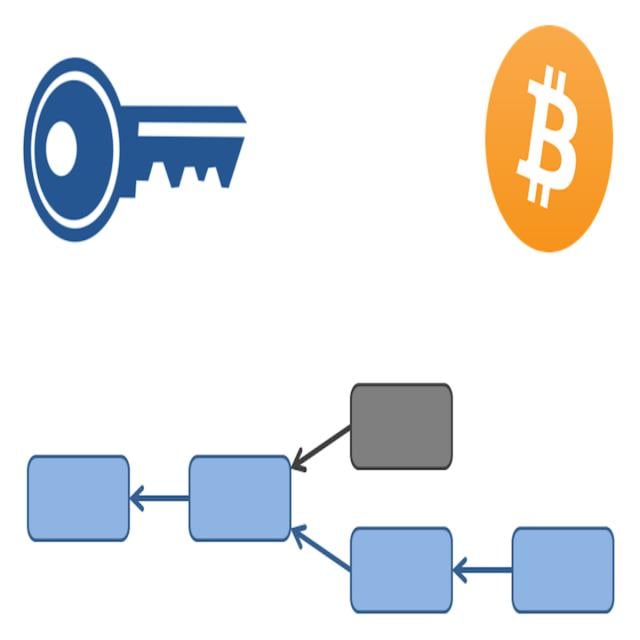
To really understand what is special about Bitcoin, we need to understand how it works at a technical level. We’ll address the important questions about Bitcoin, such as: How does Bitcoin work? What makes Bitcoin different? How secure are your Bitcoins? How anonymous are Bitcoin users? What determines the price of Bitcoins? Can cryptocurrencies be regulated? What might the future hold?

Nov 16th 2026
5-12 Weeks
Business Concepts for Life Scientists (iBiology) Other Providers
iBiology

Business Concepts for Life Scientists (iBiology)

The purpose of the Business Concepts for Life Scientists course is to enhance PhD scientists’ understanding of foundational business concepts. This business coursework is unique because it is designed to prepare scientists for career transitions into both academic and non-academic settings. The course comprises a series of three modules - Business Strategy, Finance and Business Development.

Self Paced
Self-Paced
Value and Business Decision Making (Coursera) Coursera
Yunus Social Business Fund Bengaluru

Value and Business Decision Making (Coursera)

This course is part of a Specialization titled “Strategy and Finance for a Lifecycle of a Social Business”. It is an introduction to time value of money and will help the learner understand the basics of finance with the ultimate goal of valuing a company from a societal lens. The beauty of the modern decision-making framework is that it can be used to understand value creation at any level – the individual, the corporate or nonprofit entity level and from the point of view of society. The applications however become increasingly complex as your lens expands from the individual to the corporate/nonprofit to the global society.

Nov 11th 2026
5-12 Weeks
Fundamentos de Finanzas Empresariales (Coursera) Coursera
Universidad de los Andes

Fundamentos de Finanzas Empresariales (Coursera)

No importa qué rol desempeñas en tu compañía, ni el nivel de responsabilidades que tienes, ni si eres empleado o emprendedor; el curso de Fundamentos de las Finanzas Empresariales te brinda las herramientas para que adquieras los conocimientos necesarios para entender las finanzas de tu empresa y seas capaz de tomar mejores decisiones.

Nov 16th 2026
5-12 Weeks
Macroeconomic Financial Accounts (Coursera) Coursera
Sapienza University of Rome

Macroeconomic Financial Accounts (Coursera)

This course is primarily aimed at undergraduates attending their final year or Master’s students in monetary and financial economics, international macroeconomics and data mining. Professionals in Government institutions, Central Banks, business and the financial industry, along with other professionals interested in finance and macroeconomics, may also benefit from this course.

Nov 16th 2026
5-12 Weeks
What is the Metaverse? (Coursera) Coursera
Meta

What is the Metaverse? (Coursera)

The metaverse isn’t just for gamers or developers, it will be for everyone. In this free course from the experts at Meta, you’ll learn what the metaverse is, what it means for our world today and into the future, and the opportunities it presents for both professionals and businesses. Understand the metaverse fundamentals. Experts will guide you through a broad range of topics spanning the metaverse ecosystem, from communication and collaboration to NFTs and cryptocurrency, from avatars and devices to platforms and game engines. You’ll learn about augmented reality (AR), virtual reality (VR), extended reality, NFTs, blockchain, web3, cryptocurrency, and more.

Nov 23rd 2026
5-12 Weeks
Principles of Sustainable Finance (Coursera) Coursera
Erasmus University Rotterdam

Principles of Sustainable Finance (Coursera)

Finance is widely seen as an obstacle to a better world. Principles of Sustainable Finance explains how the financial sector can be mobilized to counter this. Using finance as a means to achieve social goals we can divert the planet and its economy from its current path to a world that is sustainable for all. Throughout this course, you will learn about the UN Sustainable Development Goals, how social and environmental factors should not be regarded as externalities, you will learn more about sustainable banking and asset management, about effective engagement, sustainable scenario analysis and long-term value creation.

Nov 23rd 2026
5-12 Weeks
Blockchains, Tokens, and The Decentralized Future (Coursera) Coursera
Illinois Tech

Blockchains, Tokens, and The Decentralized Future (Coursera)

Dive into the transformative world of blockchain with our course, designed to navigate the complexities of digital currencies, smart contracts, and decentralized applications. Whether you're intrigued by Bitcoin, Ethereum, or the broader implications of blockchain for industries and governance, this course offers deep insights and practical knowledge to leverage blockchain technology for innovation and problem-solving. Perfect for both beginners and seasoned enthusiasts, it's your gateway to mastering the blockchain ecosystem and its burgeoning impact on the digital age.

Nov 23rd 2026
4 Weeks
Blockchain Scalability and its Foundations in Distributed Systems (Coursera) Coursera
The University of Sydney

Blockchain Scalability and its Foundations in Distributed Systems (Coursera)

Blockchain promises to disrupt industries once it will be efficient at large scale. In this course, you will learn how to make blockchain scale. You will learn about the foundational problem of distributed computing, consensus, that is key to create blocks securely. By illustrating limitations of mainstream blockchains, this course will indicate how to improve the technology in terms of security and efficiency. In particular, this course will help you: understand security vulnerabilities of mainstream blockchains; design consensus algorithms that tolerate attacks, and; design scalable blockchain systems.

Nov 23rd 2026
5-12 Weeks