EdX

Comprendre la respiration (edX)

Comprendre la respiration (edX)

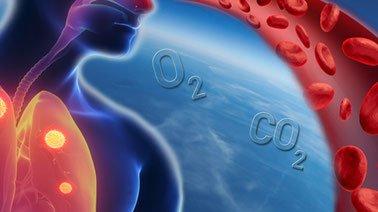
Approfondissez votre connaissance de la respiration, des poumons, de l’oxygène et du CO2, en compagnie d’étudiants et d’experts en médecine. Pourquoi respirons-nous ? A quoi servent nos poumons ? Quel est le lien entre l’oxygène et la vie ? Ces questions ouvrent un vaste champ de découvertes et de curiosités pour mieux comprendre la respiration. Ce cours s’adresse à toute personne qui souhaite apprivoiser, s’approprier ou approfondir le fonctionnement de la respiration et des poumons, autrement dit la physiologie respiratoire humaine.

Class Deals by MOOC List - Click here and see EdX's Active Discounts, Deals, and Promo Codes.

Plongés au cœur de l’université et de la pratique hospitalière, durant quatre semaines, vous côtoierez professeurs, professionnels de la santé, internes et étudiants de médecine. Vous y apprendrez des notions de niveau universitaire qui ont été sélectionnées et adaptées afin que toute personne intéressée puisse les comprendre et y donner du sens. Ainsi, nous aborderons des thèmes proches du monde qui vous entoure : la respiration lors d’un effort physique, en altitude, le rôle des polluants atmosphériques, l’asthme….
A chaque leçon, un expert abordera des domaines concrets et pratiques : comment apprécier l’oxygénation d’un patient, pourquoi lui administrer de l’oxygène, que signifie hyperventiler….

Ce cours vous fera entrer en profondeur dans un monde où l’atmosphère est faite d’anatomie humaine, de physique des volumes et des pressions, de gaz et de sang, d’oxygène et de CO2, de poumons et de tissus, de tabagisme et de bronchite chronique.
Au terme de ce cours, vous serez capables de:

  • expliquer et décrire les principes d’oxygénation, de ventilation, de transport et de consommation d’oxygène, de diffusion de gaz entre l’air et le sang… par des schémas et par des calculs utilisant quelques formules fondamentales.
  • évaluer la quantité et la qualité de l’oxygénation d’un patient,
  • distinguer les situations normales de celles dites pathologiques.

Bref, vous aurez, pour votre plaisir et votre motivation, approfondi votre culture générale en acquérant des connaissances élevées.

What you'll learn:

  • Expliquer et décrire les principes d’oxygénation, de ventilation, de transport et de consommation d’oxygène, de diffusion de gaz entre l’air et le sang par des schémas et par des calculs utilisant des formules fondamentales
  • Evaluer la quantité et la qualité de l’oxygénation d’un patient
  • Distinguer les situations normales de celles dites pathologiques

Syllabus

  • Sans oxygène, point de vie sur terre
  • L’anatomie respiratoire : de la bouche aux alvéoles pulmonaires
  • La ventilation et les volumes pulmonaires
  • Les physiciens de la respiration
  • La Cascade d’Oxygène
  • L’Hémoglobine, transporteur d’Oxygène dans le sang
  • Les couleurs de l’oxygène
  • Le Dioxyde de Carbone (CO2) : bien mieux qu’un déchet de l’organisme
  • Respirer en altitude ou en avion : une adaptation à l’hypoxie
  • L’effort physique augmente la consommation d’oxygène
  • Le poumon du fœtus, c’est le placenta de sa mère
  • Les polluants atmosphériques, le monoxyde de carbone (CO) et le tabagisme
  • L’asthme obstrue et enflamme les petites bronches
  • La bronchite chronique et l’emphysème réduisent l’élasticité des poumons
  • L’œdème Pulmonaire : le cœur et les poumons sont indissociables
  • Respiration et bien-être : le yoga et l’hypnose
  • Compléments de physiologie respiratoire : le surfactant, la compliance, la fibros

Go to Class
MOOC List is learner-supported. When you buy through links on our site, we may earn an affiliate commission.

Related Courses

Fundamentals of Neuroscience, Part 1: The Electrical Properties of the Neuron (edX) EdX
HarvardX,Harvard University

Fundamentals of Neuroscience, Part 1: The Electrical Properties of the Neuron (edX)

Learn how electricity makes the neurons in your brain tick. Fundamentals of Neuroscience is a three-courseseries that explores the structure and function of the nervous system—from the inner workings of a single nerve cell to the staggering complexity of the brain and the social interactions they enable.

Self Paced
Self-Paced
Cellular Mechanisms of Brain Function (edX) EdX
École Polytechnique Fédérale de Lausanne,EPFLx

Cellular Mechanisms of Brain Function (edX)

This course aims for a mechanistic description of mammalian brain function at the level of individual nerve cells and their synaptic interactions. Brain and behavior are inextricably linked in neuroscience. The function of the brain is to govern behavior, and the aim of this course is to causally link biophysical mechanisms with simple behaviors studied in mice.

Self Paced
Self-Paced
Uso racional de antibióticos en el tratamiento de heridas (FutureLearn) FutureLearn
British Society for Antimicrobial Chemotherapy - BSAC,European Wound Management Association

Uso racional de antibióticos en el tratamiento de heridas (FutureLearn)

Aprende sobre la resistencia a antibióticos, descubre la amenaza que supone al tratar heridas y conoce las medidas de prevención. Aprende a tratar las infecciones causadas por heridas como un profesional sanita. Es habitual recurrir a antibióticos para tratar las infecciones causadas por heridas. Por ello, es fundamental comprender el uso racional de antibióticos a la hora de tratar correctamente distintas infecciones provocadas por bacterias, parásitos, virus u hongos y así evitar las resistencias.

Self Paced
3 Weeks
Protección de la infancia durante la COVID-19 y otros brotes de enfermedades infecciosas (FutureLearn) FutureLearn
The Alliance for Child Protection in Humanitarian Action

Protección de la infancia durante la COVID-19 y otros brotes de enfermedades infecciosas (FutureLearn)

Cómo adaptar los programas de protección de la infancia para apoyar el bienestar y el desarrollo de los niños y niñas vulnerables. Ajustar los programas de protección de la infancia en el contexto de la COVID-19. Este curso proporcionará a los profesionales de la protección de la infancia conocimientos y habilidades para implementar estrategias de prevención y respuesta ante crisis, sobre la base de datos empíricos, a fin de proteger a los niños y niñas durante los brotes de COVID-19 y otras enfermedades infecciosas.

Jun 21st 2021
5-12 Weeks
Fundamentals of Neuroscience, Part 3: The Brain (edX) EdX
HarvardX,Harvard University

Fundamentals of Neuroscience, Part 3: The Brain (edX)

Discover what makes your brain tick in this third part of a four-part introductory series in Neuroscience. The human brain is a fantastically complex system, capable of transforming a torrent of incoming information into thought and action. In this course, we will look at how the various subsystems of the brain work together to enable us to survive and thrive in a changing world.

Self Paced
Self-Paced
Human Anatomy: Musculoskeletal Cases (edX) EdX
HarvardX,Harvard University

Human Anatomy: Musculoskeletal Cases (edX)

Learn the anatomy basic to understanding five musculoskeletal injuries commonly seen in primary care medicine and orthopedic clinical specialty practice. Follow hypothetical patients from injury to operating room. Human Anatomy: Musculoskeletal Cases invites students to join medical and basic science faculty at Harvard Medical School (HMS) to learn about musculoskeletal injuries commonly seen in clinical practice.

Self Paced
Self-Paced
Advanced Bioconductor (edX) EdX
HarvardX,Harvard University

Advanced Bioconductor (edX)

Learn advanced approaches to genomic visualization, reproducible analysis, data architecture, and exploration of cloud-scale consortium-generated genomic data. In this course, we begin with approaches to visualization of genome-scale data, and provide tools to build interactive graphical interfaces to speed discovery and interpretation. Using knitr and rmarkdown as basic authoring tools, the concept of reproducible research is developed, and the concept of an executable document is presented.

Self Paced
Self-Paced
Advanced Transport Phenomena (edX) EdX
Delft University of Technology,DelftX

Advanced Transport Phenomena (edX)

Learn how to tackle complex mass and heat transfer problems and apply the results in your own environment. How can you reduce the energy loss of your home? What is the underlying science of energy loss in pipes? Which heat and mass transfer problems do we have to tackle to make consumer products? In this engineering course, you will learn about the engineering principles that play an important role in all of these and more phenomena. You will learn about microbalances, radiation, convection, diffusion and more and their applications in everyday life.

Self Paced
Self-Paced
Introduction to Linear Models and Matrix Algebra (edX) EdX
HarvardX,Harvard University

Introduction to Linear Models and Matrix Algebra (edX)

Learn to use R programming to apply linear models to analyze data in life sciences. Matrix Algebra underlies many of the current tools for experimental design and the analysis of high-dimensional data. In this introductory data analysis course, we will use matrix algebra to represent the linear models that commonly used to model differences between experimental units. We perform statistical inference on these differences. Throughout the course we will use the R programming language.

Self Paced
Self-Paced
Humanitarian Response to Conflict and Disaster (edX) EdX
HarvardX,Harvard University

Humanitarian Response to Conflict and Disaster (edX)

Learn the principles guiding humanitarian response to modern emergencies, and the challenges faced in the field today. From the Syrian refugee crisis to the West Africa Ebola outbreak, humanitarian emergencies have reached unprecedented dimensions and proportions. As need for humanitarian aid grows, how can efforts to alleviate human suffering evolve with it? This course from the Harvard Humanitarian Initiative and HarvardX seeks to prepare learners to recognize and analyze emerging challenges in the humanitarian field.

Self Paced
Self-Paced