C++ Object Basics: Functions, Recursion, and Objects (Coursera)

Offered by Codio,
C++ Object Basics: Functions, Recursion, and Objects (Coursera)

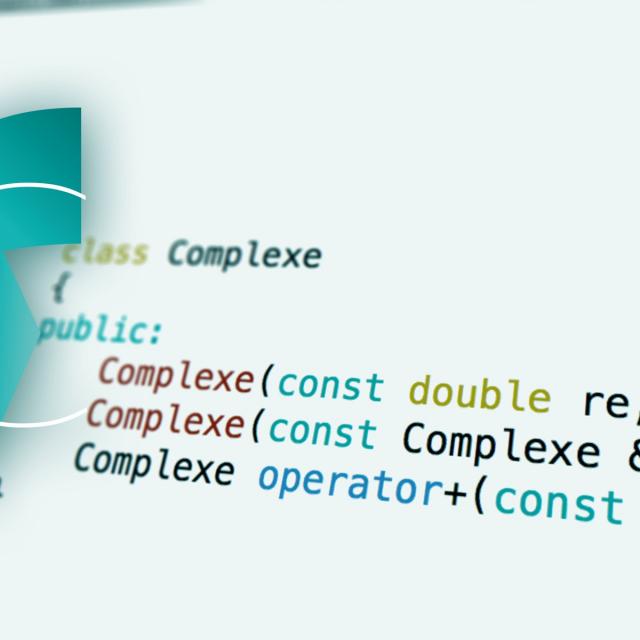
Code and run your first C++ program in minutes without installing anything! This course is designed for learners with limited coding experience, providing a solid foundation of not just C++, but core Computer Science topics that can be transferred to other languages. The modules in this course cover functions, recursion, objects, and mutability. Completion of the prior 2 courses in this specialization are recommended.

Class Deals by MOOC List - Click here and see Coursera's Active Discounts, Deals, and Promo Codes.

To allow for a truly hands-on, self-paced learning experience, this course is video-free. Assignments contain short explanations with images and runnable code examples with suggested edits to explore code examples further, building a deeper understanding by doing. You'll benefit from instant feedback from a variety of assessment items along the way, gently progressing from quick understanding checks (multiple choice, fill in the blank, and un-scrambling code blocks) to small, approachable coding exercises that take minutes instead of hours.

What You Will Learn

  • Define and use custom functions to improve code readability
  • When and how to use recursion instead of iteration
  • Create and modify custom objects

Course 3 of 4 in the Programming in C++: A Hands-on Introduction Specialization

Syllabus

WEEK 1
User-Defined Functions
Re-use pieces of code by wrapping them in functions. You can create functions that take in and/or return data.

WEEK 2
Recursion
Use recursion for special cases of iteration.

WEEK 3
Introduction to Objects
Learn about user-defined classes and how to use them to create objects.

WEEK 4
Mutability
Change the attributes associated with an object through functions.

Go to Class
MOOC List is learner-supported. When you buy through links on our site, we may earn an affiliate commission.

Related Courses

Creative Programming for Digital Media & Mobile Apps (Coursera) Coursera
University of London,Goldsmiths, University of London

Creative Programming for Digital Media & Mobile Apps (Coursera)

This course is for anyone who would like to apply their technical skills to creative work ranging from video games to art installations to interactive music, and also for artists who would like to use programming in their artistic practice. This course will teach you how to develop and apply programming skills to creative work. This is an important skill within the development of creative mobile applications, digital music and video games. It will teach the technical skills needed to write software that make use of images, audio and graphics, and will concentrate on the application of these skills to creative projects. Additional resources will be provided for students with no programming background.

Oct 12th 2026
5-12 Weeks
Introduction à la programmation orientée objet (en C++) (Coursera) Coursera
École Polytechnique Fédérale de Lausanne

Introduction à la programmation orientée objet (en C++) (Coursera)

Ce cours introduit la programmation orientée objet (encapsulation, abstration, héritage, polymorphisme) en l'illustrant en langage C++. Il présuppose connues les bases de la programmation (variables, types, boucles, fonctions, ...). Il est conçu comme la suite du cours « Initiation à la programmation (en C++) ».

Oct 12th 2026
5-12 Weeks
Introduction to Software, Programming, and Databases (Coursera) Coursera
IBM

Introduction to Software, Programming, and Databases (Coursera)

There are many types of software and understanding software can be overwhelming. This course aims to help you understand more about the types of software and how to manage software from an information technology (IT) perspective. This course will help you understand the basics of software, cloud computing, web browsers, development and concepts of software, programming languages, and database basics.

Oct 12th 2026
5-12 Weeks
Programming Languages, Part A (Coursera) Coursera
University of Washington

Programming Languages, Part A (Coursera)

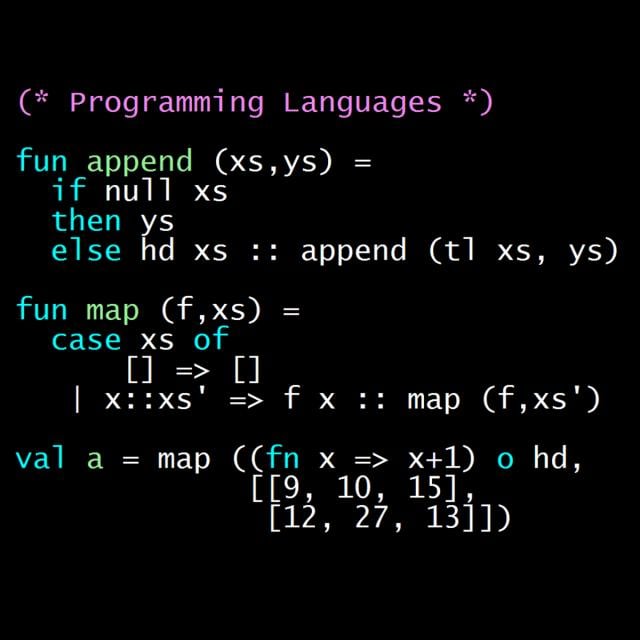
This course is an introduction to the basic concepts of programming languages, with a strong emphasis on functional programming. The course uses the languages ML, Racket, and Ruby as vehicles for teaching the concepts, but the real intent is to teach enough about how any language “fits together” to make you more effective programming in any language -- and in learning new ones.

Oct 5th 2026
5-12 Weeks
The Finite Element Method for Problems in Physics (Coursera) Coursera
University of Michigan

The Finite Element Method for Problems in Physics (Coursera)

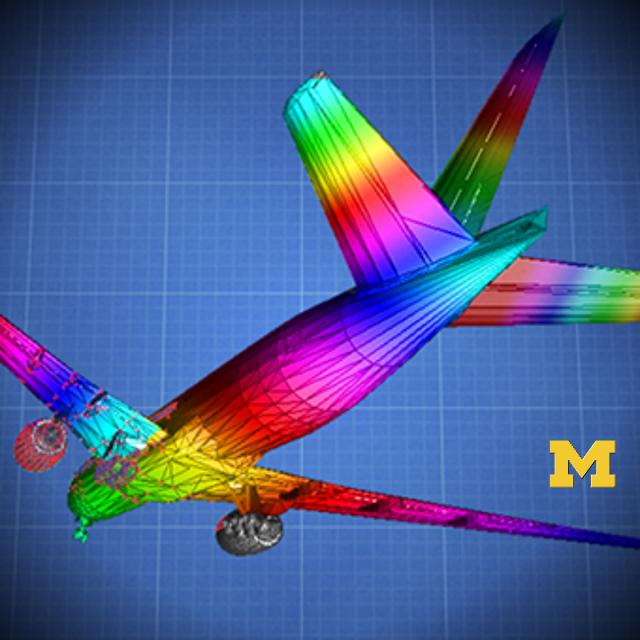
This course is an introduction to the finite element method as applicable to a range of problems in physics and engineering sciences. The treatment is mathematical, but only for the purpose of clarifying the formulation. The emphasis is on coding up the formulations in a modern, open-source environment that can be expanded to other applications, subsequently.

Oct 5th 2026
13-24 Weeks
Build a Modern Computer from First Principles: Nand to Tetris Part II (project-centered course) (Coursera) Coursera
Hebrew University of Jerusalem

Build a Modern Computer from First Principles: Nand to Tetris Part II (project-centered course) (Coursera)

In this project-centered course you will build a modern software hierarchy, designed to enable the translation and execution of object-based, high-level languages on a bare-bone computer hardware platform. In particular, you will implement a virtual machine and a compiler for a simple, Java-like programming language, and you will develop a basic operating system that closes gaps between the high-level language and the underlying hardware platform.

Oct 12th 2026
5-12 Weeks
Problem Solving Using Computational Thinking (Coursera) Coursera
University of Michigan

Problem Solving Using Computational Thinking (Coursera)

Have you ever heard that computers "think"? Believe it or not, computers really do not think. Instead, they do exactly what we tell them to do. Programming is, "telling the computer what to do and how to do it." Before you can think about programming a computer, you need to work out exactly what it is you want to tell the computer to do. Thinking through problems this way is Computational Thinking. Computational Thinking allows us to take complex problems, understand what the problem is, and develop solutions. We can present these solutions in a way that both computers and people can understand.

Oct 12th 2026
5-12 Weeks
Introduction to User Experience Design (Coursera) Coursera
Georgia Institute of Technology

Introduction to User Experience Design (Coursera)

The focus of this course is to introduce the learner to User Experience (UX) Design. User Experience design is design that is user centered. The goal is to design artifacts that allow the users to meet their needs in the most effective efficient and satisfying manner. The course introduces the novice to a cycle of discovery and evaluation and a set of techniques that meet the user's needs.

Oct 5th 2026
5-12 Weeks
Image and video processing: From Mars to Hollywood with a stop at the hospital (Coursera) Coursera
Duke University

Image and video processing: From Mars to Hollywood with a stop at the hospital (Coursera)

In this course, you will learn the science behind how digital images and video are made, altered, stored, and used. We will look at the vast world of digital imaging, from how computers and digital cameras form images to how digital special effects are used in Hollywood movies to how the Mars Rover was able to send photographs across millions of miles of space.

Oct 5th 2026
5-12 Weeks