EdX

Astrophysics: Exploring Exoplanets (edX)

Astrophysics: Exploring Exoplanets (edX)

Explore the mysteries of exoplanets - planets around other stars – in this introductory astrophysics course. The discovery of exoplanets is one of the greatest revolutions in modern astrophysics. Twenty years ago, we had no idea whether any of the countless stars out there beyond our solar system had planets or not.

Class Deals by MOOC List - Click here and see EdX's Active Discounts, Deals, and Promo Codes.

Today, things are totally different. Over 1,000 planetary systems have been discovered. The universe is teeming with planets. And what strange planets they are - hot Jupiter-like planets skimming the surfaces of their stars, cold and lonely free-floating planets far from any star, planets made of diamond, planets with rain made of glass, super-Earths and even planets orbiting neutron stars. In this course, we’ll bring you up-to-date with the latest research on exoplanets, and how this research has revolutionised our understanding of the formation of solar systems like our own.

This course is designed for people who would like to get a deeper understanding of these mysteries than that offered by popular science articles and shows. You will need reasonable high-school level mathematics and physics to get the most out of this course.
This is the second of four ANUx courses which together make up the Australian National University's first year astrophysics program. It follows on from the introductory course on the Greatest Unsolved Mysteries of the Universe, and is followed by courses on the violent universe and on cosmology. These courses compromise the Astrophysics XSeries.

What you'll learn:

  • An understanding of the different methods used to find and study exoplanets
  • Knowledge of the results obtained by these methods
  • An appreciation of how scientists tackle difficult problems
Go to Class
MOOC List is learner-supported. When you buy through links on our site, we may earn an affiliate commission.

Related Courses

Introduction to Quantum Transport (edX) EdX
Purdue University,PurdueX

Introduction to Quantum Transport (edX)

This course introduces the non-equilibrium Green’s function (NEGF) method widely used to describe quantum effects in nanoscale devices, along with its applications to spintronic devices. This course introduces the Schrödinger equation, using the tight-binding method to discuss the concept of bandstructure and E(k) relations, followed by an introduction to the NEGF method with simple illustrative examples. Concept of spinors is introduced along with the application of the NEGF method to spintronic devices.

Feb 12th 2024
5-12 Weeks
Quantum Mechanics of Molecular Structures (edX) EdX
The University of Tokyo,UTokyoX

Quantum Mechanics of Molecular Structures (edX)

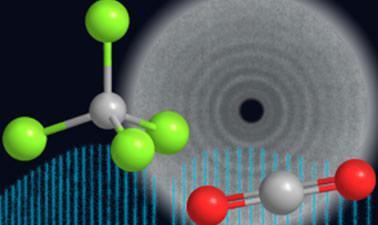
Learn two methods used to determine molecular structures and their properties in this introduction to Quantum Mechanics. Knowing the geometrical structure of the molecules around us is one of the most important and fundamental issues in the field of chemistry. This course introduces the two primary methods used to determine the geometrical structure of molecules: molecular spectroscopy and gas electron diffraction.

Self Paced
Self-Paced
文物精品与文化中国:天文与医药 | Relics of Chinese History - Part 2: Astronomy and Medicine (edX) EdX
Tsinghua University,TsinghuaX

文物精品与文化中国:天文与医药 | Relics of Chinese History - Part 2: Astronomy and Medicine (edX)

Discover how Astronomy and Medicine impacted the history of China as we use artifacts and relics as a guide to Chinese civilization. 本课程以精品文物作引子,将学术界探索中华文明的过程作为线索,介绍古代中国在造船、玉器等诸多领域的杰出成就

Self Paced
Self-Paced
Quantum Mechanics for Scientists and Engineers 1 (edX) EdX
StanfordOnline

Quantum Mechanics for Scientists and Engineers 1 (edX)

This 9 week course aims to teach quantum mechanics to anyone with a reasonable college-level understanding of physical science or engineering. Quantum mechanics was once mostly of interest to physicists, chemists and other basic scientists. Now the concepts and techniques of quantum mechanics are essential in many areas of engineering and science such as materials science, nanotechnology, electronic devices, and photonics.

Self Paced
Self-Paced
Cement Chemistry and Sustainable Cementitious Materials (edX) EdX
École Polytechnique Fédérale de Lausanne,EPFLx

Cement Chemistry and Sustainable Cementitious Materials (edX)

Learn the basics of cement chemistry and laboratory best practices for assessment of its key properties. Every day, we see concrete used all around us – to build our houses, offices, schools, bridges, and infrastructure. But few people actually understand what gives concrete its strength, resistance, and utility. The aim of this course is to offer basic cement chemistry to practitioners, as well as new students in the fields of chemistry and engineering.

Self Paced
Self-Paced
Cavity Quantum Optomechanics (edX) EdX
École Polytechnique Fédérale de Lausanne,EPFLx

Cavity Quantum Optomechanics (edX)

Fundamentals of optomechanics. Basic principles, recent developments and applications. Optomechanics is the study of the interaction between light and mechanical systems which can result in the manipulation of the state of both light and the mechanics. The nature of this interaction gives rise to a wide range of applications in both fundamental physics and technological advancements. In this course, you will learn the concepts and tools required for conducting research in the field of cavity optomechanics.

Self Paced
Self-Paced
Introduction to Quantum Computing for Everyone (edX) EdX
University of Chicago,UChicagoX

Introduction to Quantum Computing for Everyone (edX)

This first course in quantum computing is for novices and requires learners to have only basic algebra. It covers the future impacts of quantum computing, provides intuitive introductions of quantum physics phenomenon, and progresses from single operations to a complete algorithm. Quantum computing is coming closer to reality, with 80+ bit machines in active use. This course provides an intuitive introduction to the impacts, underlying phenomenon, and programming principles that underlie quantum computing.

Self Paced
Self-Paced
Understanding Nuclear Energy (edX) EdX
Delft University of Technology,DelftX

Understanding Nuclear Energy (edX)

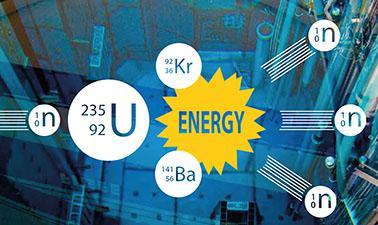
Learn the science and technology behind nuclear energy and the special features of this energy source. In this nuclear energy course, we will tackle provocative questions such as: Is nuclear energy a good substitute for fossil fuels to reduce our CO2 emission or not?; Can nuclear reactors operate safely without any harm to the public and environment?; How much nuclear waste is produced and how long does it need to be stored safely?; How can we make nuclear energy clean and more sustainable?; How much are nuclear energy costs?

Self Paced
Self-Paced
The Basics of Transport Phenomena (edX) EdX
Delft University of Technology,DelftX

The Basics of Transport Phenomena (edX)

Learn the basic framework to work on a broad spectrum of engineering problems concerning transfer of heat, mass and momentum. Learn through examples of everyday processes at home, in the lab and in industry. Have you ever wondered why ventilation helps to cool down your hot chocolate? Do you know why a surfing suit keeps you warm? Why iron feels cold, while wood feels warm at room temperature? Or how air is transferred into aqueous liquids in a water treatment plant? How can we sterilize milk with the least amount of energy? How does medicine spread in our tissue? Or how do we design a new cooling tower of a power plant? All these are phenomena that involve heat transfer, mass transfer or fluid flow.

Self Paced
Self-Paced