EdX

Algorithm Design and Analysis (edX)

Algorithm Design and Analysis (edX)

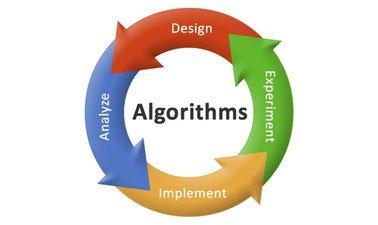
Learn about the core principles of computer science: algorithmic thinking and computational problem solving. How do you optimally encode a text file? How do you find shortest paths in a map? How do you design a communication network? How do you route data in a network? What are the limits of efficient computation?

Class Deals by MOOC List - Click here and see EdX's Active Discounts, Deals, and Promo Codes.

This course, part of the Computer Science Essentials for Software Development Professional Certificate program, is an introduction to design and analysis of algorithms, and answers along the way these and many other interesting computational questions.
You will learn about algorithms that operate on common data structures, for instance sorting and searching; advanced design and analysis techniques such as dynamic programming and greedy algorithms; advanced graph algorithms such as minimum spanning trees and shortest paths; NP-completeness theory; and approximation algorithms.
After completing this course you will be able to design efficient and correct algorithms using sophisticated data structures for complex computational tasks.

This course is part of the Computer Science Essentials for Software Development Professional Certificate

What you'll learn

  • How to represent data in ways that allow you to access it efficiently in the ways you need to
  • How to analyze the efficiency of algorithms
  • How to bootstrap solutions on small inputs into algorithmic solutions on bigger inputs
  • Solutions to several classic optimization problems
  • How to critically analyze whether a locally optimal approach (greedy) can provide a globally optimal solution to a problem

Syllabus

Week 1: Mathematical Preliminaries; Asymptotic analysis and recurrence relations; Sorting and Searching; Heaps and Binary Search Trees
Week 2: Algorithm Design Paradigms - Divide-and-Conquer algorithms, Dynamic Programming, Greedy Algorithms
Week 3: Graphs and graph traversals; minimum spanning trees; shortest paths
Week 4: Flows; NP-completeness; Approximation Algorithms


Go to Class
MOOC List is learner-supported. When you buy through links on our site, we may earn an affiliate commission.

Related Courses

Advanced Bayesian Statistics Using R (edX) EdX
University of Canterbury,UCx

Advanced Bayesian Statistics Using R (edX)

Now that you know the basics of Bayesian inference, dive deeper to explore its richness and flexibility more fully. Let’s take a closer look at modeling latent variables, Bayesian model averaging, generalised linear models, and MCMC methods. Advanced Bayesian Data Analysis Using R is part two of the Bayesian Data Analysis in R professional certificate.

Self Paced
Self-Paced
Introduction to Object-Oriented Programming with Java II: Object-Oriented Programming and Algorithms (edX) EdX
Georgia Institute of Technology,GTx

Introduction to Object-Oriented Programming with Java II: Object-Oriented Programming and Algorithms (edX)

Learn the basics of object-oriented programming and algorithms. Students will build on the skills learned from “Introduction to Object-Oriented Programming with Java I: Foundations and Syntax Basics” and learn the basics of writing classes that serve as blueprints of concepts or objects that are represented in a programming problem. Students will leverage the concepts of inheritance, interfaces, and polymorphism to program reusability and flexibility in classes. Finally, students will gain experience walking through and analyzing algorithms that are applied on data (including objects) in many object-oriented programs.

Self Paced
Self-Paced
A Hands-on Introduction to Engineering Simulations (edX) EdX
CornellX,Cornell University

A Hands-on Introduction to Engineering Simulations (edX)

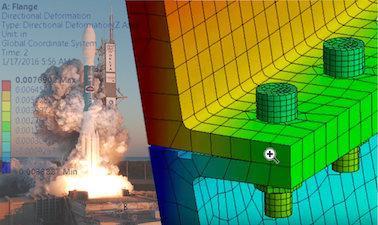
Learn how to analyze real-world engineering problems using ANSYS simulation software and gain important professional skills sought by employers. In this hands-on course, you’ll learn how to perform engineering simulations using a powerful tool from ANSYS, Inc. This is a problem-based course where you’ll learn by doing. The focus will be on understanding what’s under the blackbox so as to move beyond garbage-in, garbage-out. You’ll practice using a common solution approach to problems involving different physics: structural mechanics, fluid dynamics and heat transfer.

Self Paced
Self-Paced
Advanced Linear Algebra: Foundations to Frontiers (edX) EdX
University of Texas at Austin,UTAustinX

Advanced Linear Algebra: Foundations to Frontiers (edX)

Learn advanced linear algebra for computing. Linear algebra is one of the fundamental tools for computational and data scientists. In Advanced Linear Algebra: Foundations to Frontiers (ALAFF), you will build your knowledge, understanding, and skills in linear algebra, practical algorithms for matrix computations, and the analysis of the effects of floating-point arithmetic as performed by computers.

Self Paced
Self-Paced
Advanced Algorithmics and Graph Theory with Python (edX) EdX
Institut Mines-Telecom,IMTx

Advanced Algorithmics and Graph Theory with Python (edX)

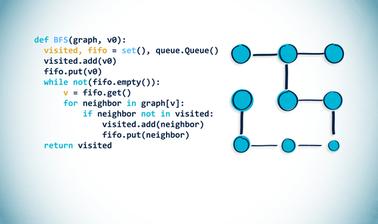
Strengthen your skills in algorithmics and graph theory, and gain experience in programming in Python along the way. Algorithmics and programming are fundamental skills for engineering students, data scientists and analysts, computer hobbyists or developers. Learning how to program algorithms can be tedious if you aren’t given an opportunity to immediately practice what you learn. In this course, you won't just focus on theory or study a simple catalog of methods, procedures, and concepts. Instead, you’ll be given a challenge wherein you'll be asked to beat an algorithm we’ve written for you by coming up with your own clever solution.

Sep 4th 2023
5-12 Weeks
Autonomous Mobile Robots (edX) EdX
ETH Zurich,ETHx

Autonomous Mobile Robots (edX)

Basic concepts and algorithms for locomotion, perception, and intelligent navigation. Robots are rapidly evolving from factory workhorses, which are physically bound to their work-cells, to increasingly complex machines capable of performing challenging tasks in our daily environment. The objective of this course is to provide the basic concepts and algorithms required to develop mobile robots that act autonomously in complex environments.

Self Paced
Self-Paced