Tobacco & Nicotine: Public Health, Science, Policy, and Law (Coursera)

Tobacco & Nicotine: Public Health, Science, Policy, and Law (Coursera)

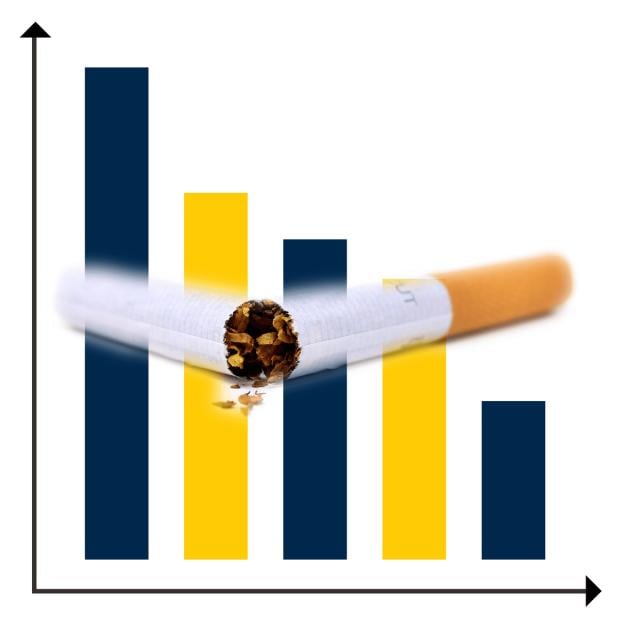
This course provides a strong foundation in the history of smoking and other tobacco and nicotine use; the individual and public health impact; tobacco use prevalence trends in adults, youth and key subpopulations; and how cigarette smoking came to be, and remains to this day, the leading preventable cause of death in the U.S. and globally, despite the fact that tobacco control efforts have collectively constituted one of the most successful public health endeavors in our history.

Class Deals by MOOC List - Click here and see Coursera's Active Discounts, Deals, and Promo Codes.

The course also explores the role of the tobacco industry in the epidemic, as well as the pursuit of accountability and industry behavior change through legal action; the rapidly evolving tobacco and nicotine product marketplace; the unique and ever-changing regulatory and other policy challenges that have emerged; and the implications of this rapid change for public health today and in the future.
Hosted by lead instructor Cliff Douglas of the University of Michigan School of Public Health, the course features 18 experts in a range of tobacco control areas and issues. Through a series of lectures, interviews, readings, and assessments, the course tells the story of smoking and tobacco and nicotine product use, focusing on the specific - but not unique - story of the U.S., while also presenting important information and insights from elsewhere in the world.

Syllabus

WEEK 1
Tobacco, Nicotine, and Health: The Current Landscape in the U.S.
This module provides an overview of the history and current state of the tobacco epidemic. You will learn about the health effects of both combustible and non-combustible tobacco and nicotine products, the causes of smoking, and key trends in cigarette and other tobacco/nicotine product use.

WEEK 2
Tobacco Industry: Vector of the Smoking Epidemic
This module describes the strategies and tactics used by the tobacco industry that created and continue to perpetuate the smoking epidemic, and it also begins to explore the complexities of contemporary and potential future relationships between the public health community and the tobacco industry.

WEEK 3
Tobacco Policy: History and Best Practices
This module introduces the major aspects of tobacco control policy interventions and their effects on tobacco consumption and health historically, in addition to newer policy approaches. You will learn about non-governmental policy interventions, state and federal level policy, and global policy as they relate to tobacco control, and you will understand the importance of considering unintended consequences of policy interventions.

WEEK 4
Legal Action: The Pursuit of Accountability and Industry Behavior Change
This module provides a look into the legal strategies pursued to address the tobacco industry's impact on U.S. public health, covering the period of the 1950s to 2020 and beyond. Lectures and interviews provide first hand accounts of this fascinating and ongoing pursuit.

WEEK 5
Tobacco Harm Reduction, Product Regulation, and the Continuum of Risk
This module explores the concept of harm reduction as it relates to tobacco control and encourages you to think critically about the controversies that have been raise in this ongoing debate. You will learn about alternative products and where they fall on the continuum of risk, issues of adult cessation and youth initiation, and some potential paths forward in terms of policy.

WEEK 6
Using Modeling to Project the Impact of Tobacco Policy
This module provides an overview of modeling and its role in tobacco policy and tobacco regulatory science with a focus on the U.S. federal policy context. Three examples of how modeling has been used in this field are covered: menthol cigarette bans, youth nicotine use, and forecasting future smoking prevalence.

WEEK 7
The Tobacco Endgame
This module describes the overall tobacco landscape, both in the U.S. and globally, and how tobacco control may look in the coming decades. Additionally, you will consider the "tobacco endgame" and complete a Peer Review assignment which allows you to choose an endgame strategy and analyze it. Finally, you will reflect on the issues within tobacco control that have been highlighted throughout this course.
Go to Class
MOOC List is learner-supported. When you buy through links on our site, we may earn an affiliate commission.

Related Courses

History of Medical Cannabis (Coursera) Coursera
University of Colorado Boulder

History of Medical Cannabis (Coursera)

This History of Medical Cannabis course is designed to have you think critically about past, present, and future research on the health effects of cannabis by developing a more nuanced understanding of the barriers to research as well as different approaches to research. You will learn about the history of cannabis cultivation, the legal history of cannabis or "marijuana", and the obstacles that led to the lack of science on its medicinal use.

Jun 1st 2026
4 Weeks
Cannabis, Mental Health, and Brain Disorders (Coursera) Coursera
University of Colorado Boulder

Cannabis, Mental Health, and Brain Disorders (Coursera)

This Cannabis, Mental Health, and Brain Disorders course is designed to have you think critically about the health effects of cannabis (i.e., marijuana) in the context of several mental health and neurocognitive disorders. You'll be able to identify key features of several anxiety disorders (e.g., panic disorder, generalized anxiety disorder, social anxiety disorder, PTSD), major depression, schizophrenia, multiple sclerosis, epilepsy, traumatic brain injury, and Alzheimer's and Parkinson's Disease.

Jun 1st 2026
4 Weeks
Linear Regression in R for Public Health (Coursera) Coursera
Imperial College London

Linear Regression in R for Public Health (Coursera)

Public Health has been defined as “the art and science of preventing disease, prolonging life and promoting health through the organized efforts of society”. Knowing what causes disease and what makes it worse are clearly vital parts of this. This requires the development of statistical models that describe how patient and environmental factors affect our chances of getting ill. This course will show you how to create such models from scratch, beginning with introducing you to the concept of correlation and linear regression before walking you through importing and examining your data, and then showing you how to fit models.

Jun 1st 2026
4 Weeks
Healthy Aging and the Future of Cannabis Research (Coursera) Coursera
University of Colorado Boulder

Healthy Aging and the Future of Cannabis Research (Coursera)

This Healthy Aging and Future of Cannabis Research course is designed to have you think critically about the health effects of cannabis (i.e., marijuana) in the context of inflammation, exercise, and aging. You'll learn how inflammation and the microbiome may be related to the disorders discussed in class, and how cannabis may influence these disorder through modulating inflammation.

Jun 1st 2026
4 Weeks
Logistic Regression in R for Public Health (Coursera) Coursera
Imperial College London

Logistic Regression in R for Public Health (Coursera)

Why logistic regression for public health rather than just logistic regression? Well, there are some particular considerations for every data set, and public health data sets have particular features that need special attention. In a word, they're messy. Like the others in the series, this is a hands-on course, giving you plenty of practice with R on real-life, messy data, with predicting who has diabetes from a set of patient characteristics as the worked example for this course.

Jun 1st 2026
4 Weeks
Community Change in Public Health (Coursera) Coursera
Johns Hopkins University

Community Change in Public Health (Coursera)

In bringing about behavior change in public health, we often focus on the individual mother, student, or farmer. We should not forget the community structure and norms constrain for encouraging individual health behaviors. This course examines the community context of the changes needed to promote the public’s health. We begin by examining the various definitions of ‘community’ and the processes by which we ‘diagnose’ or seek to understand the structure and characteristics of different types of communities.

Jun 1st 2026
5-12 Weeks
Science of Exercise (Coursera) Coursera
University of Colorado Boulder

Science of Exercise (Coursera)

Learners who complete Science of Exercise will have an improved physiological understanding of how your body responds to exercise, and will be able to identify behaviors, choices, and environments that impact your health and training. You will explore a number of significant adjustments required by your body in order to properly respond to the physical stress of exercise, including changes in carbohydrate, fat and protein metabolism, nutritional considerations, causes of muscle soreness & fatigue, and the effectiveness and dangers of performance enhancing drugs.

Jun 1st 2026
4 Weeks
Healthcare Organizations and the Health System (Coursera) Coursera
Rutgers University

Healthcare Organizations and the Health System (Coursera)

Have you ever been in a healthcare waiting room and thought about how the organization could be more efficient? For example, have you found yourself thinking about how to reduce the amount of time spent waiting? Or do you work in a healthcare organization and find yourself thinking about how to improve the organization? If you have, this course is for you. Course content includes an overview of healthcare organizations, their administration and management, and their governance.

Jun 1st 2026
4 Weeks
Instructional Methods in Health Professions Education (Coursera) Coursera
University of Michigan

Instructional Methods in Health Professions Education (Coursera)

This course provides those involved in educating members of the health professions an asynchronous, interdisciplinary, and interactive way to obtain, expand, and improve their teaching skills. These skills can then be applied within their own professional context, with a variety of learners, extending across many stages.

Jun 1st 2026
5-12 Weeks
In the footsteps of Zika… approaching the unknown (Coursera) Coursera
University of Geneva

In the footsteps of Zika… approaching the unknown (Coursera)

Welcome to this on-demand MOOC “In the footsteps of Zika… approaching the unknown”. This MOOC has been produced by Université de Genève Institut Pasteur, Université Paris Descartes and Centre Virchow-Villermé. With the help of the intervention of faculty members and international experts, we will explore together the recent Zika phenomenon, a previously rare benign virus that recently turned unexpectedly into the limelight when on the 1st of February 2016 it was declared by the WHO as a Public Health Emergency of International Concern.

Jun 1st 2026
5-12 Weeks
Quality Improvement in Healthcare Organizations (Coursera) Coursera
Rutgers University

Quality Improvement in Healthcare Organizations (Coursera)

Have you ever though that healthcare quality could be improved - either where you get health care treatment or where you delivery health care? Have you ever thought that there should be a way for you to determine the relative quality of your choices? Have you found yourself thinking that there should be a way for you to provide your view and input on the quality of healthcare organization? Or do you work in a healthcare organization and find yourself thinking that there must be better ways to continuously and systematically improve the quality of your healthcare organization? If you have, this course is for you.

Jun 1st 2026
4 Weeks
Foundations of Public Health Practice: Health Protection (Coursera) Coursera
Imperial College London

Foundations of Public Health Practice: Health Protection (Coursera)

The Health Protection course is the fourth instalment of the wider Foundations of Public Health Practice specialisation from Imperial College London's Global Master of Public Health (MPH). The scope and content of this course has been developed from the ground up by a combined team of academics and practitioners drawing on decades of real-world public health experience as well as deep academic knowledge. Through short video lectures, practitioner interviews and a wide range of interactive activities, learners will be immersed in the world of public health practice.

Jun 1st 2026
3 Weeks