The Politics of Economics and the Economics of Politicians (FutureLearn)

The Politics of Economics and the Economics of Politicians (FutureLearn)

Investigate links between economics and politicians with Sir Vince Cable and leading economists at the University of Nottingham. How does economics impact on politicians? And how do politicians impact on economics? In this three-week course, Sir Vince Cable and a team of leading economists at the University of Nottingham will explain the links between politics and economics. You will explore these links by looking at the work of major political figures and the key economic ideas they adopted.

Class Deals by MOOC List - Click here and see FutureLearn's Active Discounts, Deals, and Promo Codes.

Find out about the links between politicians and economics
You will study both contemporary economics – for example exploring responses to the financial crisis of 2008 – and some of the political leaders who have put key economic theories into practice throughout history.
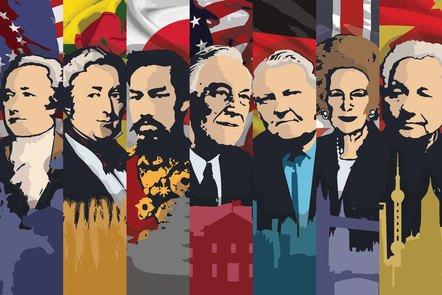
These are political figures from around the world who have changed economic history, including Alexander Hamilton, Sir Robert Peel, the Mejii Emperor, FD Roosevelt, Margaret Thatcher and Deng Xiaoping. The economic policies and practices of these former leaders are still having an impact on our world today.

Learn from experts in the field
The course is led by Sir Vince Cable, former Secretary of State for Business, Innovation and Skills (2010-2015) and Honorary Professor of Economics at the University of Nottingham. His experience combines the theoretical knowledge of a trained economist with practical experience gained in government.
You will also learn from leading economists at the University of Nottingham, including Head of School Professor Kevin Lee and Professor of Political Economy Cecilia Testa.

Syllabus

Week 1: Introduction, Alexander Hamilton, and Sir Robert Peel
Week 2: The Meiji Emperor, President Franklin D Roosevelt, and Ludwig Erhard
Week 3: Margaret Thatcher, Deng Xiaoping, and Conclusions

What will you achieve?

  • Investigate policy making in an historical context
  • Apply economic tools to policy relevant questions
  • Discuss the relationship between politics and economics
  • Identify and use assets (images, video, quizzes etc.) within learning resources
  • Develop analytical skills
  • Develop an understanding of how economic theory guides policy choices
Go to Class
MOOC List is learner-supported. When you buy through links on our site, we may earn an affiliate commission.

Related Courses

實驗經濟學 (Experimental Economics: Behavioral Game Theory) (Coursera) Coursera
National Taiwan University

實驗經濟學 (Experimental Economics: Behavioral Game Theory) (Coursera)

人是否會如同理論經濟學的預測進行決策?這門課將透過每週的課程影片以及課後作業帶你了解實驗經濟學的基本概念。每週將會有習題練習以及指定閱讀的期刊論文。你將會參與一些線上的實驗、報告論文並且互評其他同學的報告。

Aug 5th 2026
5-12 Weeks
Earth Economics (Coursera) Coursera
Erasmus University Rotterdam

Earth Economics (Coursera)

After this course you will be an Earth Economist that can provide evidence-based advise on the best global policy. As an Earth Economist you will better understand the behavior and advice of economists, have become a better economist yourself and know where to find Earth's data and how to analyze these world observations. Our planet is too important: we need you to get engaged!

Aug 17th 2026
5-12 Weeks
Structuring Values in Modern China (Coursera) Coursera
The Chinese University of Hong Kong

Structuring Values in Modern China (Coursera)

This sequence of four courses will propose a multi-disciplinary approach to the study of Chinese cultural history conceived of as a succession of modes of rationality (philosophical, bureaucratic, and economic). The focus will be on the moments of paradigm shift from one mode of rationality to another. For each of these moments, cultural facts and artifacts—thought, literature, ritual—will be examined in relationship to changing social, political, and economic systems.

Aug 17th 2026
5-12 Weeks
Economics of Money and Banking (Coursera) Coursera
Columbia University

Economics of Money and Banking (Coursera)

The last three or four decades have seen a remarkable evolution in the institutions that comprise the modern monetary system. The financial crisis of 2007-2009 is a wakeup call that we need a similar evolution in the analytical apparatus and theories that we use to understand that system. Produced and sponsored by the Institute for New Economic Thinking, this course is an attempt to begin the process of new economic thinking by reviving and updating some forgotten traditions in monetary thought that have become newly relevant.

Aug 3rd 2026
13-24 Weeks
Pets, Politics and Pandemics (Coursera) Coursera
Columbia University

Pets, Politics and Pandemics (Coursera)

This course is designed to be a fun and accessible introduction to the topic of systems theory. Systems theory describes a number of fundamental concepts that undergird a broad array of phenomena across many different social, political and natural arenas. It is from this broad applicability that the course derives its title: Pets (social), politics (political and economic) and Pandemics (natural).

Aug 10th 2026
5-12 Weeks
Civic Engagement in American Democracy (Coursera) Coursera
Duke University

Civic Engagement in American Democracy (Coursera)

So how does the American political system work? Who are some of the key actors? What are key concepts for a student trying to understand what’s going on? How can I as a citizen influence politics? Civic Engagement in American Democracy takes on these and other key questions. We’re Dr. Nicholas Carnes and Dr. Bruce Jentleson, the principal course instructors. Along with our Duke faculty colleagues who also contributed modules, we’ve designed the course to provide a strong foundational introduction to US politics.

Aug 10th 2026
4 Weeks