Mathematics for economists (Coursera)

Mathematics for economists (Coursera)

This course is an important part of the undergraduate stage in education for future economists. It's also useful for graduate students who would like to gain knowledge and skills in an important part of math. It gives students skills for implementation of the mathematical knowledge and expertise to the problems of economics.

Class Deals by MOOC List - Click here and see Coursera's Active Discounts, Deals, and Promo Codes.

Its prerequisites are both the knowledge of the single variable calculus and the foundations of linear algebra including operations on matrices and the general theory of systems of simultaneous equations. Some knowledge of vector spaces would be beneficial for a student.
The course covers several variable calculus, both constrained and unconstrained optimization. The course is aimed at teaching students to master comparative statics problems, optimization problems using the acquired mathematical tools.
Home assignments will be provided on a weekly basis.
The objective of the course is to acquire the students’ knowledge in the field of mathematics and to make them ready to analyze simulated as well as real economic situations.
Students learn how to use and apply mathematics by working with concrete examples and exercises. Moreover this course is aimed at showing what constitutes a solid proof. The ability to present proofs can be trained and improved and in that respect the course is helpful. It will be shown that math is not reduced just to “cookbook recipes”. On the contrary the deep knowledge of math concepts helps to understand real life situations.

Syllabus

Week 1
The basics of the set theory. Functions in Rn
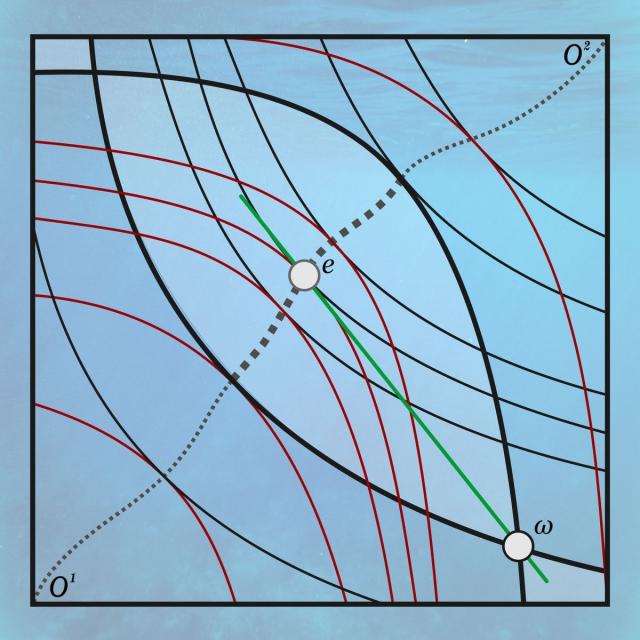
Week 1 of the Course is devoted to the main concepts of the set theory, operation on sets and functions in Rn. Of special attention will be level curves. Also in this week introduced definitions of sequences, bounded and compact sets, domain and limit of the function. Also from this week students will grasp the concept of continuous function.

Week 2
Differentiation. Gradient. Hessian.
Week 2 of the Course is devoted to the main concepts of differentiation, gradient and Hessian. Of special attention is the chain rule. Also students will understand economic applications of the gradient.

Week 3
Implicit Function Theorems and their applications.
Week 3 of the Course is devoted to implicit function theorems. In this week three different implicit function theorems are explained. This week students will grasp how to apply IFT concept to solve different problems.

Week 4
Unconstrained and constrained optimization.
Week 4 of the Course is devoted to the problems of constrained and unconstrained optimization. Of special attention are quadratic forms, critical points and their classification.

Week 5
Constrained optimization for n-dim space. Bordered Hessian.
Week 5 of the Course is devoted to the extension of the constrained optimization problem to the n-dimensional space. This week students will grasp how to apply bordered Hessian concept to classification of critical points arising in different constrained optimization problems.

Week 6
Envelope theorems. Concavity and convexity.
Week 6 of the Course is devoted to envelope theorems, concavity and convexity of functions. This week students will understand how to interpret Lagrange multiplier and get to learn the criteria of convexity and concavity of functions in n-dimensional space.

Week 7
Global extrema. Constrained optimization with inequality constraints.
Week 7 of the Course is devoted to identification of global extrema and constrained optimization with inequality constraints. This week students will grasp the concept of binding constraints and complementary slackness conditions.

Week 8
Kunh-Tucker conditions. Homogeneous functions.
Week 8 of the Course is devoted to Kuhn-Tucker conditions and homogenous functions. This week students will find out how to use Kuhn-Tucker conditions for solving various economic problems.

Go to Class
MOOC List is learner-supported. When you buy through links on our site, we may earn an affiliate commission.

Related Courses

Analytic Combinatorics (Coursera) Coursera
Princeton University

Analytic Combinatorics (Coursera)

Analytic Combinatorics teaches a calculus that enables precise quantitative predictions of large combinatorial structures. This course introduces the symbolic method to derive functional relations among ordinary, exponential, and multivariate generating functions, and methods in complex analysis for deriving accurate asymptotics from the GF equations. All the features of this course are available for free. It does not offer a certificate upon completion.

Aug 10th 2026
5-12 Weeks
Calculus: Single Variable Part 4 - Applications (Coursera) Coursera
University of Pennsylvania

Calculus: Single Variable Part 4 - Applications (Coursera)

Calculus is one of the grandest achievements of human thought, explaining everything from planetary orbits to the optimal size of a city to the periodicity of a heartbeat. This brisk course covers the core ideas of single-variable Calculus with emphases on conceptual understanding and applications. The course is ideal for students beginning in the engineering, physical, and social sciences.

Aug 3rd 2026
5-12 Weeks
Analysis of Algorithms (Coursera) Coursera
Princeton University

Analysis of Algorithms (Coursera)

This course teaches a calculus that enables precise quantitative predictions of large combinatorial structures. In addition, this course covers generating functions and real asymptotics and then introduces the symbolic method in the context of applications in the analysis of algorithms and basic structures such as permutations, trees, strings, words, and mappings.

Aug 3rd 2026
5-12 Weeks
Fibonacci Numbers and the Golden Ratio (Coursera) Coursera
The Hong Kong University of Science and Technology - HKUST

Fibonacci Numbers and the Golden Ratio (Coursera)

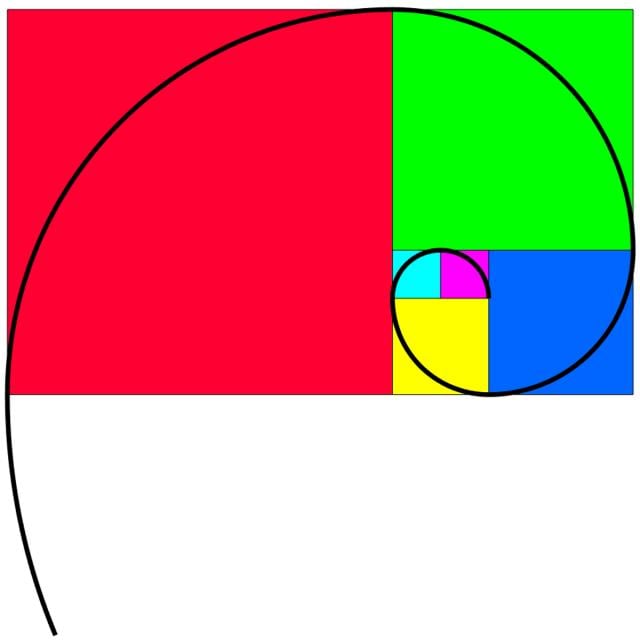
Learn the mathematics behind the Fibonacci numbers, the golden ratio, and how they are related. These topics are not usually taught in a typical math curriculum, yet contain many fascinating results that are still accessible to an advanced high school student. The course culminates in an explanation of why the Fibonacci numbers appear unexpectedly in nature, such as the number of spirals in the head of a sunflower.

Aug 3rd 2026
3 Weeks
The Finite Element Method for Problems in Physics (Coursera) Coursera
University of Michigan

The Finite Element Method for Problems in Physics (Coursera)

This course is an introduction to the finite element method as applicable to a range of problems in physics and engineering sciences. The treatment is mathematical, but only for the purpose of clarifying the formulation. The emphasis is on coding up the formulations in a modern, open-source environment that can be expanded to other applications, subsequently.

Aug 10th 2026
13-24 Weeks
Introduction à la théorie de Galois (Coursera) Coursera
École normale supérieure

Introduction à la théorie de Galois (Coursera)

Le cours expose la théorie de Galois, du classique critère de non-résolubilité des équations polynomiales aux méthodes plus avancées de calcul de groupes de Galois par réduction modulo un nombre premier. Le thème général de cette théorie est l'étude des racines d'un polynôme et concerne en particulier la possibilité de les exprimer à partir des coefficients de ce polynôme. Evariste Galois considère les symétries de ces racines et associe ainsi à ce polynôme un groupe de permutations de ses racines, que l'on appelle maintenant son groupe de Galois.

Aug 3rd 2026
5-12 Weeks
Originalité et modernité du mutualisme (Coursera) Coursera
ESSEC Business School

Originalité et modernité du mutualisme (Coursera)

Bienvenue dans ce MOOC qui a été conçu pour vous accompagner dans l’exploration de l’originalité et de la modernité des mutuelles ! Que vous soyez salarié ou élu d’une mutuelle, que vous envisagiez de travailler dans ce secteur ou que vous soyez un sociétaire impliqué soucieux de comprendre ce qui se cache derrière la différence mutualiste, ce qui caractérise les mutuelles, en quoi elles sont originales et pourquoi les mutuelles sont plus que jamais des vecteurs privilégiés d’innovation sociale, ce MOOC est fait pour vous !

Aug 10th 2026
4 Weeks
Introduction to Calculus (Coursera) Coursera
The University of Sydney

Introduction to Calculus (Coursera)

The focus and themes of the Introduction to Calculus course address the most important foundations for applications of mathematics in science, engineering and commerce. The course emphasises the key ideas and historical motivation for calculus, while at the same time striking a balance between theory and application, leading to a mastery of key threshold concepts in foundational mathematics.

Aug 10th 2026
5-12 Weeks
Differential Equations Part II Series Solutions (Coursera) Coursera
Korea Advanced Institute of Science and Technology - KAIST

Differential Equations Part II Series Solutions (Coursera)

This introductory courses on (Ordinary) Differential Equations are mainly for the people, who need differential equations mostly for the practical use in their own fields. So we try to provide basic terminologies, concepts, and methods of solving various types of differential equations as well as a rudimentary but indispensable knowledge of the underlying theory and some related applications.

Aug 3rd 2026
5-12 Weeks
Math for AI beginner part 1 Linear Algebra (Coursera) Coursera
Korea Advanced Institute of Science and Technology - KAIST

Math for AI beginner part 1 Linear Algebra (Coursera)

'Learn concept of AI such as machine learning, deep-learning, support vector machine which is related to linear algebra. Learn how to use linear algebra for AI algorithm. After completing this course, you are able to understand AI algorithm and basics of linear algebra for AI applications.

Aug 3rd 2026
5-12 Weeks
Jugar y Aprender Matemática en aulas heterogéneas (Coursera) Coursera
Universidad Austral

Jugar y Aprender Matemática en aulas heterogéneas (Coursera)

Cuando se asume la enseñanza de la matemática con el compromiso de la participación de todos los alumnos en una comunidad de producción, en la que se resuelven problemas con distintos procedimientos, se comparan producciones, se analiza la validez de las afirmaciones que se hacen, la tarea resulta todo un desafío. En el caso del plurigrado, el desafío parece aún mayor. ¿Cómo presentar problemas que involucren en este trabajo reflexivo a niños y niñas de distintas edades y con distintos conocimientos?

Aug 3rd 2026
4 Weeks