Java Testing: An Introduction to TDD (Coursera)

Offered by LearnQuest,
Java Testing: An Introduction to TDD (Coursera)

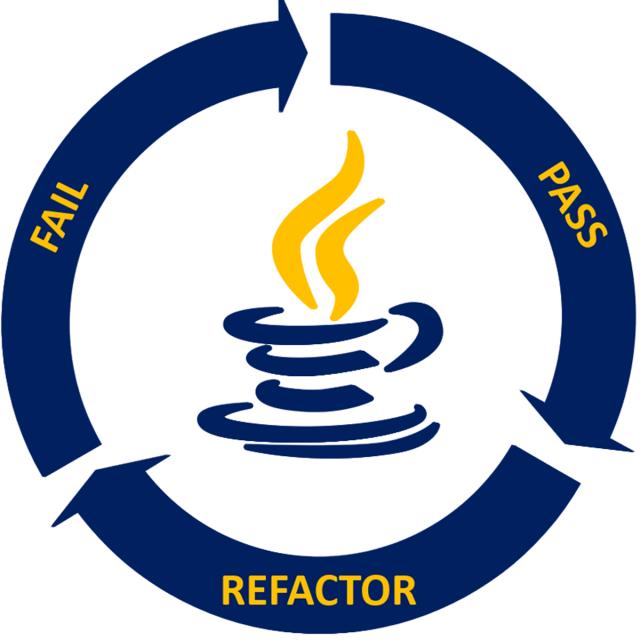
Test Driven Development (TDD) is an industry accepted technique to build Enterprise Applications and enhance quality. This course will introduce a test first approach for the development of Java artifacts and explain the benefits of adopting such a technique

Class Deals by MOOC List - Click here and see Coursera's Active Discounts, Deals, and Promo Codes.

Course 3 of 4 in the Java Testing Specialization.

Syllabus

WEEK 1
A Test First Approach
Using a test first approach to development

WEEK 2
Core Principles
This module will explain the key Principals of test driven development (TDD)

Go to Class
MOOC List is learner-supported. When you buy through links on our site, we may earn an affiliate commission.
Related Courses

Building Scalable Java Microservices with Spring Boot and Spring Cloud (Coursera) Coursera
Google Cloud

Building Scalable Java Microservices with Spring Boot and Spring Cloud (Coursera)

"Microservices" describes a software design pattern in which an application is a collection of loosely coupled services. These services are fine-grained, and can be individually maintained and scaled. The microservices architecture is ideal for the public cloud, with its focus on elastic scaling with on-demand resources. In this course, you will learn how to build Java applications using Spring Boot and Spring Cloud on Google Cloud Platform.

Oct 27th 2026
2 Weeks
Integrating Test-Driven Development into Your Workflow (Coursera) Coursera
LearnQuest

Integrating Test-Driven Development into Your Workflow (Coursera)

In this course we will discuss how to integrate best practices of test-driven development into your programming workflow. We will start out by discussing how to refactor legacy codebases with the help of agile methodologies. Then, we will explore continuous integration and how to write automated tests in Python. Finally, we will work everything we've learned together to write code that contains error handlers, automated tests, and refactored functions.

Nov 2nd 2026
4 Weeks
Parallel Programming in Java (Coursera) Coursera
Rice University

Parallel Programming in Java (Coursera)

This course teaches learners (industry professionals and students) the fundamental concepts of parallel programming in the context of Java 8. Parallel programming enables developers to use multicore computers to make their applications run faster by using multiple processors at the same time. By the end of this course, you will learn how to use popular parallel Java frameworks (such as ForkJoin, Stream, and Phaser) to write parallel programs for a wide range of multicore platforms including servers, desktops, or mobile devices, while also learning about their theoretical foundations including computation graphs, ideal parallelism, parallel speedup, Amdahl's Law, data races, and determinism.

Oct 26th 2026
4 Weeks
Data Structures and Performance (Coursera) Coursera
University of California, San Diego

Data Structures and Performance (Coursera)

How do Java programs deal with vast quantities of data? Many of the data structures and algorithms that work with introductory toy examples break when applications process real, large data sets. Efficiency is critical, but how do we achieve it, and how do we even measure it? This is an intermediate Java course. We recommend this course to learners who have previous experience in software development or a background in computer science, and in particular, we recommend that you have taken the first course in this specialization (which also requires some previous experience with Java).

Oct 26th 2026
5-12 Weeks
Concurrent Programming in Java (Coursera) Coursera
Rice University

Concurrent Programming in Java (Coursera)

This course teaches learners (industry professionals and students) the fundamental concepts of concurrent programming in the context of Java 8. Concurrent programming enables developers to efficiently and correctly mediate the use of shared resources in parallel programs. By the end of this course, you will learn how to use basic concurrency constructs in Java such as threads, locks, critical sections, atomic variables, isolation, actors, optimistic concurrency and concurrent collections, as well as their theoretical foundations (e.g., progress guarantees, deadlock, livelock, starvation, linearizability).

Oct 26th 2026
4 Weeks
Java Programming: Arrays, Lists, and Structured Data (Coursera) Coursera
Duke University

Java Programming: Arrays, Lists, and Structured Data (Coursera)

Build on the software engineering skills you learned in “Java Programming: Solving Problems with Software” by learning new data structures. Use these data structures to build more complex programs that use Java’s object-oriented features. At the end of the course you will write an encryption program and a program to break your encryption algorithm.

Nov 2nd 2026
4 Weeks
Distributed Programming in Java (Coursera) Coursera
Rice University

Distributed Programming in Java (Coursera)

This course teaches learners (industry professionals and students) the fundamental concepts of Distributed Programming in the context of Java 8. Distributed programming enables developers to use multiple nodes in a data center to increase throughput and/or reduce latency of selected applications. By the end of this course, you will learn how to use popular distributed programming frameworks for Java programs, including Hadoop, Spark, Sockets, Remote Method Invocation (RMI), Multicast Sockets, Kafka, Message Passing Interface (MPI), as well as different approaches to combine distribution with multithreading.

Oct 26th 2026
4 Weeks
Object Oriented Programming in Java (Coursera) Coursera
University of California, San Diego

Object Oriented Programming in Java (Coursera)

Welcome to our course on Object Oriented Programming in Java using data visualization. People come to this course with many different goals -- and we are really excited to work with all of you! Some of you want to be professional software developers, others want to improve your programming skills to implement that cool personal project that you’ve been thinking about, while others of you might not yet know why you’re here and are trying to figure out what this course is all about.

Nov 2nd 2026
5-12 Weeks
Android App Components - Intents, Activities, and Broadcast Receivers (Coursera) Coursera
Vanderbilt University

Android App Components - Intents, Activities, and Broadcast Receivers (Coursera)

This MOOC builds upon the overview of Java and Android covered in Course 1 by delving deeper into core Android components, such as Activities, Broadcast Receivers, Intents, and Intent Filters. You will learn by example how to program these core Android components together with basic Java file I/O classes (such as File, InputStream, OutputWriter, etc.) and Android storage mechanisms (such as Shared Preferences).

Nov 2nd 2026
4 Weeks
Laboratório de Programação Orientada a Objetos - Parte 1 (Coursera) Coursera
Universidade de São Paulo, Brasil

Laboratório de Programação Orientada a Objetos - Parte 1 (Coursera)

Este curso apresenta os conceitos mais importantes em torno do paradigma de desenvolvimento mais comum da indústria de software hoje: a Programação Orientação a Objetos (POO). Oferecido pelo Departamento de Ciência da Computação do Instituto de Matemática e Estatística da USP, o curso é voltado para quem já conhece os conceitos básicos de POO e quer se aprofundar no assunto, tornando-se um excelente programador. Ele funciona bem como uma sequência natural aos 2 cursos anteriores do Prof. Fabio Kon do IME-USP no coursera: Introdução à Ciência da Computação com Python.

Nov 16th 2026
5-12 Weeks
Java Programming: Solving Problems with Software (Coursera) Coursera
Duke University

Java Programming: Solving Problems with Software (Coursera)

Learn to code in Java and improve your programming and problem-solving skills. You will learn to design algorithms as well as develop and debug programs. Using custom open-source classes, you will write programs that access and transform images, websites, and other types of data. At the end of the course you will build a program that determines the popularity of different baby names in the US over time by analyzing comma separated value (CSV) files.

Nov 2nd 2026
4 Weeks