Introduction to Formal Concept Analysis (Coursera)

Introduction to Formal Concept Analysis (Coursera)

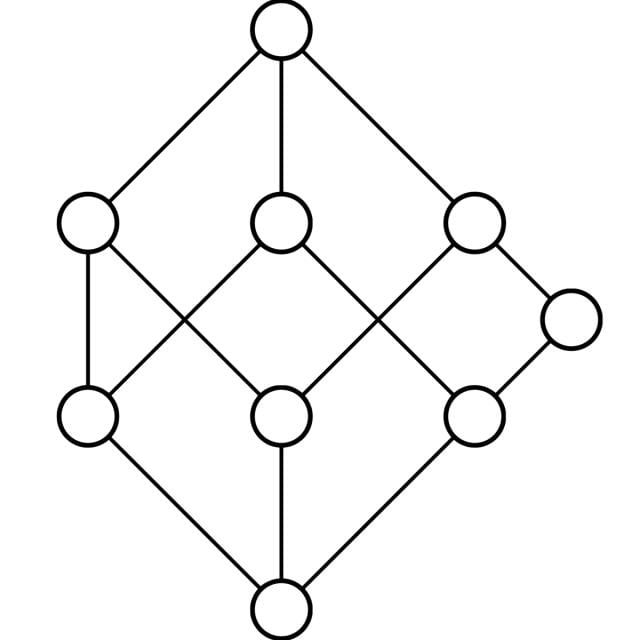
This course is an introduction into formal concept analysis (FCA), a mathematical theory oriented at applications in knowledge representation, knowledge acquisition, data analysis and visualization. It provides tools for understanding the data by representing it as a hierarchy of concepts or, more exactly, a concept lattice. FCA can help in processing a wide class of data types providing a framework in which various data analysis and knowledge acquisition techniques can be formulated. In this course, we focus on some of these techniques, as well as cover the theoretical foundations and algorithmic issues of FCA.

Class Deals by MOOC List - Click here and see Coursera's Active Discounts, Deals, and Promo Codes.

Upon completion of the course, the students will be able to use the mathematical techniques and computational tools of formal concept analysis in their own research projects involving data processing. Among other things, the students will learn about FCA-based approaches to clustering and dependency mining.
The course is self-contained, although basic knowledge of elementary set theory, propositional logic, and probability theory would help.
End-of-the-week quizzes include easy questions aimed at checking basic understanding of the topic, as well as more advanced problems that may require some effort to be solved.

Syllabus

WEEK 1
Formal concept analysis in a nutshell
This week we will learn the basic notions of formal concept analysis (FCA). We'll talk about some of its typical applications, such as conceptual clustering and search for implicational dependencies in data. We'll see a few examples of concept lattices and learn how to interpret them. The simplest data structure in formal concept analysis is the formal context. It is used to describe objects in terms of attributes they have. Derivation operators in a formal context link together object and attribute subsets; they are used to define formal concepts. They also give rise to closure operators, and we'll talk about what these are, too. We'll have a look at software called Concept Explorer, which is good for basic processing of formal contexts. We'll also talk a little bit about many-valued contexts, where attributes may have many values. Conceptual scaling is used to transform many-valued contexts into "standard", one-valued, formal contexts.

WEEK 2
Concept lattices and their line diagrams
This week we'll talk about some mathematical properties of concepts. We'll define a partial order on formal concepts, that of "being less general". Ordered in this way, the concepts of a formal concept constitute a special mathematical structure, a complete lattice. We'll learn what these are, and we'll see, through the basic theorem on concept lattices, that any complete lattice can, in a certain sense, be modelled by a formal context. We'll also discuss how a formal context can be simplified without loosing the structure of its concept lattice.

WEEK 3
Constructing concept lattices
We will consider a few algorithms that build the concept lattice of a formal context: a couple of naive approaches, which are easy to use if one wants to build the concept lattice of a small context; a more sophisticated approach, which enumerates concepts in a specific order; and an incremental strategy, which can be used to update the concept lattice when a new object is added to the context. We will also give a formal definition of implications, and we'll see how an implication can logically follow from a set of other implications.

WEEK 4
Implications
This week we'll continue talking about implications. We'll see that implication sets can be redundant, and we'll learn to summarise all valid implications of a formal context by its canonical (Duquenne–Guigues) basis. We'll study one concrete algorithm that computes the canonical basis, which turns out to be a modification of the Next Closure algorithm from the previous week. We'll also talk about what is known in database theory as functional dependencies, and we'll show how they are related to implications.

WEEK 5
Interactive algorithms for learning implications
What if we don't have a direct access to a formal context, but still want to compute its concept lattice and its implicational theory? This can be done if there is a domain expert (or an oracle) willing to answer our queries about the domain. We'll study an approach known as learning with queries that addresses this setting. We'll get to know a few standard types of queries, and we'll see how an implication set can be learnt in time polynomial of its size with so called membership and equivalence queries. We'll then introduce attribute exploration, a method from formal concept analysis, which may require exponential time, but which uses different queries, more suitable for building implicational theories and representative samples of subject domains.

WEEK 6
Working with real data
A concept lattice can be exponentially large in the size of its formal context. Sometimes this can be due to noise in data. We'll study a few heuristics to filter out noisy concepts or select the most interesting concepts in a large lattice built from real data: stability and separation indices, concept probability, iceberg lattices. We will also talk about association rules, which is a name for implications that are supported by strong evidence, but may still have counterexamples in data.

Go to Class
MOOC List is learner-supported. When you buy through links on our site, we may earn an affiliate commission.

Related Courses

Statistical Inference (Coursera) Coursera
Johns Hopkins University

Statistical Inference (Coursera)

Statistical inference is the process of drawing conclusions about populations or scientific truths from data. There are many modes of performing inference including statistical modeling, data oriented strategies and explicit use of designs and randomization in analyses. Furthermore, there are broad theories (frequentists, Bayesian, likelihood, design based, …) and numerous complexities (missing data, observed and unobserved confounding, biases) for performing inference.

Jun 1st 2026
4 Weeks
Process Data from Dirty to Clean (Coursera) Coursera
Google

Process Data from Dirty to Clean (Coursera)

This is the fourth course in the Google Data Analytics Certificate. These courses will equip you with the skills needed to apply to introductory-level data analyst jobs. In this course, you’ll continue to build your understanding of data analytics and the concepts and tools that data analysts use in their work. You’ll learn how to check and clean your data using spreadsheets and SQL as well as how to verify and report your data cleaning results. Current Google data analysts will continue to instruct and provide you with hands-on ways to accomplish common data analyst tasks with the best tools and resources.

Jun 2nd 2026
5-12 Weeks
Data Analysis Tools (Coursera) Coursera
Wesleyan University

Data Analysis Tools (Coursera)

In this course, you will develop and test hypotheses about your data. You will learn a variety of statistical tests, as well as strategies to know how to apply the appropriate one to your specific data and question. Using your choice of two powerful statistical software packages (SAS or Python), you will explore ANOVA, Chi-Square, and Pearson correlation analysis. This course will guide you through basic statistical principles to give you the tools to answer questions you have developed. Throughout the course, you will share your progress with others to gain valuable feedback and provide insight to other learners about their work.

Jun 1st 2026
4 Weeks
Text Mining and Analytics (Coursera) Coursera
University of Illinois at Urbana-Champaign

Text Mining and Analytics (Coursera)

This course will cover the major techniques for mining and analyzing text data to discover interesting patterns, extract useful knowledge, and support decision making, with an emphasis on statistical approaches that can be generally applied to arbitrary text data in any natural language with no or minimum human effort.

Jun 1st 2026
5-12 Weeks
Machine Learning: Regression (Coursera) Coursera
University of Washington

Machine Learning: Regression (Coursera)

Case Study - Predicting Housing Prices. In our first case study, predicting house prices, you will create models that predict a continuous value (price) from input features (square footage, number of bedrooms and bathrooms,...). This is just one of the many places where regression can be applied. Other applications range from predicting health outcomes in medicine, stock prices in finance, and power usage in high-performance computing, to analyzing which regulators are important for gene expression.

Jun 1st 2026
5-12 Weeks
Mastering Data Analysis in Excel (Coursera) Coursera
Duke University

Mastering Data Analysis in Excel (Coursera)

Important: The focus of this course is on math - specifically, data-analysis concepts and methods - not on Excel for its own sake. We use Excel to do our calculations, and all math formulas are given as Excel Spreadsheets, but we do not attempt to cover Excel Macros, Visual Basic, Pivot Tables, or other intermediate-to-advanced Excel functionality. This course will prepare you to design and implement realistic predictive models based on data. In the Final Project (module 6) you will assume the role of a business data analyst for a bank, and develop two different predictive models to determine which applicants for credit cards should be accepted and which rejected. Your first model will focus on minimizing default risk, and your second on maximizing bank profits.

Jun 1st 2026
5-12 Weeks
Data Visualization and Communication with Tableau (Coursera) Coursera
Duke University

Data Visualization and Communication with Tableau (Coursera)

One of the skills that characterizes great business data analysts is the ability to communicate practical implications of quantitative analyses to any kind of audience member. Even the most sophisticated statistical analyses are not useful to a business if they do not lead to actionable advice, or if the answers to those business questions are not conveyed in a way that non-technical people can understand. In this course you will learn how to become a master at communicating business-relevant implications of data analyses.

Jun 1st 2026
5-12 Weeks
Foundations: Data, Data, Everywhere (Coursera) Coursera
Google

Foundations: Data, Data, Everywhere (Coursera)

This is the first course in the Google Data Analytics Certificate. These courses will equip you with the skills you need to apply to introductory-level data analyst jobs. Organizations of all kinds need data analysts to help them improve their processes, identify opportunities and trends, launch new products, and make thoughtful decisions. In this course, you’ll be introduced to the world of data analytics through hands-on curriculum developed by Google. The material shared covers plenty of key data analytics topics, and it’s designed to give you an overview of what’s to come in the Google Data Analytics Certificate. Current Google data analysts will instruct and provide you with hands-on ways to accomplish common data analyst tasks with the best tools and resources.

Jun 2nd 2026
5-12 Weeks
Hadoop Platform and Application Framework (Coursera) Coursera
University of California, San Diego

Hadoop Platform and Application Framework (Coursera)

This course is for novice programmers or business people who'd like to understand the core tools used to wrangle and analyze big data. With no prior experience, you'll have the opportunity to walk through hands-on examples with Hadoop and Spark frameworks, two of the most common in the industry. You will be comfortable explaining the specific components and basic processes of the Hadoop architecture, software stack, and execution environment.

Jun 1st 2026
5-12 Weeks
Process Mining: Data science in Action (Coursera) Coursera
Eindhoven University of Technology

Process Mining: Data science in Action (Coursera)

Process mining is the missing link between model-based process analysis and data-oriented analysis techniques. Through concrete data sets and easy to use software the course provides data science knowledge that can be applied directly to analyze and improve processes in a variety of domains. Data science is the profession of the future, because organizations that are unable to use (big) data in a smart way will not survive. It is not sufficient to focus on data storage and data analysis. The data scientist also needs to relate data to process analysis.

Jun 1st 2026
5-12 Weeks
The Data Scientist's Toolbox (Coursera) Coursera
Johns Hopkins University

The Data Scientist's Toolbox (Coursera)

In this course you will get an introduction to the main tools and ideas in the data scientist's toolbox. The course gives an overview of the data, questions, and tools that data analysts and data scientists work with. There are two components to this course. The first is a conceptual introduction to the ideas behind turning data into actionable knowledge. The second is a practical introduction to the tools that will be used in the program like version control, markdown, git, GitHub, R, and RStudio.

Jun 1st 2026
4 Weeks
Programming Foundations with JavaScript, HTML and CSS (Coursera) Coursera
Duke University

Programming Foundations with JavaScript, HTML and CSS (Coursera)

Learn foundational programming concepts (e.g., functions, for loops, conditional statements) and how to solve problems like a programmer. In addition, learn basic web development as you build web pages using HTML, CSS, JavaScript. By the end of the course, will create a web page where others can upload their images and apply image filters that you create.

Jun 1st 2026
4 Weeks