Introduction to Dynamical Systems and Chaos (Complexity Explorer)

Offered by Santa Fe Institute,
Introduction to Dynamical Systems and Chaos (Complexity Explorer)

In this course you'll gain an introduction to the modern study of dynamical systems, the interdisciplinary field of applied mathematics that studies systems that change over time.

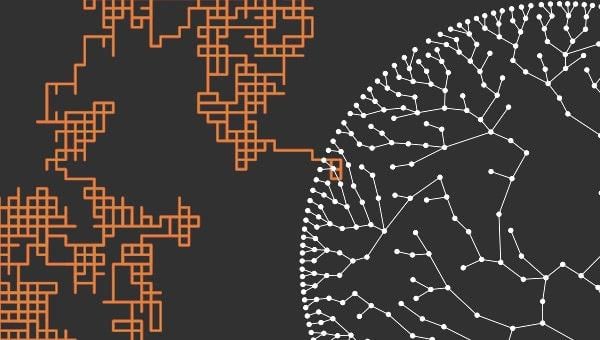
Topics to be covered include: phase space, bifurcations, chaos, the butterfly effect, strange attractors, and pattern formation. The course will focus on some of the realizations from the study of dynamical systems that are of particular relevance to complex systems:

  1. Dynamical systems undergo bifurcations, where a small change in a system parameter such as the temperature or the harvest rate in a fishery leads to a large and qualitative change in the system's behavior.
  2. Deterministic dynamical systems can behave randomly. This property, known as sensitive dependence or the butterfly effect, places strong limits on our ability to predict some phenomena.
  3. Disordered behavior can be stable. Non-periodic systems with the butterfly effect can have stable average properties. So the average or statistical properties of a system can be predictable, even if its details are not.
  4. Complex behavior can arise from simple rules. Simple dynamical systems do not necessarily lead to simple results. In particular, we will see that simple rules can produce patterns and structures of surprising complexity.
Go to Class
MOOC List is learner-supported. When you buy through links on our site, we may earn an affiliate commission.

Related Courses

Estadística y probabilidad (Coursera) Coursera
Universidad Nacional Autónoma de México

Estadística y probabilidad (Coursera)

En este curso podrás apoyar tu formación en temas de estadística y probabilidad I. Más allá de que encuentres aquí un apoyo para lograr una calificación, el curso busca ayudarte a que adquieras los aprendizajes que comprenden temas de estadística descriptiva, datos bivariados y probabilidad, los cuales te serán de utilidad en tu paso por la licenciatura y en tu vida profesional.

Aug 31st 2026
4 Weeks
Calculus: Single Variable Part 2 - Differentiation (Coursera) Coursera
University of Pennsylvania

Calculus: Single Variable Part 2 - Differentiation (Coursera)

Calculus is one of the grandest achievements of human thought, explaining everything from planetary orbits to the optimal size of a city to the periodicity of a heartbeat. This brisk course covers the core ideas of single-variable Calculus with emphases on conceptual understanding and applications. The course is ideal for students beginning in the engineering, physical, and social sciences.

Aug 31st 2026
3 Weeks
Probability - The Science of Uncertainty and Data (edX) EdX
MIT,MITx

Probability - The Science of Uncertainty and Data (edX)

Build foundational knowledge of data science with this introduction to probabilistic models, including random processes and the basic elements of statistical inference. The world is full of uncertainty: accidents, storms, unruly financial markets, noisy communications. The world is also full of data. Probabilistic modeling and the related field of statistical inference are the keys to analyzing data and making scientifically sound predictions.

Sep 1st 2026
13-24 Weeks
Nonlinear Dynamics: Mathematical and Computational Approaches (Complexity Explorer) Complexity Explorer
Santa Fe Institute

Nonlinear Dynamics: Mathematical and Computational Approaches (Complexity Explorer)

This course provides a broad introduction to the field of nonlinear dynamics, focusing both on the mathematics and the computational tools that are so important in the study of chaotic systems. The course is aimed at students who have had at least one semester of college-level calculus and physics, and who can program in at least one high-level language (C, Java, Matlab, R, ...).

No sessions available
5-12 Weeks
Initiation à la théorie des distributions (Coursera) Coursera
École Polytechnique

Initiation à la théorie des distributions (Coursera)

Une fonction discontinue peut-elle être solution d'une équation différentielle? Comment définir rigoureusement la masse de Dirac (une "fonction" d'intégrale un, nulle partout sauf en un point) et ses dérivées? Peut-on définir une notion de "dérivée d'ordre fractionnaire"? Cette initiation aux distributions répond à ces questions - et à bien d'autres.

Sep 7th 2026
5-12 Weeks
Geometría Analítica Preuniversitaria (Coursera) Coursera
Universidad Autónoma Metropolitana

Geometría Analítica Preuniversitaria (Coursera)

Líneas rectas, círculos, parábolas, elipses e hipérbolas son figuras geométricas que encontramos en nuestro derredor. Por ejemplo, mucha gente sabe que los planetas en nuestro sistema solar se mueven en órbitas elípticas teniendo al astro rey en un foco de esta figura. Sin embargo, pocos saben que la plaza de San Pedro en el Vaticano está construída sobre elipses donde sus focos se encuentran sobre las fuentes donde mucha gente se toma fotos. Estos son dos ejemplos que muestran la importancia de las figuras geométricas en nuestra vida.

Sep 7th 2026
5-12 Weeks
Analytic Combinatorics (Coursera) Coursera
Princeton University

Analytic Combinatorics (Coursera)

Analytic Combinatorics teaches a calculus that enables precise quantitative predictions of large combinatorial structures. This course introduces the symbolic method to derive functional relations among ordinary, exponential, and multivariate generating functions, and methods in complex analysis for deriving accurate asymptotics from the GF equations. All the features of this course are available for free. It does not offer a certificate upon completion.

Sep 7th 2026
5-12 Weeks
Analysis of Algorithms (Coursera) Coursera
Princeton University

Analysis of Algorithms (Coursera)

This course teaches a calculus that enables precise quantitative predictions of large combinatorial structures. In addition, this course covers generating functions and real asymptotics and then introduces the symbolic method in the context of applications in the analysis of algorithms and basic structures such as permutations, trees, strings, words, and mappings.

Aug 31st 2026
5-12 Weeks
Introduction to Mathematical Thinking (Coursera) Coursera
Stanford University

Introduction to Mathematical Thinking (Coursera)

Learn how to think the way mathematicians do - a powerful cognitive process developed over thousands of years. Mathematical thinking is not the same as doing mathematics – at least not as mathematics is typically presented in our school system. School math typically focuses on learning procedures to solve highly stereotyped problems. Professional mathematicians think a certain way to solve real problems, problems that can arise from the everyday world, or from science, or from within mathematics itself.

Sep 7th 2026
5-12 Weeks
Introduction à la théorie de Galois (Coursera) Coursera
École normale supérieure

Introduction à la théorie de Galois (Coursera)

Le cours expose la théorie de Galois, du classique critère de non-résolubilité des équations polynomiales aux méthodes plus avancées de calcul de groupes de Galois par réduction modulo un nombre premier. Le thème général de cette théorie est l'étude des racines d'un polynôme et concerne en particulier la possibilité de les exprimer à partir des coefficients de ce polynôme. Evariste Galois considère les symétries de ces racines et associe ainsi à ce polynôme un groupe de permutations de ses racines, que l'on appelle maintenant son groupe de Galois.

Aug 31st 2026
5-12 Weeks
Cálculo Diferencial e Integral unidos por el Teorema Fundamental del Cálculo (Coursera) Coursera
Tecnológico de Monterrey

Cálculo Diferencial e Integral unidos por el Teorema Fundamental del Cálculo (Coursera)

Los cursos de Cálculo Diferencial y Cálculo Integral tradicionalmente se ofrecen separados y respetando ese orden. El primero estudia la derivada, y el segundo, la integral, siendo este momento en el que aparece el Teorema Fundamental del Cálculo (TFC) para establecer la relación entre ambos conceptos. En el presente curso vamos a hacer una diferencia: introduciremos la derivada y la integral como conceptos relacionados desde un principio.

Aug 24th 2026
5-12 Weeks