EdX

Introduction to Deep Earth Science (edX)

Introduction to Deep Earth Science (edX)

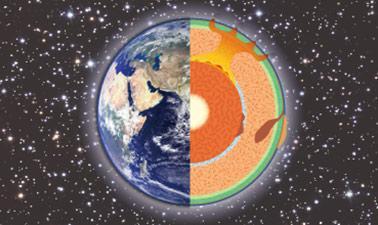
Learn about the nature and dynamics of the Earth’s core, mantle and crust in this introductory Earth Science course. Have you ever imagined what is deep under the ground? What is happening deep inside the earth? How has the earth evolved into its present state? This course is an introduction to earth science, focusing on the deep earth.

Class Deals by MOOC List - Click here and see EdX's Active Discounts, Deals, and Promo Codes.

We will learn how temperature and chemical compositions inside the Earth are inferred from limited observations combined with laboratory experiments. We will also explore the fate of water on the early Earth related to advanced research questions. Upon finishing this course, you will learn how scientists interpret the unknown and use the scientific method to address immeasurable research challenges.
No specific knowledge is needed. Join this course and let’s imagine the inside of the Earth together.

What you'll learn

  • Chemical compositions and dynamics inside the earth
  • Internal temperature of the earth and how it is estimated
  • Water inside the deep earth as an example of advanced Earth science research
  • How to apply multidisciplinary scientific methods to understand what can’t be seen directly

Syllabus

Week 1. Introduction to the solid Earth
Week 2. Plate Tectonics
Week 3. Chemical composition of our planet
Week 4. Temperature inside the Earth
Week 5. Earth’s water

Go to Class
MOOC List is learner-supported. When you buy through links on our site, we may earn an affiliate commission.

Related Courses

Climate Change Science and Negotiations (edX) EdX
SDGAcademyX,SDG Academy

Climate Change Science and Negotiations (edX)

Humanity is up against a tight timeline to address climate change. Learn how we can deeply decarbonize the global energy systems, and put the world on a 2°C pathway. In this course, learn solutions to mitigate the effects of the global greenhouse gas emissions causing temperature rise, and how to apply these solutions in different national contexts improvements.

Self Paced
Self-Paced
Deep Time: Discovering an Ancient Earth (Coursera) Coursera
University of Colorado Boulder

Deep Time: Discovering an Ancient Earth (Coursera)

Ever since our ancestors ventured onto the African savanna, human beings have searched, explored, and wondered about the world. Nowadays, and certainly for most, science is the vehicle that takes us along a path towards understanding nature. It can bring us from sub-atomic realms to the most distant galaxies. Largely through the discipline of geology, science allows us to push back the mists of time and peer into a past measured in billions of years, and aptly referred to as “Deep Time.” Climb on board!

May 11th 2026
4 Weeks
Climate Change: The Science (edX) EdX
The University of British Columbia,UBCx

Climate Change: The Science (edX)

Master the basics of climate science so you can better understand the news, evaluate scientific evidence, and explain global warming to anyone. Do you want to talk about climate change from an informed perspective? Are you interested in how global warming works? Climate change is the biggest challenge of our time, and climate science is critical to finding solutions. How can we make the best decisions about our present and future? By taking this course, you can be part of the global conversation.

No sessions available
5-12 Weeks
Moons (FutureLearn) FutureLearn
The Open University

Moons (FutureLearn)

Explore the many moons of our Solar System. Find out what makes them special and ask whether we send humans to our Moon again. Discover the amazing diversity of moons in our Solar System. There are lots of moons in our Solar System. The Earth is the only planet with just a single moon. Some are bigger than ours. Many are much smaller. Some moons have ongoing volcanic eruptions. Others have rivers of liquid methane. A small handful may even be home to primitive life. This online course will allow you to explore the rich diversity of moons in our Solar System.

Mar 4th 2024
5-12 Weeks
Extinctions: Past and Present (FutureLearn) FutureLearn
University of Cape Town

Extinctions: Past and Present (FutureLearn)

Discover the diversity of life on earth, the impacts of five past mass extinctions and the prospect of a sixth extinction today. This free online course explores how life on earth has been shaped by five mass extinction events in the distant past. At present, biodiversity is facing a crisis, with the prospect of a sixth extinction event today.

Jul 25th 2022
5-12 Weeks
Global Warming II: Create Your Own Models in Python (Coursera) Coursera
University of Chicago

Global Warming II: Create Your Own Models in Python (Coursera)

This class provides a series of Python programming exercises intended to explore the use of numerical modeling in the Earth system and climate sciences. The scientific background for these models is presented in a companion class, Global Warming I: The Science and Modeling of Climate Change. This class assumes that you are new to Python programming (and this is indeed a great way to learn Python!), but that you will be able to pick up an elementary knowledge of Python syntax from another class or from on-line tutorials.

May 18th 2026
5-12 Weeks
Processing of Space Monitoring Information (Coursera) Coursera
Moscow Institute of Physics and Technology

Processing of Space Monitoring Information (Coursera)

Observation of near-Earth outer space is an important task for astronomers and scientists at the present time. This task is to determine the coordinate and non-coordinate characteristics of artificial space objects. According to data obtained, a catalogue of objects is created, which should be maintained and updated. For this, optical means (telescopes) can be involved. The data from these means should be processed in order to obtain information about objects in space.

Aug 1st 2022
4 Weeks
Biosphere 2 Science for the Future of Our Planet (Coursera) Coursera
University of Arizona

Biosphere 2 Science for the Future of Our Planet (Coursera)

Are you ready to take an incredible journey around Planet Earth and beyond? In this course, you will delve into a world of innovative science and learn from a team of Biosphere 2 and University of Arizona researchers. From plants and soils, to oceans and rainforests, the Moon, Mars, and more, this course is an exciting opportunity for anyone interested in science and Earth stewardship.

May 25th 2026
5-12 Weeks
Introduction to Geochemistry (edX) EdX
Kyoto University,KyotoUx

Introduction to Geochemistry (edX)

The goal of the course is to apply chemical principles to understand the natural (non-living) world around us and appreciate its complexity. Chemistry, often referred to as the central science, concerns matter and the transformations it can undergo. While many aspects of chemistry can be applied to solving various problems relevant to our society, chemistry also offers a convenient framework to understand the complexity of the natural world surrounding us.

Self Paced
Self-Paced
Origens da Vida no Contexto Cósmico (Coursera) Coursera
Universidade de São Paulo, Brasil

Origens da Vida no Contexto Cósmico (Coursera)

Origens da vida no contexto cósmico é um curso desenvolvido no Instituto de Astronomia, Geofísica e Ciências Atmosféricas da Universidade de São Paulo, com o objetivo de apresentar os mais recentes avanços científicos na compreensão deste intrigante assunto. É um curso com formato multidisciplinar que o levará a compreender melhor os aspectos envolvidos no surgimento de vida na Terra e no possível surgimento de vida em outros planetas.

May 11th 2026
4 Weeks