Introduction to Applied Cryptography (Coursera)

Offered by University of London,
Introduction to Applied Cryptography (Coursera)

This course is a non-mathematical introduction to the role that cryptography plays in providing digital security for everyday applications such as the internet, mobile phones, wireless networks and cryptocurrency. In this introductory course you will develop an understanding of the functionality and purpose of the main cryptographic tools we use today. You will learn how to make decisions about which cryptographic tools are most appropriate to deploy in specific settings. You will also explore the wider infrastructure surrounding cryptography and how this impacts the overall security of systems deploying cryptography.

Class Deals by MOOC List - Click here and see Coursera's Active Discounts, Deals, and Promo Codes.

Cryptography provides the core toolkit that underpins most digital security technologies. An understanding of what cryptography does, and its limitations, is critical to developing a wider appreciation of the security of everyday digital applications. Since cryptography provides tools for atomic security services such as confidentiality and data integrity, an appreciation of cryptography will also equips you with a fundamental understanding of what security means in cyberspace.
Learning outcomes for the module.
By the end of this module learners will be able to:

  1. Explain the precise role that cryptography plays in the security of any digital system.
  2. Appreciate the breadth of use of cryptography to support security of digital systems.
  3. Identify core concepts and terminology concerning use of cryptography
  4. Assess the points of vulnerability relating to cryptography in any digital system deploying it.

Syllabus

WEEK 1
Introduction to the course and the Cryptographic Toolkit
In week 1 we discuss the need for cryptography and the core security services it provides.

WEEK 2
Applications of Cryptography
In week 2 we discuss uses of cryptography to support a wide range of digital systems.

WEEK 3
Cryptosystems
In week 3 we explain the main components of a cryptosystem and introduce some core terminology.

WEEK 4
Attacking Cryptosystems
In week 4 we identify various ways in which an attacker could try to overcome the protection offered by cryptography.

Go to Class
MOOC List is learner-supported. When you buy through links on our site, we may earn an affiliate commission.

Related Courses

Implementing a Risk Management Framework (Coursera) Coursera
University System of Georgia

Implementing a Risk Management Framework (Coursera)

The ultimate destination for a security manager is the Chief Information Security Officer (or Chief Security Officer) a senior executive role responsible for all cybersecurity operations in the organization. But how do you get from entry-level IT or security employee to the CISO’s office and what do you need to know when you get there? This course examines the career path and requirements to be an effective CISO, as well as the roles and responsibilities of the position.

Oct 5th 2026
5-12 Weeks
Security for Artificial Intelligence Software and Services (Coursera) Coursera
Board Infinity

Security for Artificial Intelligence Software and Services (Coursera)

The "Security Basics for Artificial Intelligence Software and Services" course provides an in-depth exploration of security measures and best practices in the context of AI. Spanning two comprehensive modules, the course begins with an introduction to the fundamentals of AI security, including ethical considerations and common threats. It then progresses to practical strategies for implementing robust security in AI development, such as secure coding, vulnerability assessment, and adherence to compliance standards.

Sep 28th 2026
2 Weeks
Usable Security (Coursera) Coursera
University of Maryland, College Park

Usable Security (Coursera)

This course focuses on how to design and build secure systems with a human-centric focus. We will look at basic principles of human-computer interaction, and apply these insights to the design of secure systems with the goal of developing security measures that respect human performance and their goals within a system.

Oct 5th 2026
5-12 Weeks
Information Systems Auditing, Controls and Assurance (Coursera) Coursera
The Hong Kong University of Science and Technology - HKUST

Information Systems Auditing, Controls and Assurance (Coursera)

Information systems (IS) are important assets to business organizations and are ubiquitous in our daily lives. With the latest IS technologies emerging, such as Big Data, FinTech, Virtual Banks, there are more concerns from the public on how organizations maintain systems’ integrity, such as data privacy, information security, the compliance to the government regulations. Management in organizations also need to be assured that systems work the way they expected. IS auditors play a crucial role in handling these issues.

Oct 5th 2026
4 Weeks
Cybersecurity and Its Ten Domains (Coursera) Coursera
University System of Georgia

Cybersecurity and Its Ten Domains (Coursera)

This course is designed to introduce students, working professionals and the community to the exciting field of cybersecurity. Throughout the MOOC, participants will engage in community discourse and online interaction. Participants will gain knowledge and understanding of cybersecurity and its domains. They will engage with expertly produced videos, gain insight from industry experts, participate in knowledge assessments, practice assessing their environmental awareness, and gain access to materials that address governance and risk management, compliance, business continuity and disaster recovery, cryptography, software development security, access control, network security, security architecture, security operations, and physical and environmental security.

Sep 28th 2026
5-12 Weeks
Intel® Network Academy - Network Transformation 102 (Coursera) Coursera
Intel Corporation

Intel® Network Academy - Network Transformation 102 (Coursera)

Welcome to the Intel® Network Academy – a comprehensive training program on network transformation. In this program, we will be covering the topic areas of software defined infrastructure (SDI) network functions virtualization (NFV), software-defined networking (SDN) and beyond. Network Transformation 102 covers topics such as VNF Operations & Development, Cryptography, and Hyperscan technology, students will dive into the benefits of Intel hardware and software and explore how to accelerate compute-intensive operations with Intel® QuickAssist Technology (Intel® QAT).

Sep 28th 2026
4 Weeks
Competencias digitales. Conceptos y herramientas básicas (Coursera) Coursera
Universitat Autònoma de Barcelona

Competencias digitales. Conceptos y herramientas básicas (Coursera)

Los continuos cambios tecnológicos, sobre todo en aquellos aspectos vinculados a las tecnologías de la información y la comunicación (TIC) hacen que las personas tengan la necesidad de actualizarse de forma continua para que sus conocimientos no queden obsoletos. En este contexto, para las empresas se convierte en algo imprescindible disponer de profesionales que tengan las competencias necesarias para ejercer con éxito las actividades que requieren en su lugar de trabajo.

Sep 28th 2026
4 Weeks
Responsible AI - Principles and Ethical Considerations (Coursera) Coursera
Fractal Analytics

Responsible AI - Principles and Ethical Considerations (Coursera)

Welcome to "Responsible AI – Principles and Ethical Considerations"! Dive deep into the very essence of Responsible AI with us. Uncover the significance of key principles shaping technology's future. From ethical considerations to fairness, transparency, and accountability, we discuss these principles with real-world examples, putting them into the context of data science.

Oct 5th 2026
5-12 Weeks
5G Network Fundamentals (Coursera) Coursera
Institut Mines-Telecom

5G Network Fundamentals (Coursera)

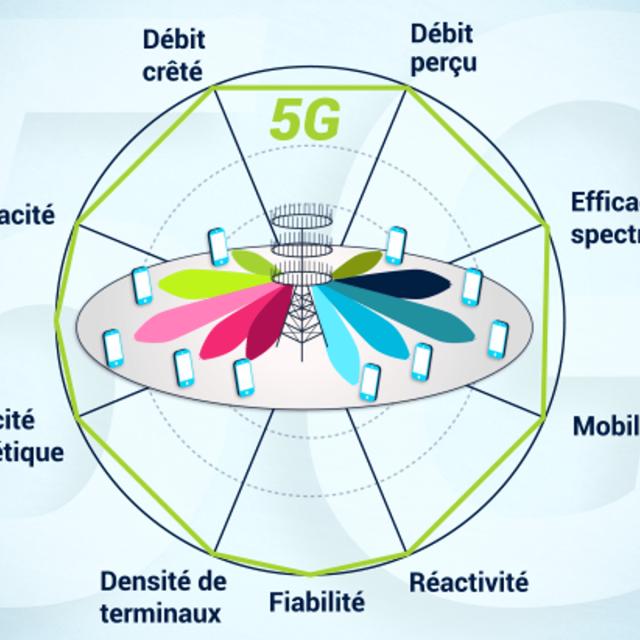
This MOOC presents the services and the architecture of 5G networks, the main principles of the new radio interface (NR), data flow management, security and the new Service-Based Architecture (SBA). In recent years, operators have been deploying 5G technology on commercial mobile networks. The latter is announced as a major technological breakthrough with speeds beyond Gbit/s, very low latencies and above all a distribution in many sectors of activity (industry, transport, medicine, etc.).

Sep 28th 2026
5-12 Weeks
Introduction to Network Security (Coursera) Coursera
University of London,Royal Holloway, University of London

Introduction to Network Security (Coursera)

The security of computer networks is a key element in cyber security. Computer networking provides the foundational connectivity services that are used for the world wide web, distributed computer applications and services, operations and manufacturing, and national infrastructure. This course provides understanding of key technologies used in computer networks and infrastructure. This includes protocols, computer networks, data centres, operational technologies that form key infrastructure critical to the success of organisations and services from a local to an international scale.

Oct 5th 2026
5-12 Weeks
Learn Firebase (Coursera) Coursera
Scrimba

Learn Firebase (Coursera)

In this comprehensive course, aspiring front-end developers will discover the transformative capabilities of Firebase. By leveraging Firebase's cloud architecture, you can seamlessly incorporate a wide array of features into your applications using HTML, CSS, and JavaScript. This newfound flexibility is underpinned by Firebase's cloud functions, which empower you with dynamic functionalities.

Oct 5th 2026
3 Weeks
Terrorism and Counterterrorism: Comparing Theory and Practice (Coursera) Coursera
Leiden University

Terrorism and Counterterrorism: Comparing Theory and Practice (Coursera)

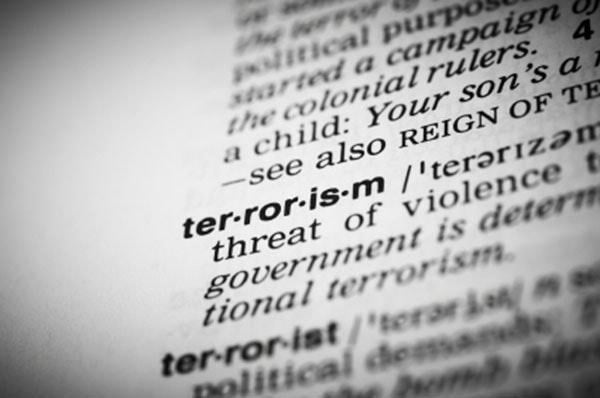
Terrorism has arguably been one of the defining factors of our age. It frequently makes headlines, threatening or attacking governments, private business and ordinary citizens. And in many parts of the world, it has been one of the most important threats to peace, security and stability. But what does this exactly mean? What is the nature of this threat? Who or what is threatened, how, by whom and why? What can be done about it or how can we at least limit the impact of terrorism and make sure that terrorists do not make headlines and manage to scare us? These are just a handful of questions that will be addressed in this course that consists of three parts.

Oct 5th 2026
5-12 Weeks