Internet Security for Beginners (openHPI)

Internet Security for Beginners (openHPI)

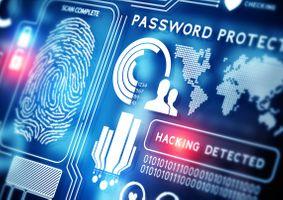
Hackers manage again and again to steal passwords, to access sensitive enterprise and user data, and, in the worst case scenario, to even paralyze entire companies. The Internet offers various possibilities to its users, but, at the same time, it harbors dangers and vulnerable points of attack, which many people are not even aware of. In this openHPI course you will learn the basics of Internet security.

Why is the Internet insecure by nature of its design? What are the weak spots of the Internet and how are they exploited by cybercriminals? We want to answer these questions and a lot more in this course. Additionally, we will advise you on how to protect yourself from such cyberattacks.

Course contents

Week 1:
We will explain the basic terms vulnerability, attack, and incident in the first week. Furthermore, we will elaborate on attackers, their motives and their origins.
Week 2:
In week 2, we will explain the idea and the concept of digital Identities and passwords. We will discuss the digital footprint, the feasibility to (easily) crack passwords and guidelines to chose a secure password.
Week 3:
In this week we will discuss several issues about malware. We will cover different types, such as, viruses, worms, and trojans, talk about botnets and mention some countermeasures.
Week 4:
In week 4, we will talk about dangers and risks that arise through the usage of open routes in the Internet. Therefore, we will discuss how attacks can capture messages and eavesdrop or even manipulate and compromise connections. Furthermore, some security mechanisms for those open communication channels, such as firewalls and encryption are illustrated.
Week 5:
In the 5th week, we will take a closer look at the general topic encryption. Therefore, we explain different cryptographic algorithms and how they can be used for various purposes.
Week 6:
In this week we will talk about several topics related to data privacy and private sphere in the digital world. Starting at the Internet as one big eco-system we will also cover privacy in the context of smartphones and wearables, the Internet-of-things or cloud computing, for example.
Final Exam:
Show what you have learned during the course by taking the final exam and qualify for a certificate.

Go to Class
MOOC List is learner-supported. When you buy through links on our site, we may earn an affiliate commission.

Related Courses

Cybersecurity Job Search and Interviews: Getting Started (Coursera) Coursera
University System of Georgia

Cybersecurity Job Search and Interviews: Getting Started (Coursera)

Are you planning to have a career in cybersecurity? This course can help you plan your preparation for such a career as well as give some advice on finding positions and landing a position. What you will learn: the process and resources for finding the perfect cybersecurity job; the cybersecurity professional’s role in an organization’s cybersecurity effort; the knowledge preparation for the cybersecurity professional from an education versus training perspective.

Sep 14th 2026
5-12 Weeks
Security and Privacy for Big Data - Part 2 (Coursera) Coursera
EIT Digital

Security and Privacy for Big Data - Part 2 (Coursera)

This course sensitizes regarding privacy and data protection in Big Data environments. You will discover privacy preserving methodologies, as well as data protection regulations and concepts in your Big Data system. By the end of the course, you will be ready to plan your next Big Data project successfully, ensuring that all privacy and data protection related issues are under control.

Sep 21st 2026
1 Week
Cyberthreats by Malware (openHPI) OpenHPI
Hasso-Plattner-Institut

Cyberthreats by Malware (openHPI)

In this course we will discuss a huge problem on the Internet: The spread of malware. The number of cyber attacks has increased again in 2020. New forms of malware have evolved, even more disruptive and more damaging. We will cover different types of malware, such as, viruses, worms, and trojans, talk about botnets and ransomware, and mention some countermeasures.

Self Paced
Self-Paced
Enhancing Mac Security: Strategies for Protection (Coursera) Coursera
LearnQuest

Enhancing Mac Security: Strategies for Protection (Coursera)

Fortifying Your Digital Fortress: Mac Security Strategies for Ultimate Protection. Discover essential Mac security in this comprehensive course tailored for beginners. Learn to safeguard your Mac workstation effectively as you delve into fundamental security features, threat assessment, and proactive management. Gain insights into automating security processes and adopting top-notch practices, ensuring robust protection for your Mac. Enroll now to master the art of securing your Mac with confidence.

Sep 14th 2026
3 Weeks
Linux on LinuxONE (Coursera) Coursera
IBM

Linux on LinuxONE (Coursera)

This course is for Linux Systems Administrators, Architects and Developers who are already familiar with Linux components and everyday tasks, but need a primer on how to best take advantage of the LinuxONE platform. This includes working with the hardware, software, facilities, and processes unique to LinuxONE. It is comprised of videos, links to online resources, and a final test for a badge.

Sep 14th 2026
5-12 Weeks
Sicherheit im Internet (openHPI) OpenHPI
Hasso-Plattner-Institut

Sicherheit im Internet (openHPI)

Hackern gelingt es immer wieder, Passwörter zu stehlen, auf sensible Firmen- und Userdaten zuzugreifen und somit schlimmstenfalls ganze Unternehmen lahmzulegen. So vielfältig die Möglichkeiten sind, die das Internet seinen Nutzern bietet, so vielfältig sind auch die Angriffspunkte und potenziellen Gefahren, die vom Internet ausgehen und vielen Menschen noch nicht richtig bewusst sind. In diesem openHPI-Kurs lernen Sie die Grundbegriffe der Internetsicherheit kennen. Warum ist das Internet in seinem Grunddesign unsicher? Welches sind die Schwachstellen des Internets und wie werden diese von Cyberkriminellen ausgenutzt? Diese Fragen werden unter anderem in diesem Kurs beantwortet. Gleichzeitig erhalten Sie einige Tipps, wie Sie sich vor solchen Angriffen schützen können.

Self Paced
Self-Paced
Mainframes (openHPI) OpenHPI
Hasso-Plattner-Institut

Mainframes (openHPI)

Kaum jemand kennt sie. Und dennoch hat man täglich mit ihnen zu tun. Wer an einem Bankautomaten Geld abhebt, wer einen Flug bucht, wer mit der Deutschen Bahn unterwegs ist: Immer arbeiten im Hintergrund Mainframes, welche die wirklich entscheidende Arbeit verrichten und dafür sorgen, dass alles sicher und ohne Datenverlust vonstatten geht. Mehr als 70 Prozent der Global 500 arbeiten mit diesen Großrechnern.

Self Paced
Self-Paced
Cybersecurity for Everyone (Coursera) Coursera
University of Maryland, College Park

Cybersecurity for Everyone (Coursera)

Cybersecurity affects everyone, including in the delivery of basic products and services. If you or your organization want to better understand how to address your cybersecurity, this is the course for you and your colleagues to take -- from seasoned professionals to your non-technical colleagues. Your instructor, Dr. Charles Harry, has served on the front lines with the NSA (National Security Agency) and as an expert advising corporate and institutional leaders on managing cybersecurity risk.

Sep 21st 2026
5-12 Weeks
DDoS Attacks and Defenses (Coursera) Coursera
University of Colorado System

DDoS Attacks and Defenses (Coursera)

In this MOOC, you will learn the history of DDoS attacks and analyze new Mirai IoT Malware and perform source code analysis. you will be provided with a brief overview of DDoS Defense techniques. You learn an Autonomous Anti-DDoS Network called A2D2 for small/medium size organizations to deal with DDoS attacks. A2D2 uses Linux Firewall Rate limiting and Class Based Queueing, and subnet flood detection to handle various DDoS traffic types.

Sep 14th 2026
4 Weeks
A Half Century of Internet: How it works today (openHPI) OpenHPI
Hasso-Plattner-Institut

A Half Century of Internet: How it works today (openHPI)

The Internet connects more than half of the world's population. This revolutionary form of transmitting all kinds of data between places on the planet has made the network of networks the indispensable backbone of societies. The number of users has exploded to four billion people. The speed of change is dramatic and for some breathtaking. Many well-known and even more unknown personalities have shaped the development of the Internet. However, this exciting success story also reveals the dark sides of this development. What has become of the original hope for a democratization of communication? To what extent has the Internet provided access to better educational opportunities? How do large Internet companies and governments use the Internet? How can you safely communicate over this network?

Self Paced
Self-Paced